Why Choose Frameless Glass Pool Fencing?
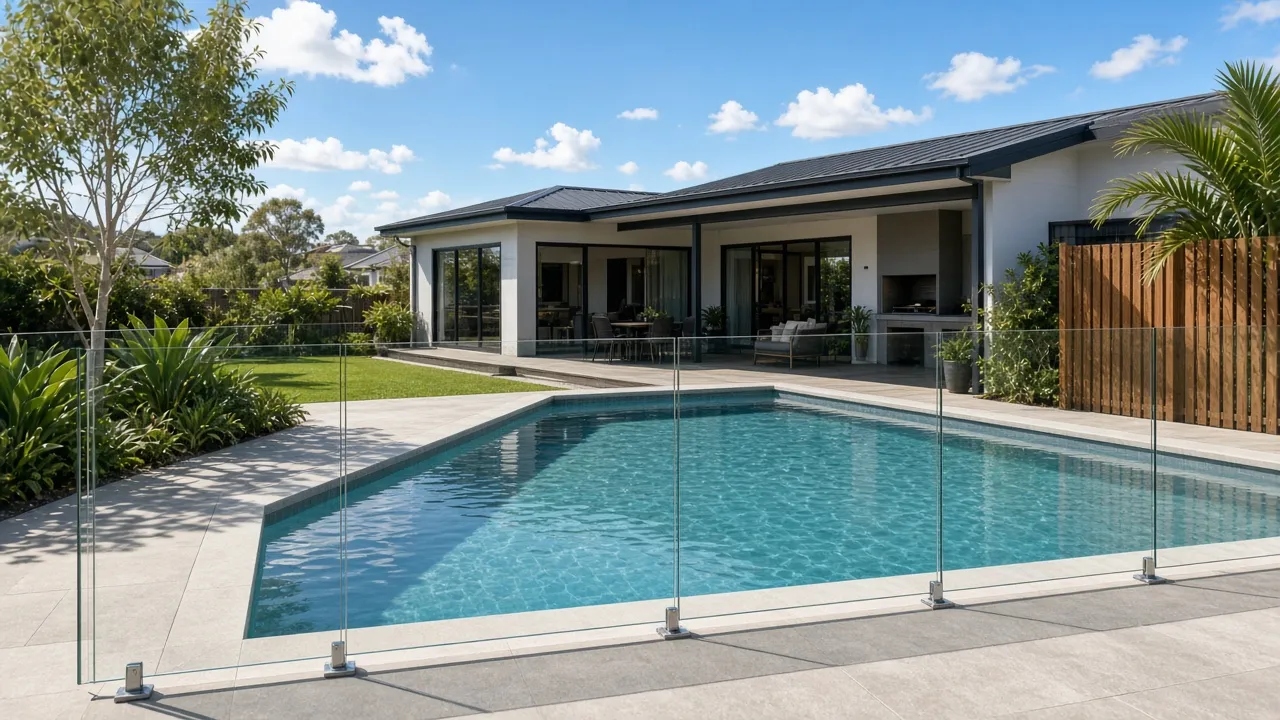
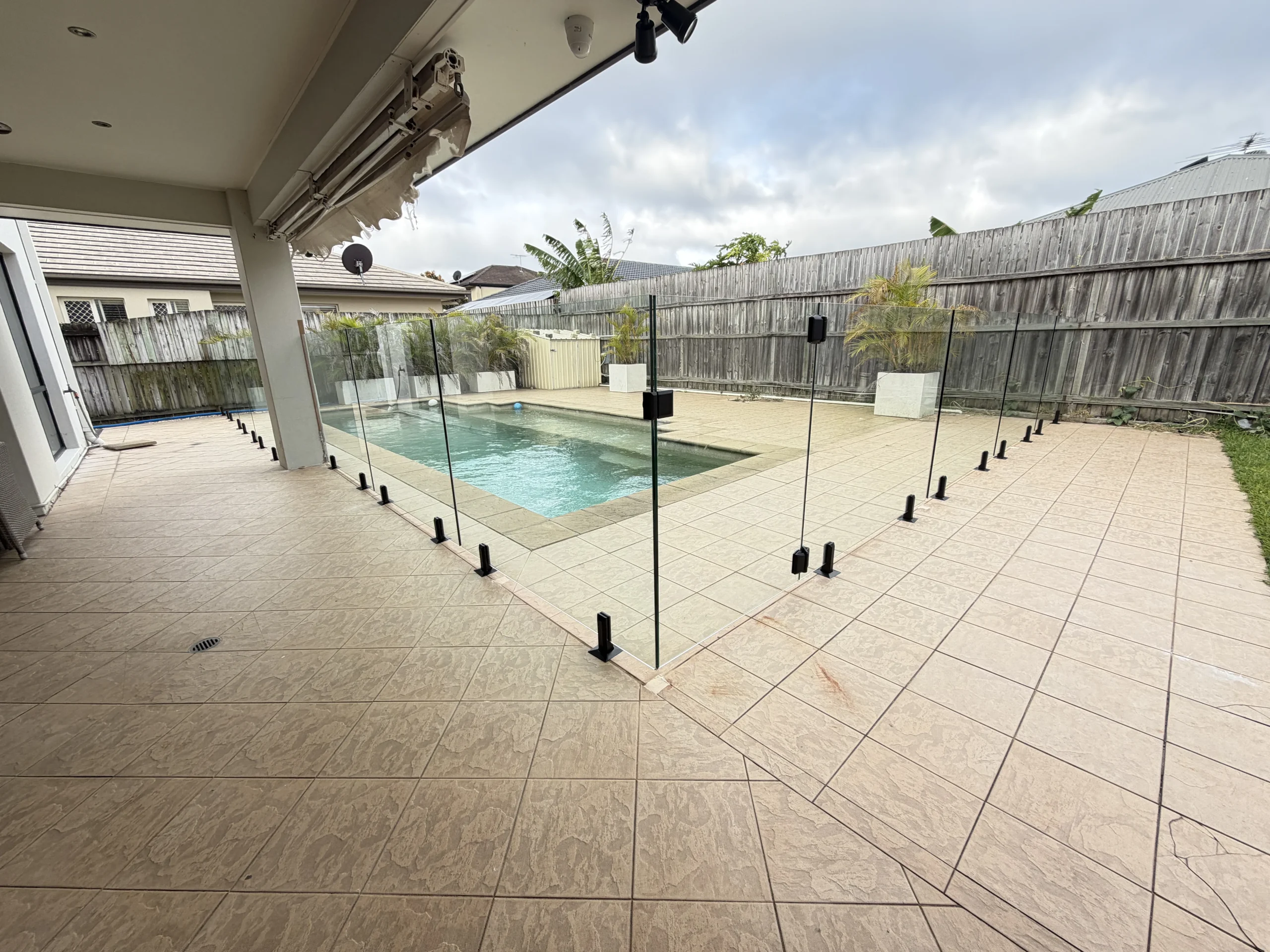
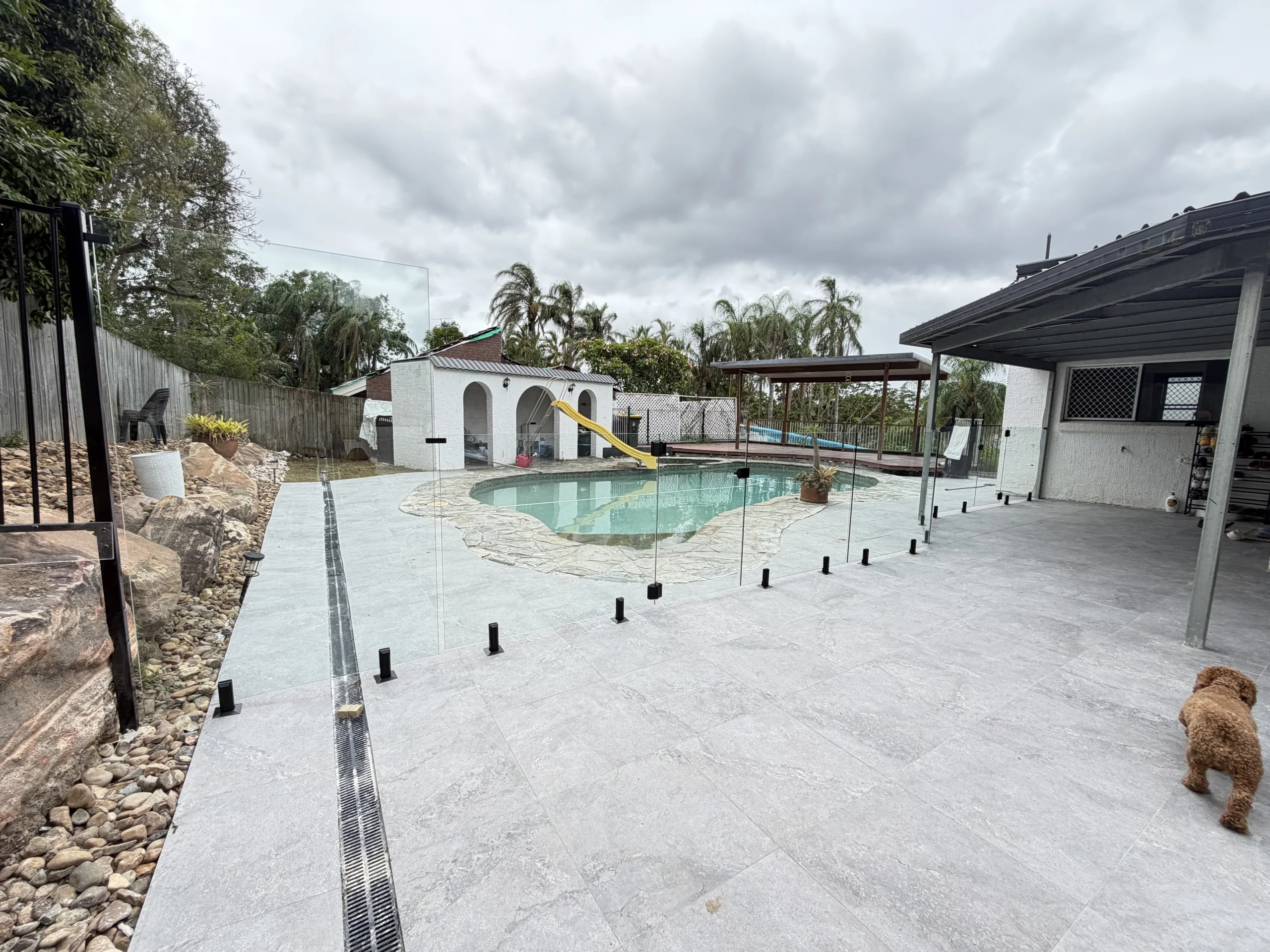
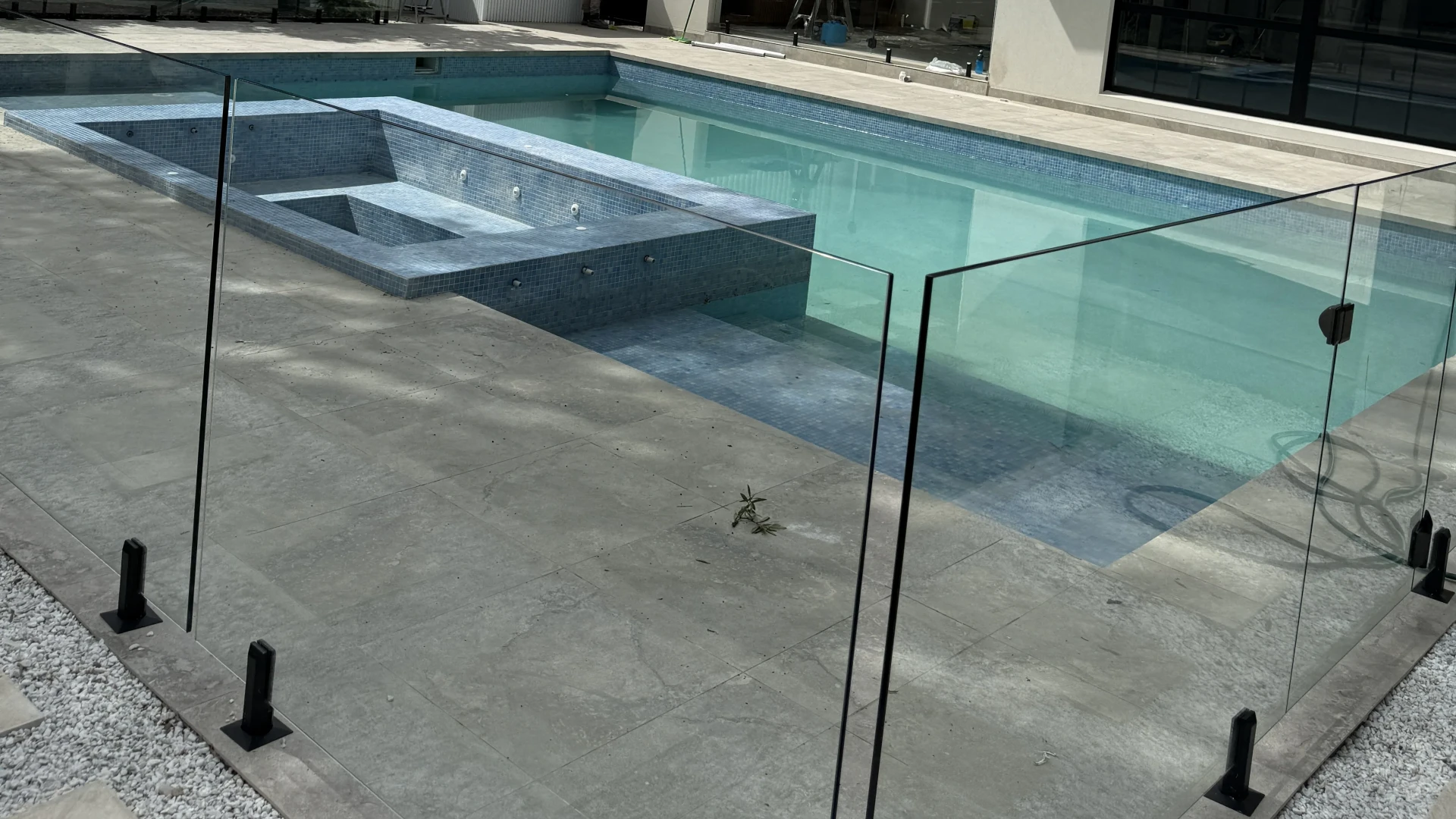
Choosing frameless glass pool fencing means opting for a barrier that blends transparency, design finesse, and uncompromising safety. Unlike traditional fences, the glass doesn’t block views — instead it enhances your landscape, especially in Queensland’s bright sunlight. And when engineered properly, it meets all required safety standards.
Key advantages:
- Uninterrupted views & aesthetic appeal — the “invisible barrier” effect opens up your pool area.
- Durability & corrosion resistance — using marine-grade fittings ensures long-term performance in humid or coastal conditions.
- Low visual intrusion — ideal for premium homes and landscaping integration.
- Compliance capable — when installed to AS/NZS standards, glass meets the same safety requirements as any barrier.
- Property value uplift — premium finishes like glass can enhance your home’s appeal to future buyers.
Still, it’s not a universal choice — glass comes with premium costs, stricter installation tolerances, and more frequent cleaning needs than some metal options. (Later, we compare with sem i-framed and aluminium.)
Key Components & Specification (Glass, Hardware & Design)
Glass Panels: Thickness, Height & Quality
- Most frameless systems use toughened safety glass (tempered) — either 10 mm, 12 mm or even 12 mm minimum for freestanding spans.
- Height must meet or exceed 1.2 m above ground level, with strict limits on gaps beneath the glass (no more than 100 mm).
- For larger spans or windy sites, use low-iron glass or ultra-clear glass to reduce visual distortion.
- Always source glass certified to AS/NZS 2208 to ensure safety compliance.
Hardware: Spigots, Patches & Fixings
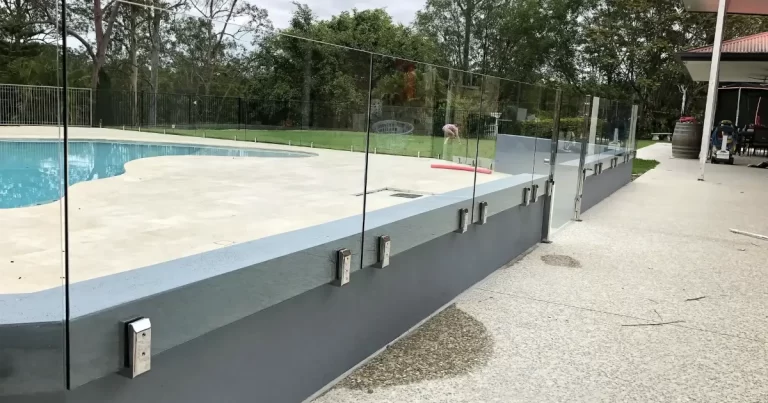
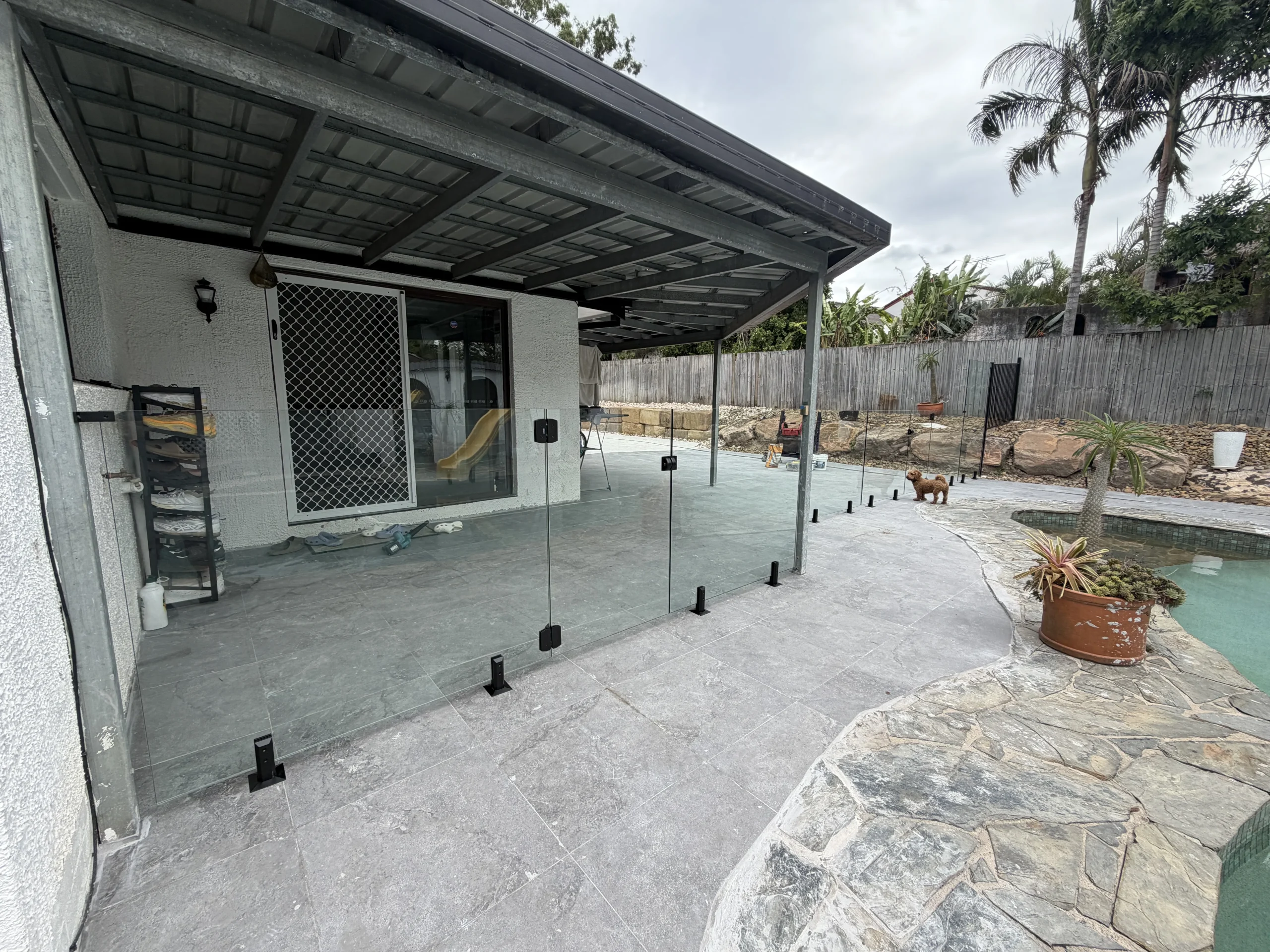
- Spigots (the small stainless-steel “poles” that clamp to the glass base) are the most common fully frameless support.
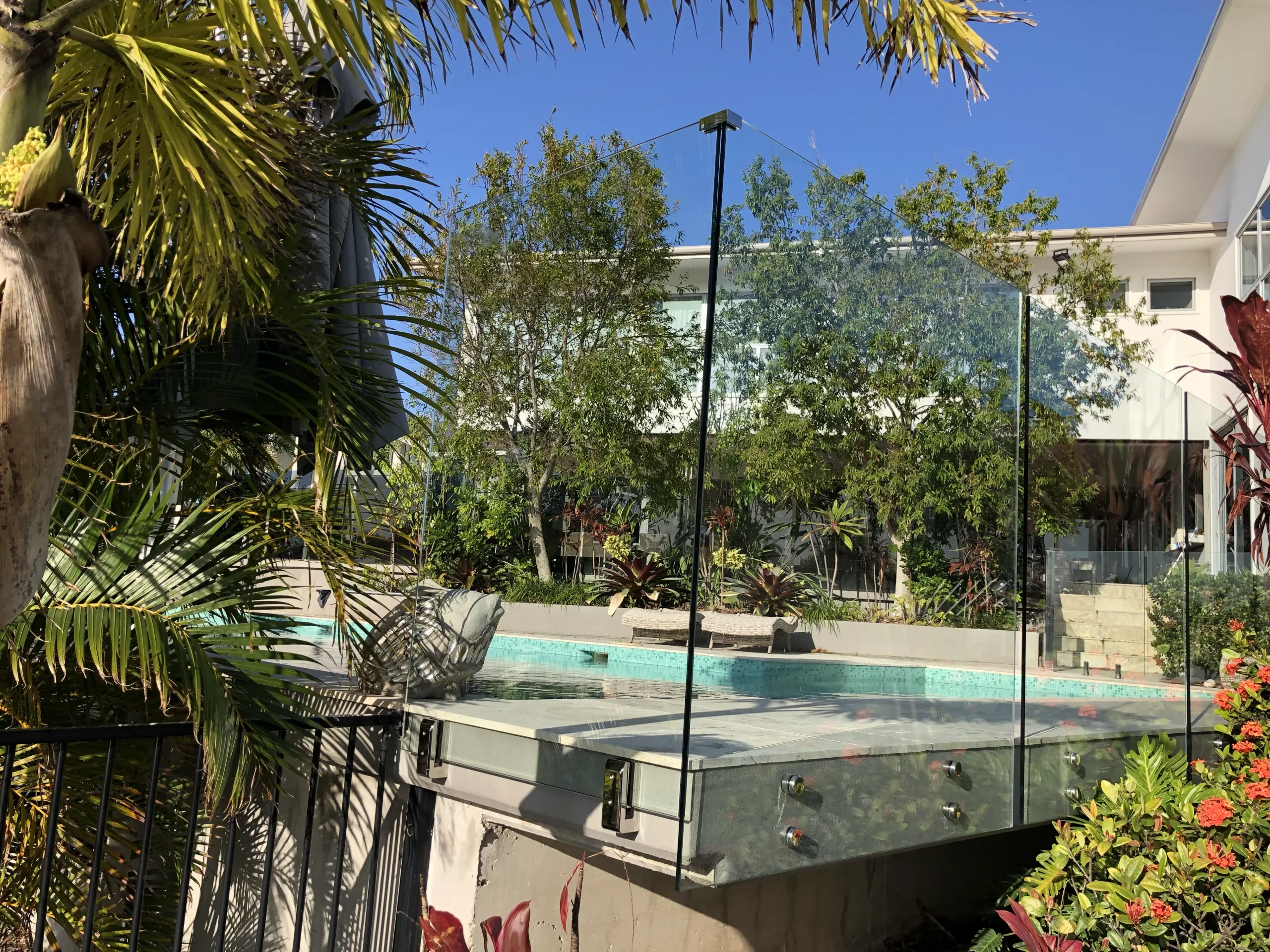
- Patch fittings (“patch-fitted” systems) suspend glass panels using small clamps near corners, giving a “floating” effect.
- All fixings must use marine-grade 316 / duplex stainless steel in coastal Brisbane to resist corrosion.
- Mounting can be core-drilled into concrete, or set into structural footings.
- The spacing between spigots and the unsupported edge of glass must be within engineered limits (often ≤1 m span depending on thickness, design wind loads).
Layout & Design Considerations
- For curved or angled walls, cut-to-curve glass panels or tight angle patch fittings may be required.
- At corners, use “negative patch” or curved spigot arrangements to maintain visual continuity.
- Gate design: self-closing, outward-swinging, with latches at 1.2 m height minimum.
- Ensure a Non-Climbable Zone (NCZ) of at least 900 mm immediately outside the fence, per Queensland pool safety rules.
- Combine with adjacent fencing: where glass meets colorbond or paling fences, plan for smooth transitions (e.g. short mullion, glass-to-metal joiners).
Compliance, Certification & Brisbane / Queensland Regulations
To ensure you and your fence pass inspection:
- Pool fencing in Queensland must comply with AS 1926.1 – Safety Barriers for Swimming Pools and Queensland Pool Safety Laws.
- Fences must be ≥1.2 m high, with no gaps >100 mm underneath or between elements.
- Gates must be self-closing, self-latching, and swing outward away from the pool area.
- You must maintain a Non-Climbable Zone (NCZ) of at least 900 mm outside the fence (i.e. no furniture, vegetation or climbing aids close to it).
- After installation, a pool safety inspector issues a compliance certificate — necessary for home sales, rentals, and insurance.
- For coastal areas (e.g. Redcliffe, Sandgate, Moreton Bay), use marine-grade materials and coatings to withstand salt-laden air.
Note: Councils may have local overlays or additional requirements. Always check with your local council permit office before installing.
Maintenance & Longevity in Brisbane Conditions
Frameless glass is often praised as “low maintenance,” but in practice there are key considerations:
- Frequent cleaning: water spots, chlorine residue, and salt spray can mark glass. Some owners clean as often as fortnightly.
- Use mild detergent, soft cloth or squeegee, and avoid harsh abrasives.
- Inspect and lubricate gate hinges and latches twice yearly.
- Check for micro-pitting or corrosion on fixings, especially in coastal zones; replace damaged hardware promptly.
- Consider applying glass-protective coatings or hydrophobic treatments to reduce buildup (though coatings may degrade over time).
- Monitor and reseal footings or caulking around spigots as needed to prevent water ingress.
Comparisons & Hybrid Options
Frameless vs Semi-Frameless
- Fully frameless offers the cleanest visuals and minimal obstruction.
- Semi-framed uses slimmer posts to support the glass, often allowing slightly thinner glass panels — potentially reducing cost by up to ~30%.
- Semi-framed designs may require more upkeep (posts, coatings) especially in high-humidity zones.
Glass vs Aluminium or Metal Fencing
- Aluminium is generally less expensive, easier to install, and lower on maintenance.
- But aluminium fences block views and can look heavier.
- For continuity, some designs mix glass panels with metal posts or infill panels — when engineered correctly, hybrid setups can maintain safety while meeting aesthetic and budget goals.
Real Project Snapshot: Brisbane Suburbs Example

Project: Wynnum Waterfront Pool Upgrade
AMG Fabrication recently installed 25 m of 12 mm toughened glass with custom LED lighting, marine-grade spigots, and curved corner panels to follow existing curved pool edges.
We overcame a sloping site by integrating tiered footings and stepped glass panels. Following installation, the fence passed local council inspection on first submission.
This is just one example of how we tailor each installation to site challenges while remaining fully compliant and visually refined.
FAQ: Frameless Glass Pool Fencing
Q1. Is frameless glass pool fencing compliant in Queensland?
Yes — when installed per AS 1926.1 standards, with height ≥1.2 m, gap limits (≤100 mm), self-closing and self-latching gates, and a non-climbable zone. We ensure all our projects pass Queensland pool safety inspection.
Q2. What’s the lifespan of frameless glass fencing in coastal areas?
With marine-grade fittings and proper maintenance, a high-quality frameless glass fence can last 15+ years — even in salt-air conditions. Routine inspections and cleaning will prolong its life.
Q3. Can I install it myself (DIY)?
While DIY is technically possible, glass fencing requires precise measurement, engineering, and strict compliance. We strongly recommend hiring a professional to ensure safety and avoid costly rework or failed inspections.
Q4. How do I maintain it?
Clean with mild soap and soft cloth or squeegee. Avoid harsh chemicals. Inspect hardware periodically, especially in coastal settings. Apply protective coatings if needed.
Conclusion
If you’re looking for a pool fencing solution that combines elegance, transparency, and full compliance, frameless glass pool fencing is a premium option — especially when you’re in Brisbane or nearby coastal suburbs. At AMG Fabrication, we specialise in tailoring glass and metal fabrication solutions that stand up to Queensland’s climate and council demands.
Request a free, no-obligation quote today so we can assess your site, recommend the best design, and help you enjoy a safe, stunning pool perimeter using frameless glass pool fencing.