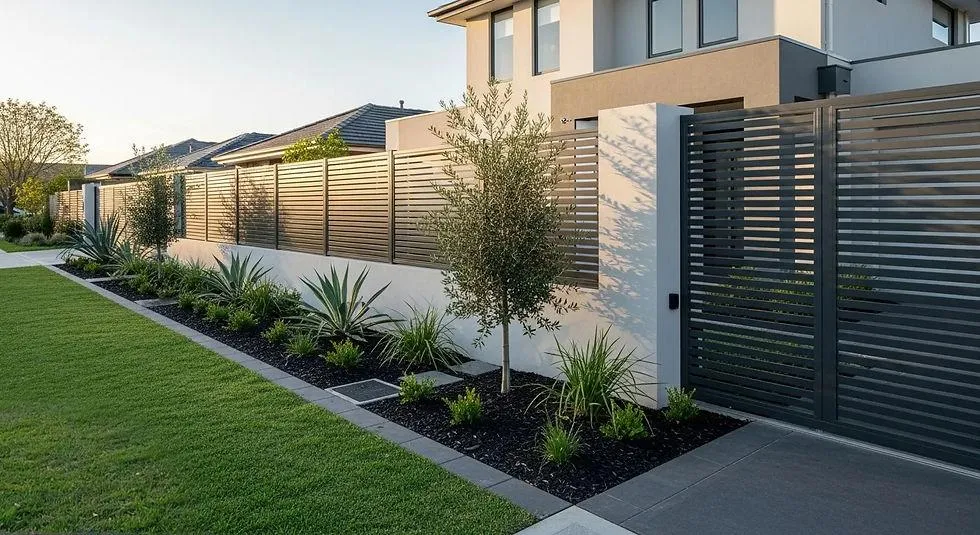
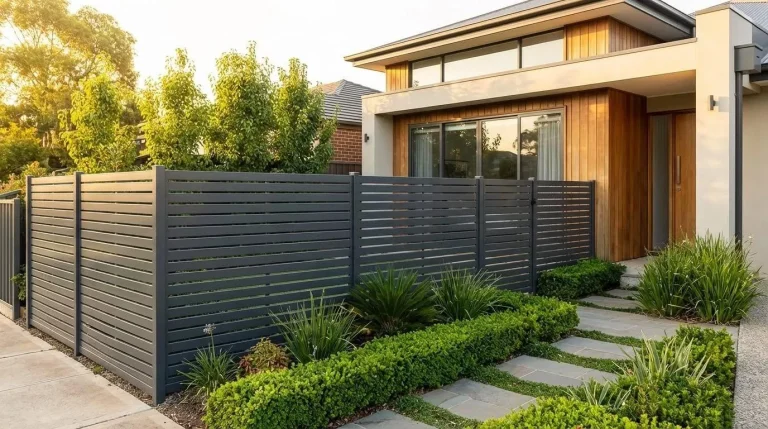
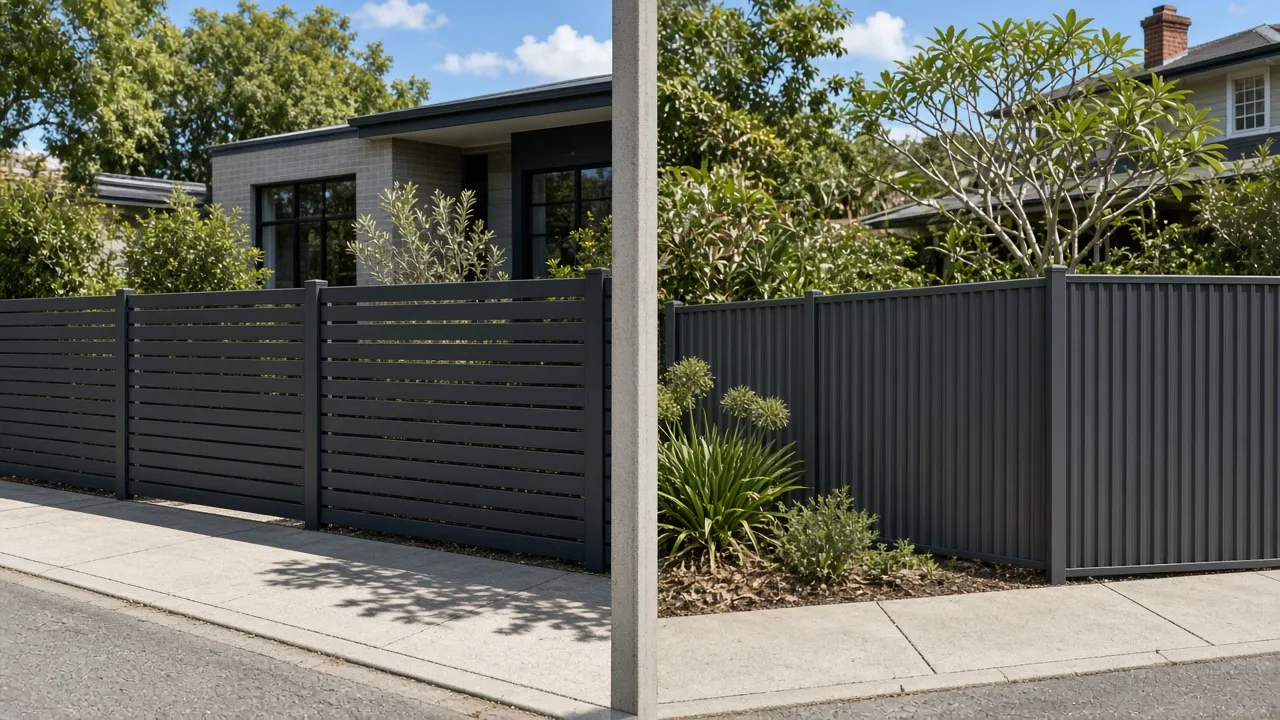
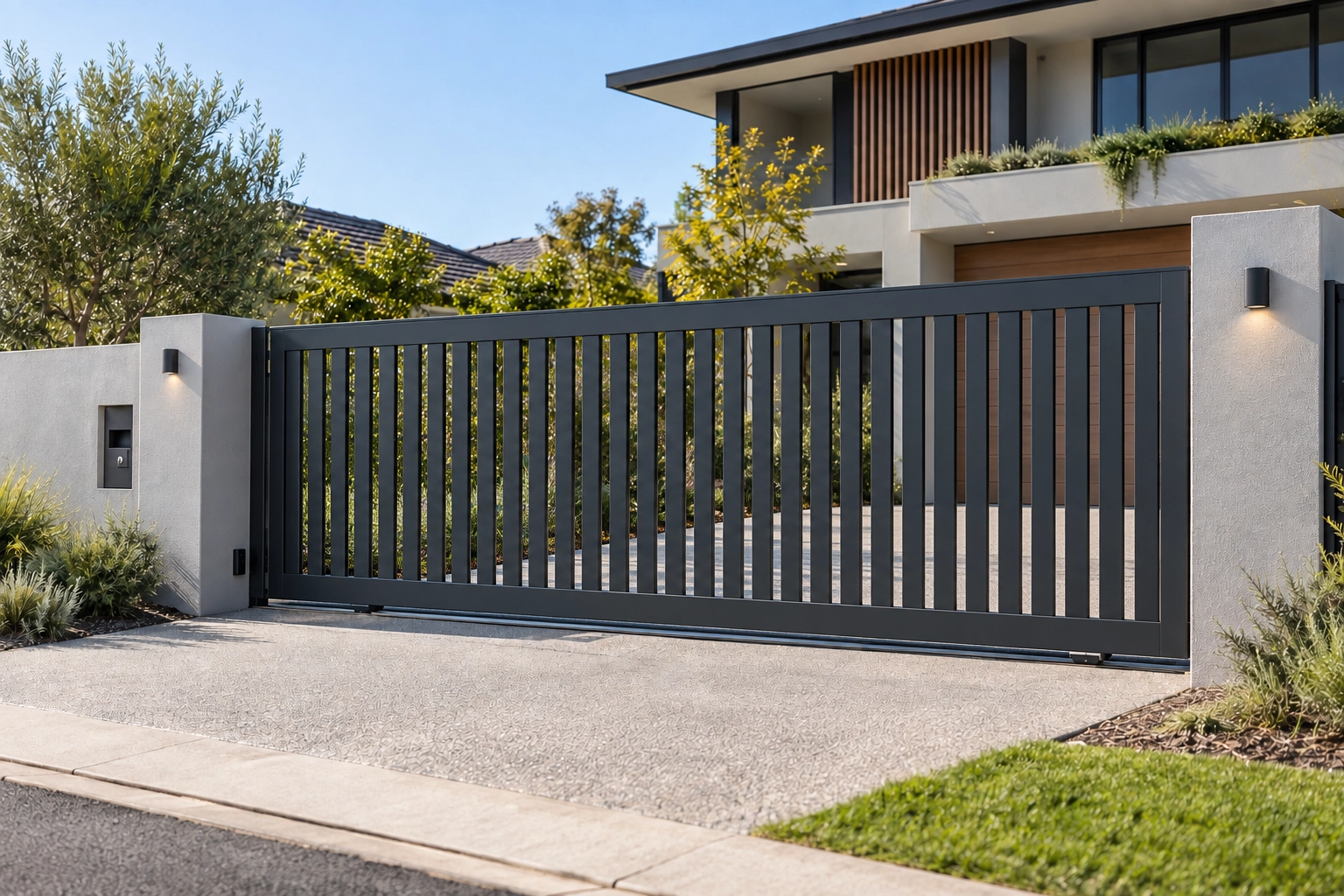
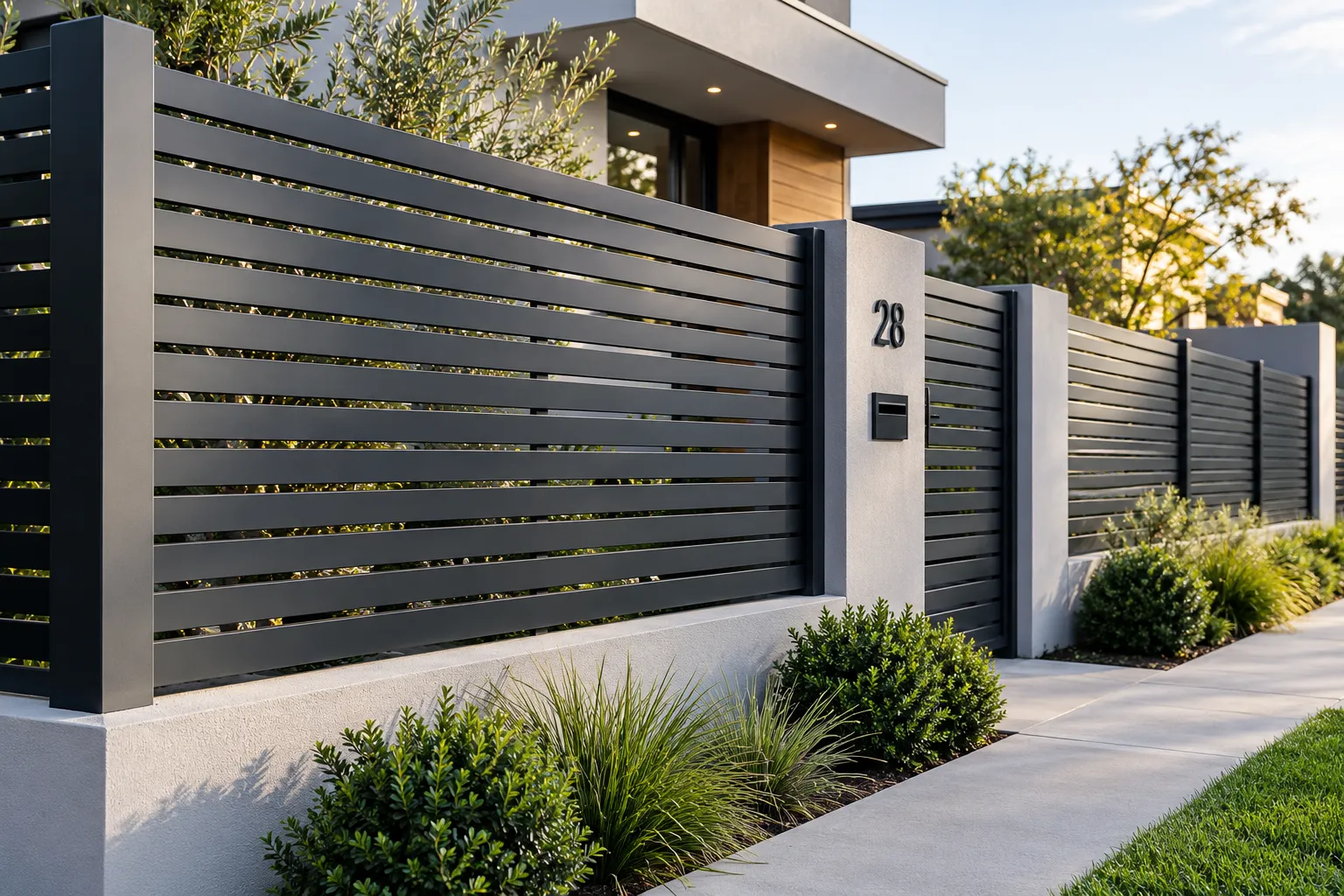
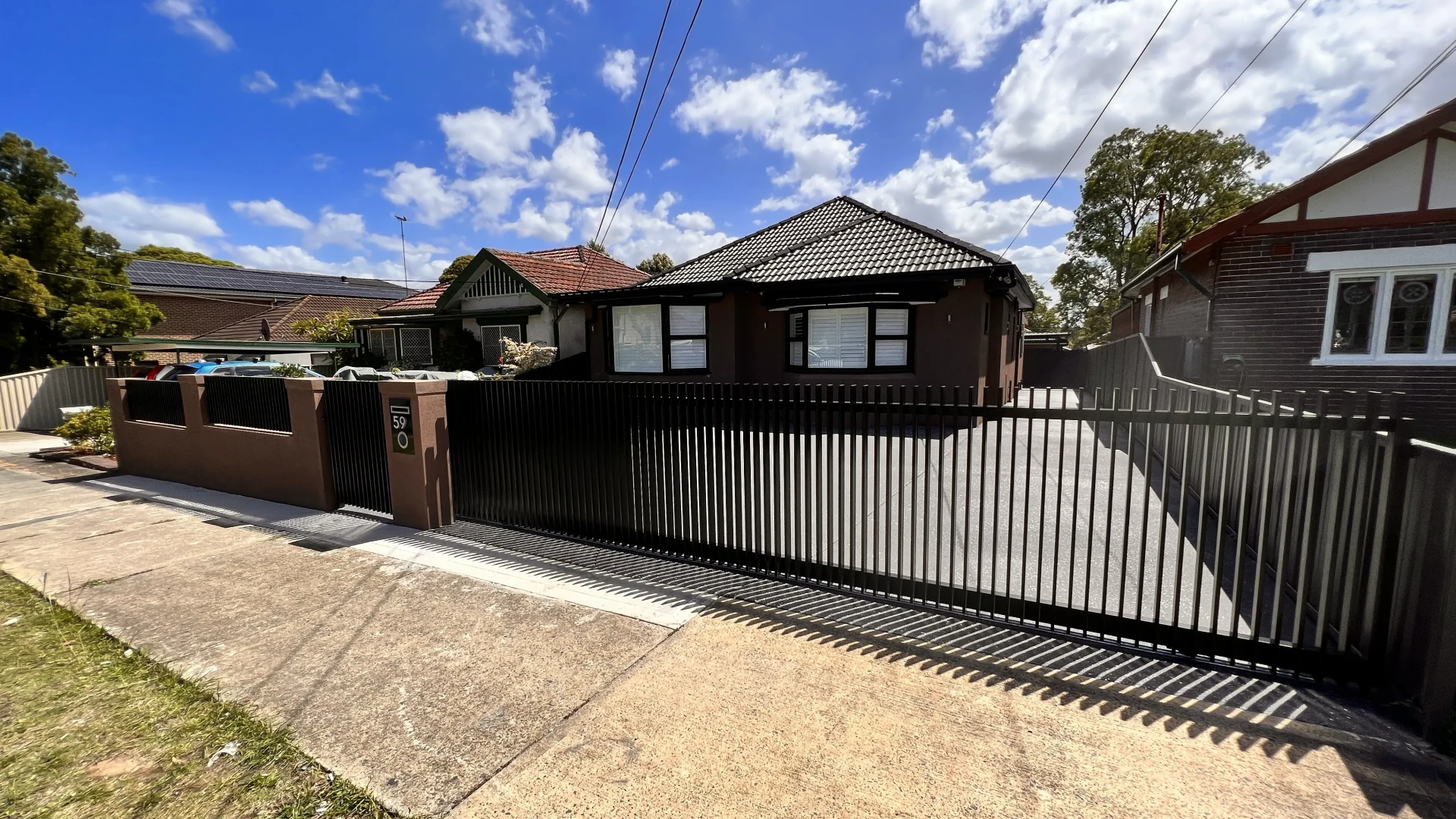
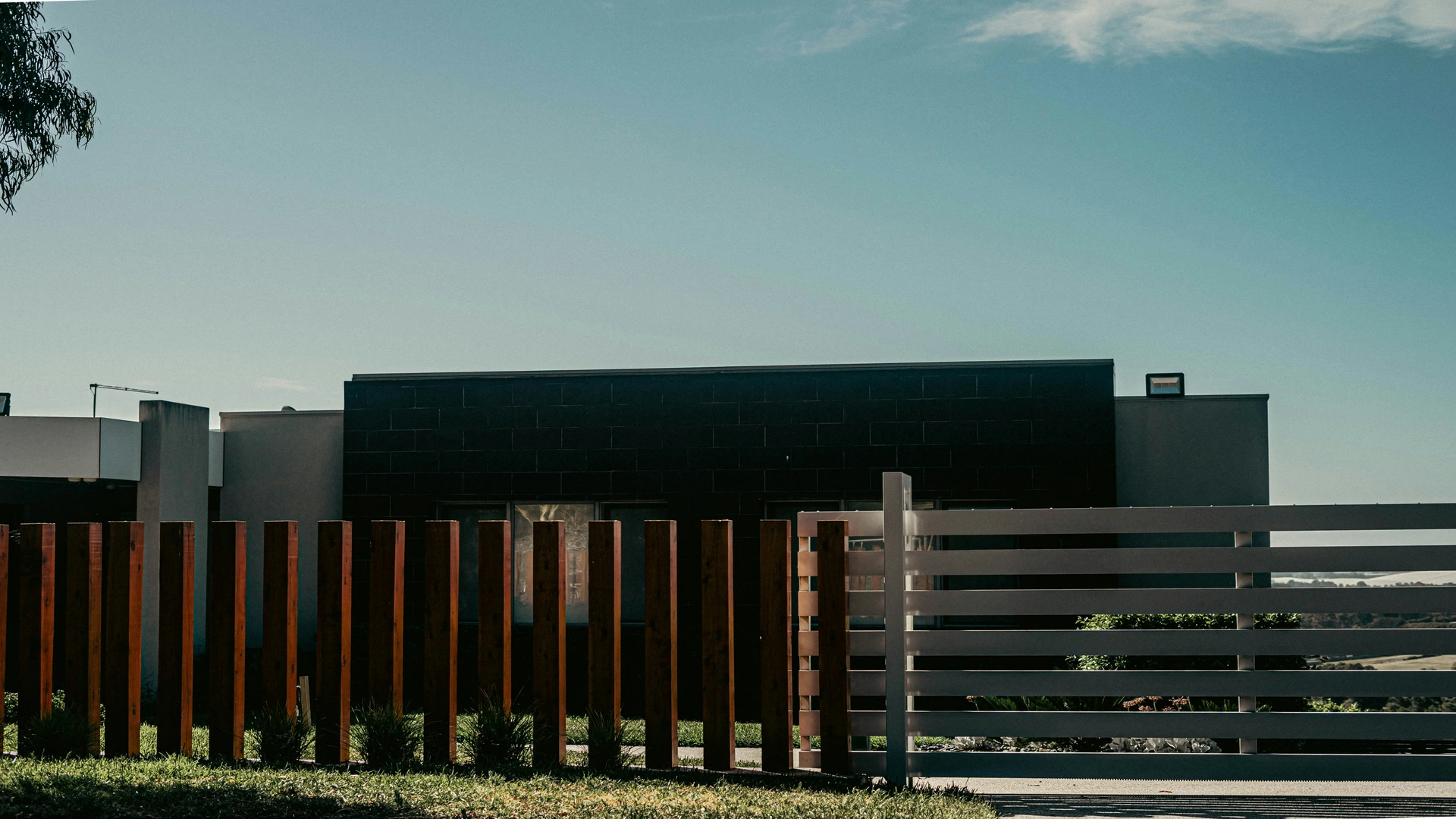
Aluminium slat fencing is a popular option for modern homes because it provides a clean architectural finish while allowing air to move through the fence. However, choosing the wrong slat spacing or installation angle can leave your backyard more exposed than you expected.
The solution is not necessarily to close every gap. With the right slat width, spacing, orientation and positioning, you can improve privacy from neighbouring properties and nearby streets while maintaining natural airflow. This guide explains how to get that balance right for homes across Brisbane, the Gold Coast and the Sunshine Coast.
1. Choose the Right Slat Spacing for Your Privacy Needs
The distance between each aluminium slat is one of the most important decisions when designing a private fence.
Wider gaps generally allow more airflow and visibility. Narrower gaps make it harder for people outside to see into your property, but they can also reduce ventilation.
There is no single spacing that suits every property. The best choice depends on your fence height, the surrounding buildings, ground levels and the direction people are likely to look from.
Consider these three approaches:
- Wide spacing: Creates a more open appearance, allows greater airflow and maintains a stronger connection with the surrounding landscape.
- Medium spacing: Provides a practical balance between privacy and ventilation for many residential backyards.
- Narrow spacing: Offers greater visual screening, particularly where neighbouring windows or outdoor living areas overlook your yard.
Before choosing a gap, consider how the fence will look from both sides. A design that appears private when viewed straight on may allow clear visibility from an angle.
For this reason, it is worth discussing the intended viewing angles with your fabricator before production begins.
2. Use Angled Aluminium Slats to Control Visibility
One effective design option is to install aluminium slats at an angle rather than using completely flat horizontal profiles.
Angled slats can help restrict direct lines of sight while allowing air to pass through the openings. They are particularly useful when a property has a nearby neighbour, an elevated outdoor area or windows overlooking the backyard.
The angle should be selected according to the direction from which privacy is most important.
For example, if a neighbouring property overlooks your entertaining area, the slats can be designed to reduce visibility from that particular direction without completely closing the fence.
However, angled slats are not automatically private from every viewing position. Their effectiveness depends on the angle, spacing, profile depth and installation height.
A custom design is often more suitable than selecting a standard fence configuration without considering the property’s layout.
3. Consider Slat Width and Profile Depth
Spacing is only one part of the design. The width and depth of each aluminium slat also affect how much of your property can be seen from outside.
Wider slats can create a stronger visual barrier, particularly when combined with smaller gaps. Deeper profiles may also help control visibility from oblique angles.
When comparing designs, consider:
- The width of each individual slat.
- The depth and shape of the aluminium profile.
- The gap between neighbouring slats.
- Whether the slats are horizontal or vertical.
- The overall height of the completed fence.
For example, a fence with relatively wide slats and carefully controlled gaps may provide better screening than one with narrow slats and large openings.
It is important to look at a physical sample where possible. Product images do not always show how a particular profile behaves when viewed from different angles.
4. Choose the Right Fence Design and Materials

Aluminium is a practical material for outdoor fencing, but the finish and overall construction still matter.
For Queensland properties, the combination of heat, UV exposure, humidity and coastal salt can influence how well an outdoor installation performs over time.
Powder-coated aluminium
Powder-coated aluminium is a popular choice for residential slat fencing because it offers a finished surface in a range of colours.
It can complement modern homes, rendered walls, landscaping and outdoor entertaining areas.
For properties closer to the coast, discuss the appropriate coating system and maintenance requirements with your fabricator. Material selection and surface preparation should suit the property’s exposure conditions.
Stainless steel components
Stainless steel can be suitable for selected brackets, fixings and architectural details.
However, stainless steel is not completely immune to corrosion. The appropriate grade, finish and maintenance requirements should be considered, particularly in coastal locations.
Timber louvres
Timber louvres provide a different architectural appearance and can be considered where a warmer, more natural finish is preferred.
They require different maintenance considerations from aluminium, including attention to the timber’s coating and exposure to moisture and sunlight.
The right material depends on the design, location, budget and level of ongoing maintenance you are comfortable with.
For a broader look at the available fabrication options, explore AMG Fabrication’s custom metal and glass services.
5. Position Your Fence to Improve Backyard Privacy
Even a well-designed slat fence can provide disappointing results if it is installed without considering the surrounding property.
Before finalising the design, identify the areas where privacy matters most.
For example:
- A backyard entertaining area overlooked by neighbouring homes.
- A swimming pool or outdoor shower.
- A ground-floor living room with windows facing the boundary.
- A patio or verandah close to a public footpath.
- A side boundary where neighbouring properties have elevated ground levels.
You may not need the same privacy level along the entire boundary.
A combination of aluminium slat fencing and strategically positioned privacy screens can sometimes provide a better result than using a completely closed fence everywhere.
Plants and landscaping can also help soften the appearance of the fence. However, vegetation should be treated as a complementary screening feature rather than a replacement for a properly designed boundary barrier.
If you are considering a more enclosed outdoor area, custom privacy screens and louvres may also be worth exploring.
6. Understand Queensland Fence Requirements Before Installation
Privacy should never come at the expense of safety, structural performance or compliance.
In Queensland, fence requirements can depend on the property, proposed height, location and intended use.
For example, Brisbane City Council explains that building approval is generally required for a boundary fence exceeding 2 metres above natural ground level. Other planning requirements may also apply depending on the property and development conditions.
You can review the Brisbane City Council boundary fence approval requirements before proceeding.
If your aluminium slat fence forms part of a swimming pool barrier, additional pool safety requirements apply. A standard privacy fence should not automatically be assumed to meet pool barrier requirements.
The Queensland Government pool safety guidance is a useful starting point.
For broader building requirements, consult the National Construction Code.
Requirements can vary and change. Confirm the applicable planning, building and safety requirements with a licensed building certifier or suitably qualified professional before installation.
It is also worth discussing boundary ownership with your neighbour before replacing or modifying an existing dividing fence. Queensland’s guidance on fence ownership and responsibilities explains the general responsibilities of adjoining property owners.
7. What Affects the Cost of Aluminium Slat Fencing?
The cost of an aluminium slat fence depends on more than the total length of the boundary.
A straightforward design with standard profiles and easy site access will generally involve different fabrication and installation requirements from a custom fence with angled slats, varying heights or integrated gates.
The main cost factors include:
- Fence dimensions: Overall height and total lineal metres.
- Slat design: Profile width, depth, spacing and orientation.
- Privacy requirements: Tighter spacing or angled profiles may require additional material and fabrication work.
- Colour and finish: Standard powder-coated finishes and specialised coating requirements can affect the specification.
- Site conditions: Sloping ground, existing structures, access limitations and ground preparation.
- Posts and foundations: Support requirements depend on the fence design and site conditions.
- Gates: Integrated pedestrian or driveway gates add hardware and fabrication requirements.
- Installation complexity: Custom measurements, difficult access and unusual boundary conditions can influence labour costs.
Rather than comparing quotes using price alone, check that each proposal includes the same fence height, material specification, spacing, finish, posts, gates and installation scope.
This makes it easier to understand what you are paying for and avoid unexpected changes during the project.
8. Maintenance Tips for Aluminium Slat Fencing in Queensland
Although aluminium is a practical outdoor material, it still needs regular care.
Queensland’s climate can expose fences to strong sunlight, rain, humidity and airborne salt, particularly around Brisbane’s bayside suburbs and coastal areas.
A simple maintenance routine can help keep the finish in good condition.
Clean the fence periodically. Use fresh water and a mild detergent to remove dust, dirt and salt deposits. Rinse thoroughly and avoid abrasive cleaning products that may damage the coating.
Inspect fixings and connections. Check visible brackets, screws, posts and gate hardware for looseness, corrosion or signs of movement.
Look for coating damage. Scratches, chips and damaged areas should be assessed and repaired using a coating repair method suitable for the finish.
Check drainage around the posts. Water should not remain pooled around the fence foundations. Poor drainage can contribute to deterioration of surrounding materials and fixings.
Pay attention after storms. Inspect the fence for movement, damaged connections or impact from fallen branches and other debris.
The correct maintenance frequency depends on the coating system and the property’s exposure. Coastal installations may need more frequent cleaning than fences in sheltered inland locations.
9. Common Mistakes to Avoid When Designing a Private Slat Fence
A few design decisions can make the difference between a fence that works well and one that creates ongoing problems.
Making the gaps too wide. This can leave direct sightlines into your backyard, particularly from elevated neighbouring properties.
Closing every gap unnecessarily. A completely enclosed design may reduce the ventilation and open appearance you originally wanted.
Ignoring viewing angles. Privacy should be assessed from the actual positions of neighbouring windows, balconies, footpaths and outdoor areas.
Choosing a finish based on appearance alone. The coating and components should be appropriate for the property’s environmental exposure.
Overlooking gate design. A private fence can still have a visibility gap around a poorly designed pedestrian or driveway gate.
Skipping site measurements. Uneven ground, existing retaining walls and boundary conditions can affect the finished result.
Forgetting future maintenance. Make sure the design allows reasonable access to clean the fence and inspect its connections.
10. Questions to Ask Before Buying Aluminium Slat Fencing
Before committing to a design, ask your fabricator a few practical questions:
- What slat spacing will provide the right balance between privacy and airflow?
- Can the slats be angled to reduce visibility from neighbouring windows?
- Which aluminium profile and coating are suitable for my property’s location?
- How will the fence accommodate changes in ground level?
- Are the posts and foundations suitable for the proposed fence design?
- Are gates included in the design and quotation?
- What approvals or compliance checks are required?
- What maintenance will be needed over time?
A good fabricator should be able to explain the advantages and limitations of the proposed design rather than simply recommending the most enclosed option.
For homeowners considering a broader outdoor upgrade, AMG Fabrication also provides custom balustrade solutions for balconies, decks and other suitable applications.
Frequently Asked Questions
1. How can I make aluminium slat fencing more private?
You can improve privacy by reducing the spacing between slats, choosing wider or deeper profiles, and considering angled slat designs. The best combination depends on the viewing angles around your property and how much airflow you want to maintain.
2. Does aluminium slat fencing block airflow?
No. Aluminium slat fencing is designed with openings between the profiles, allowing air to pass through. However, the amount of airflow depends on the slat spacing, profile design and overall fence configuration.
3. Are angled aluminium slats better for privacy?
Angled slats can help reduce direct visibility from particular directions while retaining openings for ventilation. Their effectiveness depends on the angle, spacing and surrounding layout.
4. Is aluminium slat fencing suitable for coastal Queensland?
Aluminium can be a suitable fencing material for coastal properties. However, the coating specification, fixings, installation details and maintenance routine should be selected with exposure to airborne salt and moisture in mind.
5. Can I install aluminium slat fencing along an existing boundary?
Potentially, yes. However, you should check the condition of existing posts and foundations, confirm boundary ownership and obtain any required approvals before proceeding. Structural suitability should be assessed before attaching a new fence to an existing structure.
6. Does aluminium slat fencing require much maintenance?
It generally requires routine cleaning and occasional inspections. Removing salt deposits, checking fixings and addressing coating damage early can help maintain its appearance and condition.
7. Can aluminium slat fencing be custom-made?
Yes. Custom fabrication allows the fence height, slat profiles, spacing, orientation, colour and gate configuration to be designed around the property. This can be particularly useful when privacy requirements differ across the boundary.
Conclusion: Get the Right Balance Between Privacy and Airflow
Making aluminium slat fencing more private does not mean turning your backyard into a completely enclosed space. The right combination of slat spacing, profile depth, orientation and positioning can help reduce unwanted visibility while retaining ventilation and a modern appearance.
The important thing is to design the fence around your property rather than choosing a standard configuration without considering the surrounding environment.
AMG Fabrication provides custom metal fabrication, design, manufacture and installation for residential and commercial projects across Brisbane, the Gold Coast and the Sunshine Coast.
With more than 20 years of welding experience behind founder Sam, AMG Fabrication can help you discuss suitable options for your property.
Contact AMG Fabrication to arrange a free consultation and receive an obligation-free quote for your fencing project.