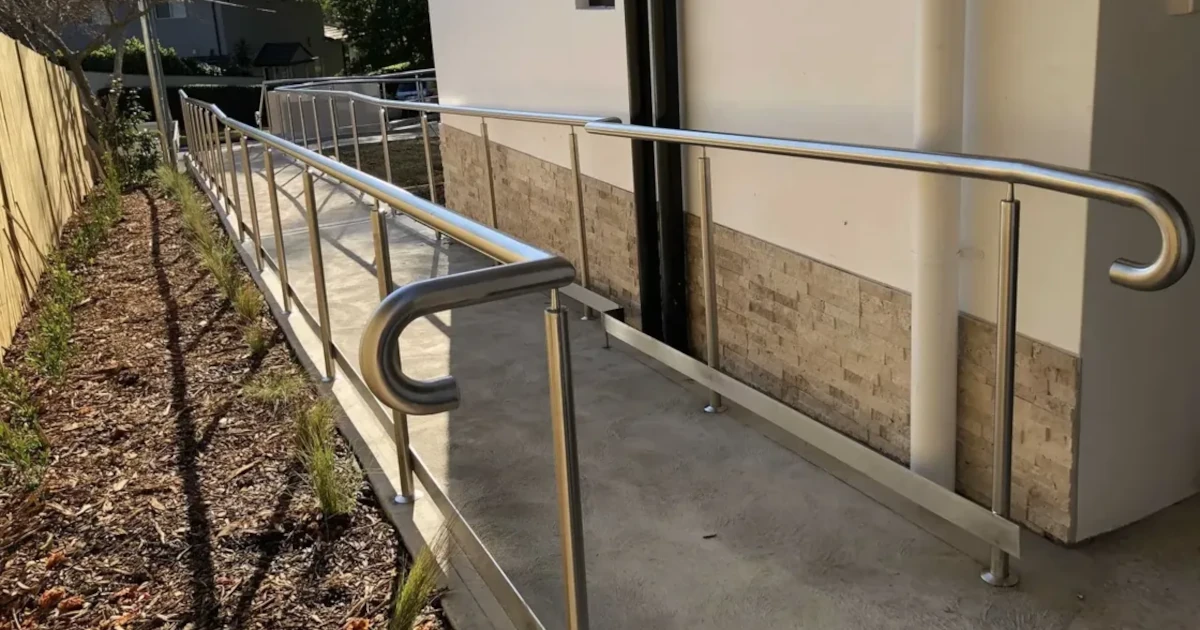
For most Queensland homes, powder-coated aluminium is the lower-maintenance outdoor default: it will not rust, takes colour, and copes with heat and UV. Stainless steel is the premium, high-traffic choice — specify 316 near the coast or it can tea-stain. Pick by site, grip and finish, not by which metal sounds stronger.
Choosing a stair or deck rail in Brisbane is not just a style call. Salt, UV, storms and wet treads decide how that rail looks in five years, and whether it still feels safe in the hand.
This comparison is for homeowners (and the builders quoting them) who are deciding between aluminium vs stainless steel handrails for a house, duplex or small commercial entry. It covers climate, grades, NCC height in plain English, cost factors, maintenance, and the questions to ask before you sign a quote. AMG Fabrication designs, fabricates and installs custom handrails in aluminium, stainless steel and galvanised steel across Brisbane, the Gold Coast and the Sunshine Coast.
If you need the basics of where a rail should run on a stair, start with AMG’s [stair handrail complete guide] and come back here for the materials decision.
Aluminium vs stainless steel handrails in Queensland conditions
Queensland is hard on metal that people touch every day.
Heat and UV fade cheap coatings and heat polished stainless until it is uncomfortable in summer. Coastal salt on the Gold Coast and Sunshine Coast pits the wrong stainless grade and stains cheap fasteners. Humidity and pool chlorine (even when the rail is not a pool fence) leave a film that shows on a mirror polish. Storms work fixings loose if the wall or stringer was never sound.
Aluminium wins on rust: the metal itself does not corrode like steel. Its finish is the powder coat. Stainless wins on a “always metal” look and a heavy, rigid feel. Its finish is the grade and the polish — 304 inland can be fine; 316 is the usual coastal conversation.
Galvanised steel is AMG’s third option for heavy-duty or budget outdoor runs. This article stays on aluminium vs stainless, because that is the choice most Queensland homes actually make.
How powder-coated aluminium handrails perform
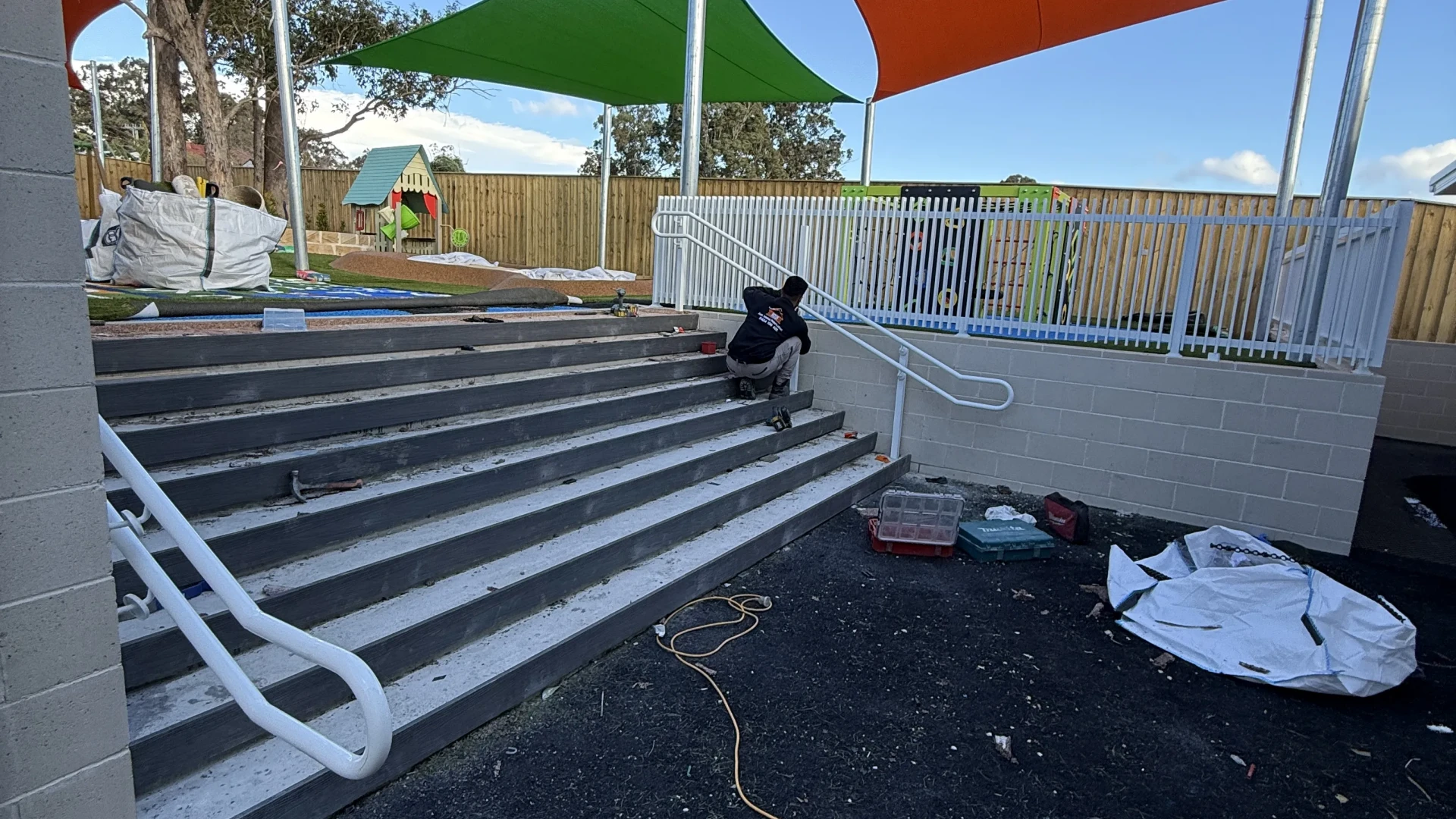
Aluminium handrails are light, easy to set out on site, and simple to colour-match to windows, fascia or a staircase balustrade.
Strengths
- Will not rust through in Brisbane humidity or Gold Coast salt
- Powder coat in a wide colour range (including darker architectural tones)
- Comfortable in the hand; less “ice-cold” than stainless in winter, less glare in summer
- Often the more cost-effective installed metre for a straightforward residential flight
- Sensible for outdoor stair handrails, decks and verandah entries
Watch-outs
- The coating is the wear surface. North- and west-facing rails cop more UV. A thin, poorly pre-treated coat will chalk and chip
- Steel screws in aluminium posts stain and loosen. Specify compatible fasteners
- Light sections can feel less solid on a long, open run if posts are too far apart
- Deep scratches through the coat are visible; they do not rust like steel, but they look tired
For a typical suburban house away from breaking surf, a well-coated aluminium rail is often the one you forget about — which is what most owners want.
How stainless steel handrails perform (304 vs 316)

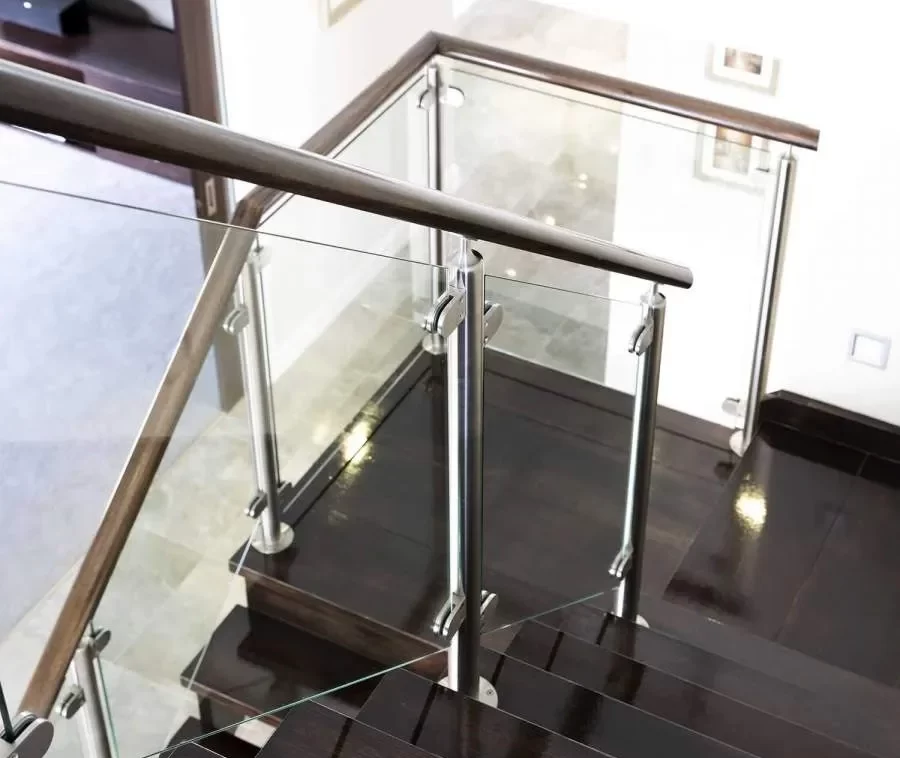
Stainless is the rail people picture on a modern stair: round tube, brushed or polished, often paired with glass. AMG’s stainless steel handrails in Brisbane page covers finishes and typical uses; the durability question is mostly grade.
304 is common inland and indoors. It can still mark. In salty air it is more likely to tea-stain (brown spotting) if it is not cleaned.
316 (marine grade) has better resistance to chlorides. For Gold Coast canal estates, Sunshine Coast beachside, and anything within a short drive of breaking surf, 316 is the specification worth paying for. Mirror polish sheds salt a little more readily than a heavy brush, but both need washing.
Strengths
- Rigid, premium feel; good for high-traffic commercial entries as well as homes
- No powder coat to fade — the metal is the finish
- Pairs cleanly with glass balustrades and standoff stairs
- Long service life when the grade and welding (passivation after fabrication) are right
Watch-outs
- Tea staining on the coast if you fit 304, skip washing, or leave weld scale
- Fingerprints and water spots on polished tube — more obvious than powder coat
- Can get hot in full western sun
- Dissimilar-metal contact (stainless tube, mild-steel bracket, aluminium post) causes staining and local corrosion
- Higher typical installed cost than a simple aluminium run
Stainless is not automatically “the one that lasts longer”. The wrong grade outdoors in Queensland can look worse than aluminium in two summers.
Indoor stairs, outdoor stairs, and the coast
A handrail is not a pool barrier. If the stair sits beside water, the pool fencing still has to do the legal barrier job on its own.
Where the stair is also a fall edge, the rail often sits on or with a balustrade. A glass balustrade with a stainless offset rail is a typical modern combo; aluminium tubular can do both barrier and grip if the profile is graspable.
NCC handrail height and what actually applies
Materials do not override the code. For most Class 1 houses, the NCC Housing Provisions on barriers and handrails (opens in a new tab) set out when a handrail is required and a minimum height of 865 mm measured vertically above the nosings of the treads (or the ramp surface). AMG’s own contact FAQ summarises typical Australian practice as roughly 865–1000 mm depending on location and purpose.
The ABCB FAQ on stairways, barriers and handrails (opens in a new tab) is a readable overview: a rail is generally required on at least one side of a flight where the change in elevation is 1 m or more, and it should run the length of that flight (with some rules where the rail is part of a barrier).
That is a summary, not a design. The NCC is updated; concessions exist for short rises; apartments and public buildings use different Volume One clauses; accessible design can require a second, lower rail. Confirm on your drawings with a licensed installer and the building certifier. Do not treat a blog height as a substitute for the current code.
Workplaces are a different conversation. Safe Work Australia’s model Code of Practice on managing the risk of falls at workplaces (opens in a new tab) points to safe access (including stairs with fixed handrails) and to AS 1657 for industrial platforms, walkways and ladders. AS 1657 is a paid standard — do not copy it from a random website. If the stair is for plant access or a warehouse, say so on the quote so the height, diameter and loads are specified correctly.
Grip matters as much as height: a round or oval profile you can actually close a hand around, continuous where required, with enough clearance off the wall. A pretty 80 mm box section that you cannot hold is a poor handrail, whether it is aluminium or stainless.
Cost factors (Queensland estimates)
AMG does not publish a single handrail rate, because geometry dominates. These 2026 South East Queensland estimates are for budgeting only. Site access, length, bends, core-drilling, wall type, finish and whether a full balustrade is included will move the figure. GST treatment depends on the quote.
Powder-coated aluminium, simple residential run – Often about $200–$400 per lineal metre
Stainless steel, 304, straightforward indoor/outdoor – Often about $250–$550 per lineal metre
316 stainless, polished, bends, glass offsets, commercial – Often $400–$600+ per lineal metre
Small single flight (supply and install) – Commonly $1,500–$6,000+ all-in, depending on material and length
You are paying for welding and fit as much as for metal. A cheap stainless kit with 304 tube and plated brackets can cost more to live with on the coast than a properly coated aluminium rail.
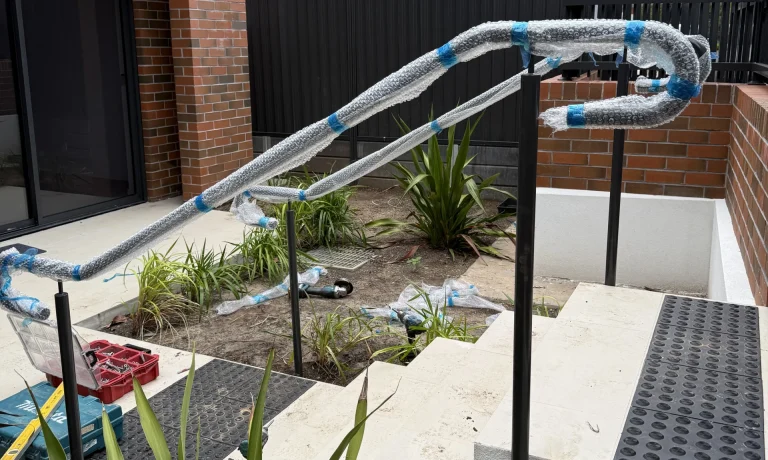
Ask for the grade, coat system, fastener spec and whether measure, fabricate and install are one contract. AMG’s work includes a 3-year product warranty and defect rectification on the fabrication supplied.
Maintenance that actually extends life
Aluminium
- Wash with mild soapy water a few times a year; more often near the beach
- Rinse after storms so salt does not sit in joints and end caps
- Check powder coat for chips; small touch-ups stop the rail looking patchy
- Re-check wall plugs and post fixings after the first wet season
Stainless
- Wash salt and fingerprints off; a dedicated stainless cleaner beats abrasive pads
- On the coast, a monthly hose-down is cheaper than living with tea stain
- Inspect welds and brackets for brown bloom; early clean-up is easier than later
- Do not mix steel wool or carbon-steel tools with stainless — they leave rust seeds
Both
- Confirm the rail is still tight, continuous, and at height after renovations (new tiles and decking steal millimetres)
- Keep the grip dry where possible; outdoor treads plus a slippery rail is how falls start
- Kids and older relatives need a rail they can actually grab, not only a visual line
What to check before you buy
Indoor, covered, or salt? That one answer often chooses aluminium vs 316 stainless for you.
What grade of stainless is on the quote? If it does not say 304 or 316, ask.
What powder-coat system is on the aluminium? Pre-treatment matters more than the colour name.
What fasteners? No mild-steel screws in aluminium or stainless.
Is this a handrail, a balustrade, or both? Heights and infill rules differ.
Which code applies — house NCC, apartment, or workplace AS 1657? Get it in writing.
Who measures, welds and installs? One workshop is simpler when a bend does not match the wall.
If the quote is only a lineal-metre rate with no grade or coat, you are not comparing like with like.
Which should you choose?
Choose aluminium if the rail is outdoors, you want a colour, you want less wiping, and you are not chasing a polished showpiece. Specify a proper powder coat and the right screws.
Choose 316 stainless if you want a metal finish, a heavier feel, a match to glass, or a coastal/commercial job that will be seen every day. Budget for washing.
Choose 304 stainless mainly indoors, or well inland, and still plan to clean it.
Choose a mix when the internal stair is stainless and the backyard flight is aluminium — that is a normal, durable split.
There is no statewide winner. The longer-lasting handrail in Queensland is the one specified for salt or suburb, set at a graspable height, and washed like any other piece of outdoor metal.
Frequently asked questions
Is aluminium or stainless steel better for outdoor handrails in Queensland?
Aluminium is usually the easier outdoor default because it does not rust and a good powder coat handles UV. Stainless is better as a premium metal finish if you use 316 near the coast and wash it. 304 stainless outdoors in salt air is the combination that disappoints people.
Do I need 316 stainless steel handrails on the Gold Coast?
If the house sees salt spray or sits close to the water, 316 is the sensible grade. Inland suburbs can often use aluminium instead of paying for marine-grade tube. A site look is more useful than a suburb rule of thumb.
What height should a stair handrail be in Australia?
For many houses, the NCC housing provisions require the top of the handrail at not less than 865 mm above the nosings, on at least one side of a flight with a 1 m or greater rise. Other buildings and accessible stairs differ. Confirm the current NCC clause with your certifier — this is not legal advice.
How much do custom handrails cost in Brisbane?
A simple aluminium run often lands around $200–$400 per lineal metre installed; stainless is often higher, especially in 316 with custom bends. Small flights commonly total from about $1,500 into several thousand dollars. These are estimates only. A measure is the real price.
Will stainless steel rust near the beach?
True stainless does not rust like mild steel, but 304 can tea-stain. Welds that were never cleaned, steel contamination, and no washing make it worse. 316 plus a rinse routine is the coastal package.
Can I put a stainless handrail on a glass balustrade?
Yes. Offset stainless rails on glass are a standard fabrication detail when the glass is specified as a barrier and the rail is specified as a graspable handrail. The two jobs are related but not identical.
Does a 3-year warranty cover tea staining or faded powder coat?
A product warranty covers defects in the work and materials AMG supplies, not every later lack of washing or impact. Ask what is included. Coastal stainless still needs cleaning; aluminium still needs the coat looked after.
Conclusion
Aluminium vs stainless steel handrails comes down to site and finish, not a myth that stainless always lasts longer. Aluminium shrugs off rust and takes colour — its life is the powder coat and the fasteners. Stainless looks premium and feels solid — its life is the grade, the welds, and whether you wash salt off.
Specify 316 at the coast, a proper coat inland, a graspable profile at a code-compliant height, and one workshop for measure, fabrication and install.
AMG Fabrication can quote aluminium, stainless or galvanised handrails for homes and commercial stairs across Brisbane, the Gold Coast and the Sunshine Coast. Book a free consultation and obligation-free quote via the contact page.