Both can last 15–25 years or more in Queensland if they are specified well. Glass panels rarely wear out; chips and corroded hardware shorten their life. Powder-coated aluminium handles heat, UV and salt, but cheap coatings and steel screws fail first. Pick the system for your site, not a generic winner.
If you are building or replacing a pool barrier in Brisbane, the Gold Coast or the Sunshine Coast, the durability question comes up quickly: will glass outlast aluminium, or the other way around?
The honest answer is that glass pool fencing vs aluminium pool fencing is not a simple materials contest. The panels, posts, gate hardware, fixings and the Queensland climate all decide how long the fence actually lasts. This guide is for homeowners comparing options before a quote. It covers how each system ages, what fails first, compliance, cost, maintenance, and the questions worth asking before you buy.
AMG Fabrication designs, fabricates and installs custom pool fencing for residential and commercial properties across South East Queensland. The right choice is the one that stays compliant, looks the part, and holds up on your block.
Glass vs aluminium pool fencing in Queensland conditions
Queensland is hard on outdoor products. Summer UV is intense. Storms drive rain sideways. Coastal suburbs pick up salt. Inland Brisbane still gets heat, humidity and chlorine drift from the pool itself.
Glass (usually 12 mm toughened safety glass on frameless systems) is chemically stable. It does not rust, fade or warp. Its weak points are impact damage, failed silicone or gaskets, and metal hardware — spigots, clamps, hinges and latches — especially if the wrong stainless grade is used near the coast.
Aluminium does not rust like steel. A decent powder coat handles UV and salt far better than painted mild steel. Its weak points are thin sections, poor coating, mismatched screws, sagging gates, and faded or chipped finish after years of sun and pool chemicals.
So “which lasts longer?” usually means: which system still looks acceptable, still latches, and still passes a pool safety inspection in 10 or 20 years?
What actually wears out on glass pool fencing

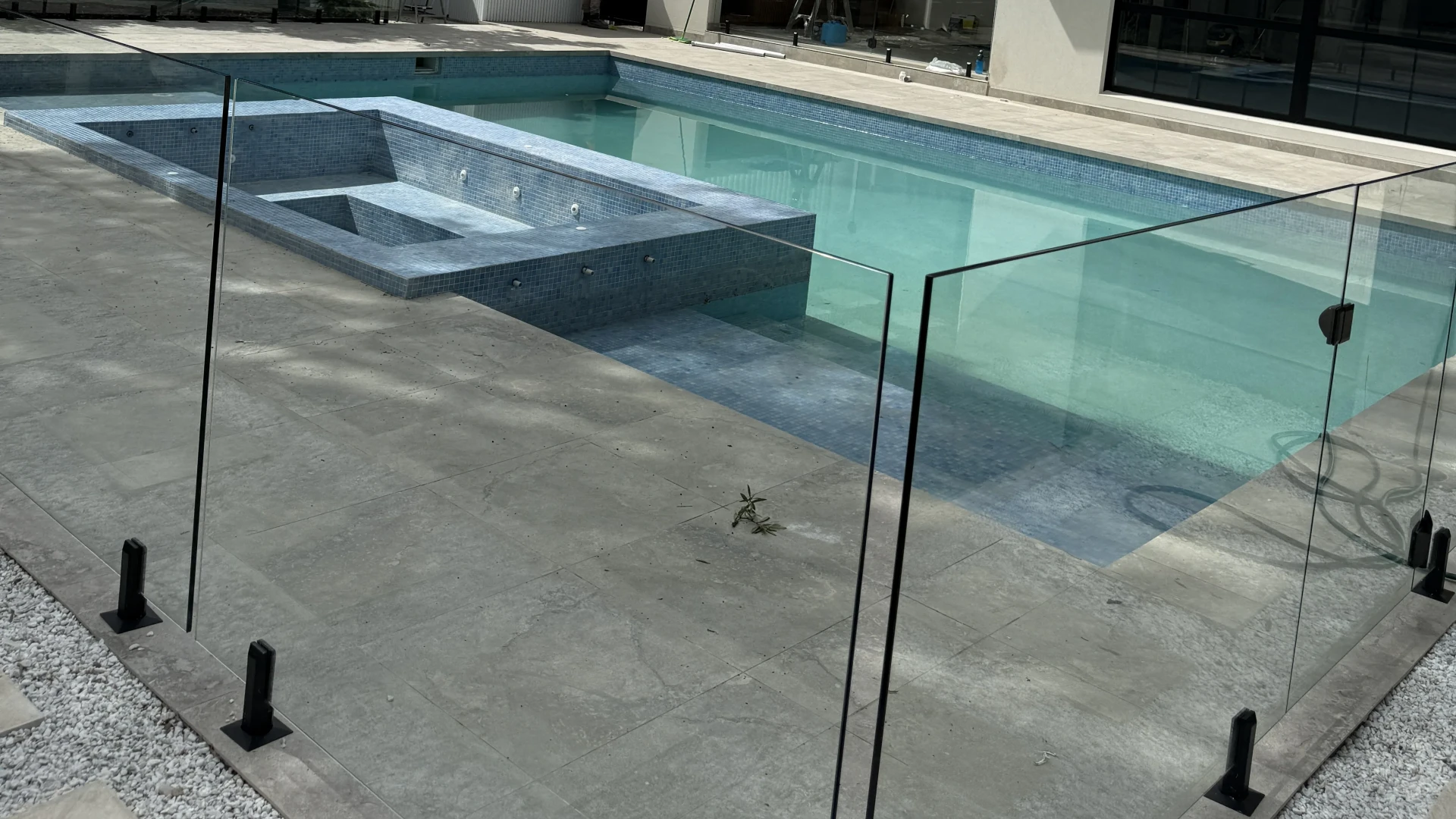
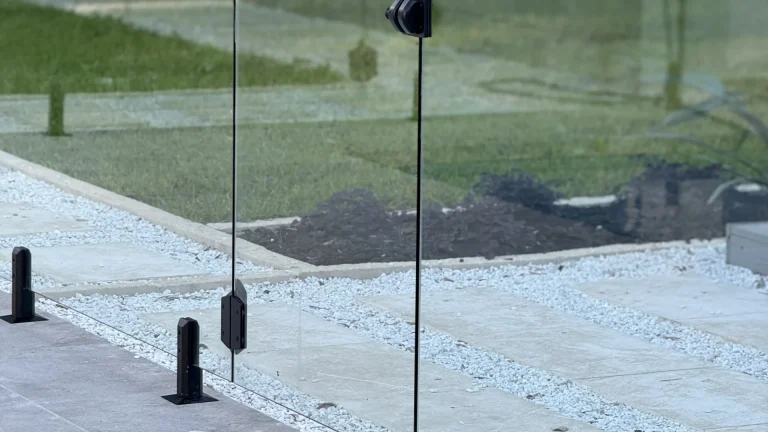
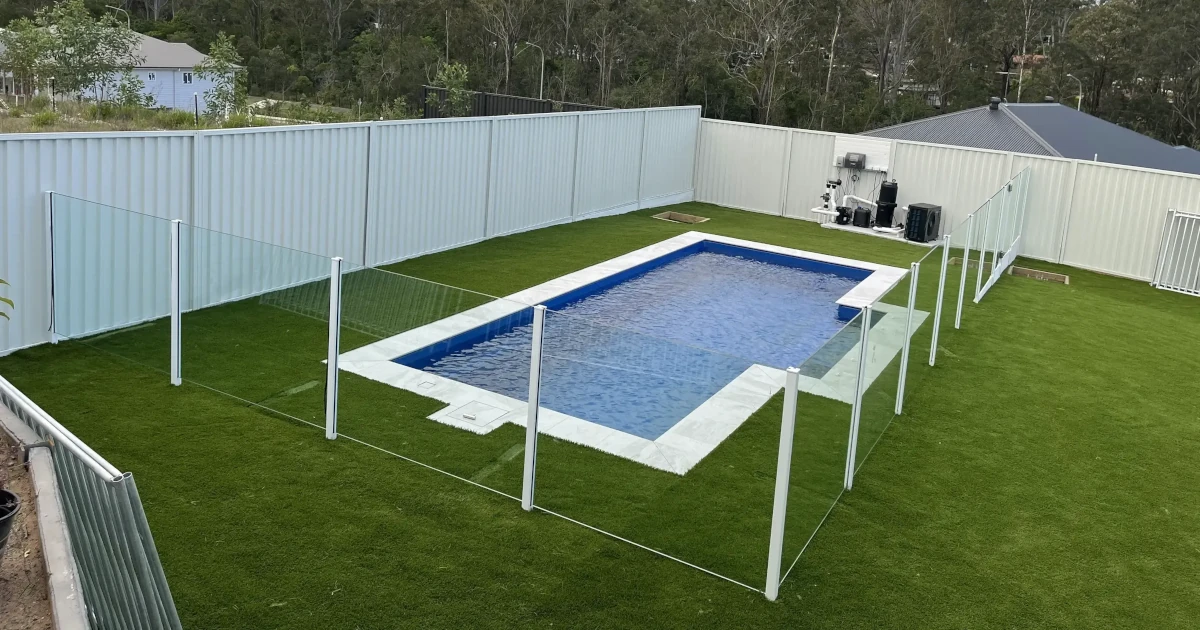
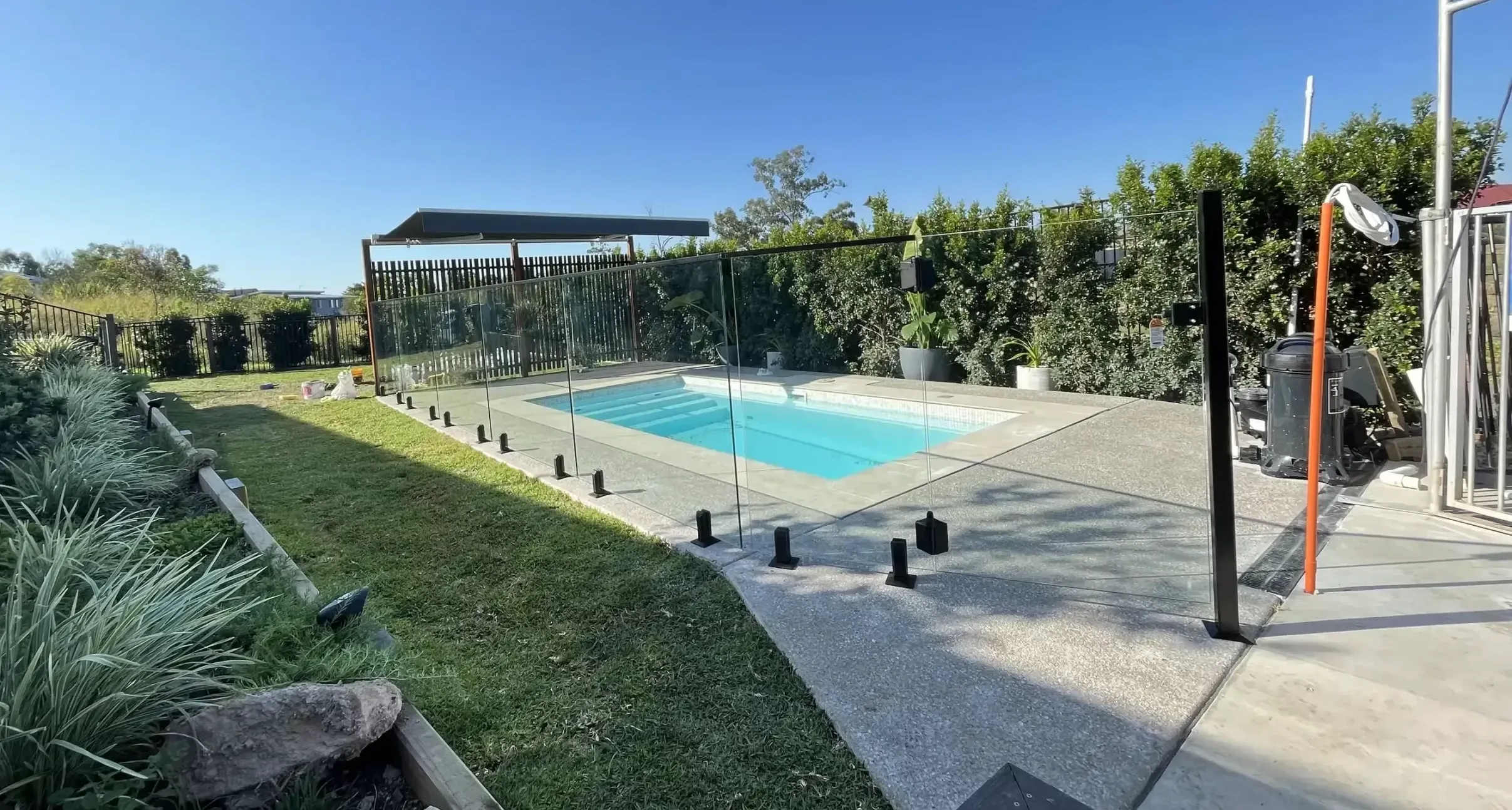
Frameless glass pool fencing uses thick toughened panels on discrete spigots. Semi-frameless glass sits in slim posts. Both can be fully compliant when designed and installed to Queensland’s pool safety standard.
Glass: Toughened panels are made for barriers. They resist the knocks of normal backyard life. They do not “wear through”. What shortens life is a stone from the mower, a fallen branch, or an impact at a corner. One damaged panel can usually be replaced without rebuilding the whole fence.
Metal: This is where coastal jobs are won or lost. Spigots, patch fittings, gate frames and fasteners need a grade that copes with salt and chlorine. Mix cheap plated screws with stainless and you invite galvanic corrosion. That is a detailing issue, not a reason to write glass off.
Most failed inspections are about the gate, not the panels. Hinges must self-close. The latch must self-latch from several open positions. Ground movement, a sagging leaf, or a closer that has lost tension will fail you even if the glass is perfect. Queensland’s pool fence and barrier rules (opens in a new tab) require the barrier — including gates — to be kept in working order.
Silicone, gaskets and core-drilled fixings sit in wet, chemical-rich conditions. Poor drainage around spigots holds salty water against the metal. That is preventable with the right install.
If you want the open, resort-style look, glass is still the durable choice provided the hardware is specified for Queensland, not just for a brochure photo.
What actually wears out on aluminium pool fencing
Aluminium pool fencing in this market is usually tubular or flat-top palisade, powder-coated in a colour that matches the house. Some owners also look at slat or blade styles. Any of those can work as a pool barrier only if heights, gaps and climbability meet the current QLD rules — not every decorative slat fence is legal around a pool.
Aluminium: It will not rust through like untreated steel. That is why it is a sensible default for Brisbane heat and Gold Coast salt. CSIRO-style atmospheric corrosion maps put much of the south-east coast in a more aggressive category than inland suburbs; aluminium still performs well there when coated properly.
Powder coat: This is the finish you live with. A properly pre-treated, architectural-grade coat can keep colour for many years. A thin, poorly prepped coat will chalk, fade and chip, especially on north and west faces. Once the coating is broken, the metal is still there, but the fence looks older than it is.
Steel screws in aluminium posts are a classic shortcut. They rust, stain the coating and loosen. Ask what screws and hinges are being used.
Aluminium gates are lighter, which is good for self-closing hardware, but long spans can rack if the frame is light and the closer is cheap. A pool fence is only as durable as its most-used moving part.
Aluminium is often the lower-maintenance survivor: it does not show water spots, and it is less likely to need a full panel replacement after one hard knock.
QLD pool fence laws: durability is also compliance
A fence that still stands but no longer complies is not “lasting”. In Queensland, pool barriers must meet the state’s pool safety standard (Queensland Development Code MP 3.4), which draws on and modifies AS 1926. Later versions of Australian Standards do not automatically apply here until they are adopted. Always confirm the current requirements with a licensed installer and, when needed, a licensed pool safety inspector. Rules can change.
In plain terms, inspectors commonly look for:
- Barrier height of at least 1200 mm from finished ground level
- Gaps under the barrier no more than 100 mm
- A non-climbable zone (commonly 900 mm) so children cannot use rails, BBQs, pots or branches as a ladder
- A gate that opens away from the pool, self-closes and self-latches
- No climbable objects left against the fence
The QBCC pool fence guidance (opens in a new tab) is a useful homeowner checklist. Selling or leasing a property with a pool usually also needs a pool safety certificate (opens in a new tab). Glass and aluminium can both pass. What fails is poor detailing: climbable horizontal rails, oversize gaps in slats, a gate that drags, or garden beds that have raised the ground and stolen your 1200 mm.
Glass used in barriers should be the correct toughened (or laminated, where specified) safety glass. AS 1288 covers glass in buildings more broadly; pool barriers have additional barrier rules. Do not treat a standard number on a quote as a substitute for a site-specific design.
Cost vs lifespan: what you are actually paying for
Upfront price is not the same as cost over 20 years.
Glass costs more to install. On AMG’s published range, glass pool fencing in Brisbane often sits around $350–$900 per lineal metre fully installed, depending on frameless vs semi-frameless, access, core drilling, gates and custom work. You are paying for the look, the view, and panels that do not fade. Budget for occasional hardware service and, rarely, a replacement pane.
Aluminium is usually cheaper per lineal metre for a straightforward tubular barrier. Estimates in South East Queensland often land below typical frameless glass pricing, but sloping sites, extra gates, demolition and non-climbable zone works change the figure. Over time you may spend less on cleaning and less on replacing a smashed panel. You may spend something later on a closer, latch or touch-up if the coat is damaged.
A hybrid is common and durable: glass where you want the view (the pool face, the entertaining edge), aluminium or a compliant slat screen where you want privacy from the neighbour. That is fabrication work, not a catalogue panel. If privacy is the main driver along a boundary, [modern slat fencing] can sit outside the pool barrier — the pool fence still has to do the legal job on its own.
For style options beyond this comparison, the modern pool fencing Brisbane guide covers frameless, semi-frameless and metal systems together.
Maintenance that actually extends life
Glass
- Rinse chlorine, sunscreen and salt off the panels; a squeegee after a hose-down keeps it looking new
- Check spigots and covers after storms; standing water at the base is a corrosion trap
- Test the gate weekly from fully open, half open and nearly closed
- Keep plants, pool toys and furniture out of the non-climbable zone
- Do not use abrasive pads or harsh acids on glass or stainless
Aluminium
- Wash with mild soapy water a few times a year, more often near the beach
- Rinse after storms so salt does not sit in joints
- Inspect powder coat for chips; small repairs stop the finish looking patchy
- Check screws, hinges and the latch the same way you would on glass
- Avoid leaning bikes, trampolines or timber against the rails
AMG’s work includes a 3-year product warranty and defect rectification. That covers manufacturing and installation issues in the early years. Long-term life still depends on the spec you choose and the care you give the gate.
What to check before you buy
Ask the fabricator these questions. The answers tell you more about lifespan than a colour chart.
- Is this a pool barrier or just a pretty fence? Confirm it will be designed to current QLD pool safety rules, including the gate.
- What glass thickness and what stainless grade? For frameless work, 12 mm toughened is the usual conversation. Near the coast, ask about 316 stainless hardware.
- What powder-coat system is on the aluminium? Pre-treatment and coat thickness matter more than the colour name.
- What fasteners are in the posts and spigots? No mild-steel screws in aluminium or stainless.
- How is the gate specified? Closer, hinges, latch height, and whether it will still close if the pavers move a little.
- Who does measure, fabricate and install? One workshop accountable for the whole job is simpler when something needs adjusting.
- What happens if a panel is damaged in five years? Replacement lead time and whether the system is still available.
If the quote is only a lineal-metre rate with no hardware spec, you are not comparing like with like.
Which should you choose?
Choose glass if you want the view, a larger-feeling backyard, and a finish that will not fade. It lasts longest when the hardware is marine-sensible and you are willing to clean it.
Choose aluminium if you want lower day-to-day fuss, a lower typical install cost, and a barrier that takes knocks without a shattered panel. It lasts longest when the coating and screws are specified properly.
Choose a mix if one side of the pool faces the living area and another faces a neighbour, a road or a wind corridor.
Matching glass at the house is straightforward if you are also planning a glass balustrade on a deck or stairs — same language of materials, different compliance rules. Pool barriers and balcony balustrades are not interchangeable designs.
There is no single winner for every Queensland block. The longer-lasting fence is the one built for salt or suburb, with a gate that still slams shut in 2036.
Frequently asked questions
Does glass pool fencing last longer than aluminium?
The glass itself often outlasts a powder-coated finish. In practice, both last a similar 15–25+ years when specified well. Aluminium usually needs less cleaning. Glass usually keeps its “new” look if the panels stay intact and the stainless hardware is the right grade.
Is aluminium pool fencing better for the Gold Coast and Sunshine Coast?
Aluminium is a strong coastal choice because the metal does not rust. Glass is also fine on the coast if spigots, gate frames and screws are marine-grade. Cheap fittings, not the glass, are what fail in salt air.
Can aluminium slat fencing be used as a pool fence in Queensland?
Only if the height, gaps, non-climbable zone and gate meet the current QLD pool safety standard. Many decorative slat fences are too climbable or have illegal openings. Treat slat as a pool barrier only when it is designed and certified as one.
How much does each option cost in Brisbane?
Glass often sits around $350–$900 per lineal metre fully installed, depending on frameless or semi-frameless spec, gates and site access. Aluminium tubular fencing is typically cheaper per metre. These are estimates only. A site measure is the only accurate price.
What causes most pool fences to fail inspection?
Gates that do not self-close or self-latch, ground that has built up under the fence, climbable objects in the 900 mm zone, and damaged or missing sections. Material — glass or aluminium — is rarely the reason on its own.
Do I need a pool safety certificate after a new fence?
You need a compliant barrier. A pool safety certificate is required in specific situations, including many sales and leases. Check the current Queensland Government pool safety pages and use a licensed inspector. AMG can install the barrier; the certificate is issued by the inspector, not the fabricator.
Will a 3-year warranty cover storm damage or a smashed panel?
A product warranty covers defects in the work and materials supplied, not every later impact or lack of maintenance. Ask what is included before you sign. Keep the gate serviced; that is the part that works every day.
Conclusion
Glass vs aluminium pool fencing comes down to how each system fails, not a myth that one material is indestructible. Glass panels are extremely durable and keep their appearance; their life is decided by hardware, chips and the gate. Aluminium shrugs off rust and daily grime; its life is decided by powder coat, fasteners and, again, the gate.
If you want a fence that still complies and still looks considered in Queensland weather, specify the details: glass thickness, stainless grade, coating quality, screws, closer and latch. Then maintain the moving parts.
AMG Fabrication can measure on site, fabricate to your layout, and install a compliant glass, aluminium or hybrid barrier. Book a free consultation and obligation-free quote for Brisbane, the Gold Coast and the Sunshine Coast via the contact page.