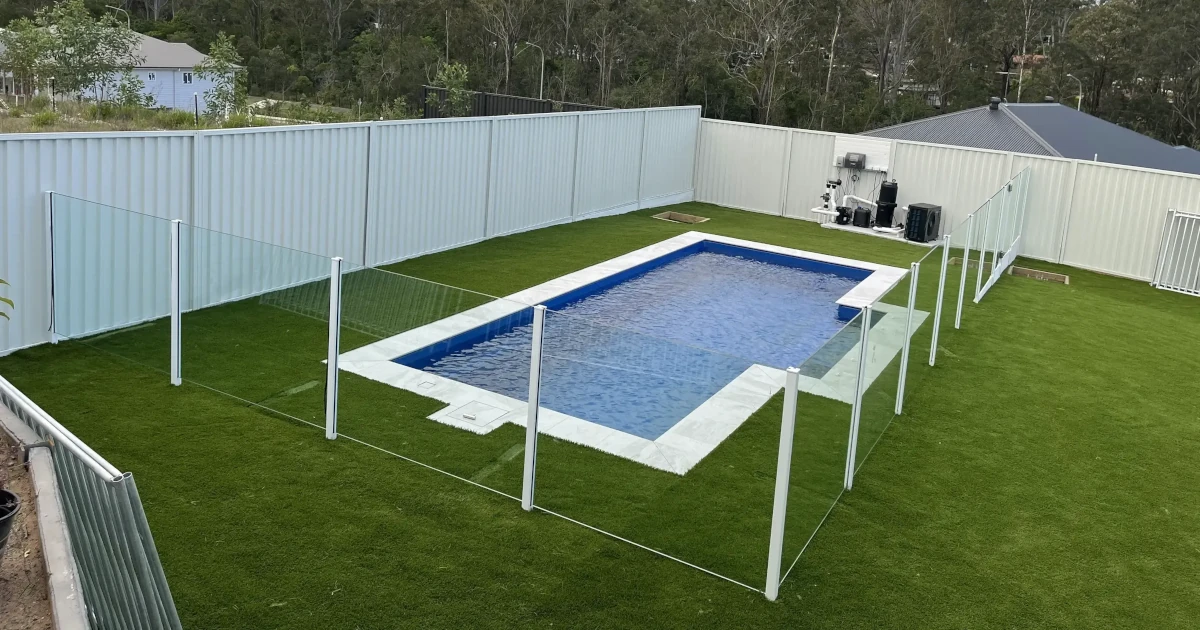
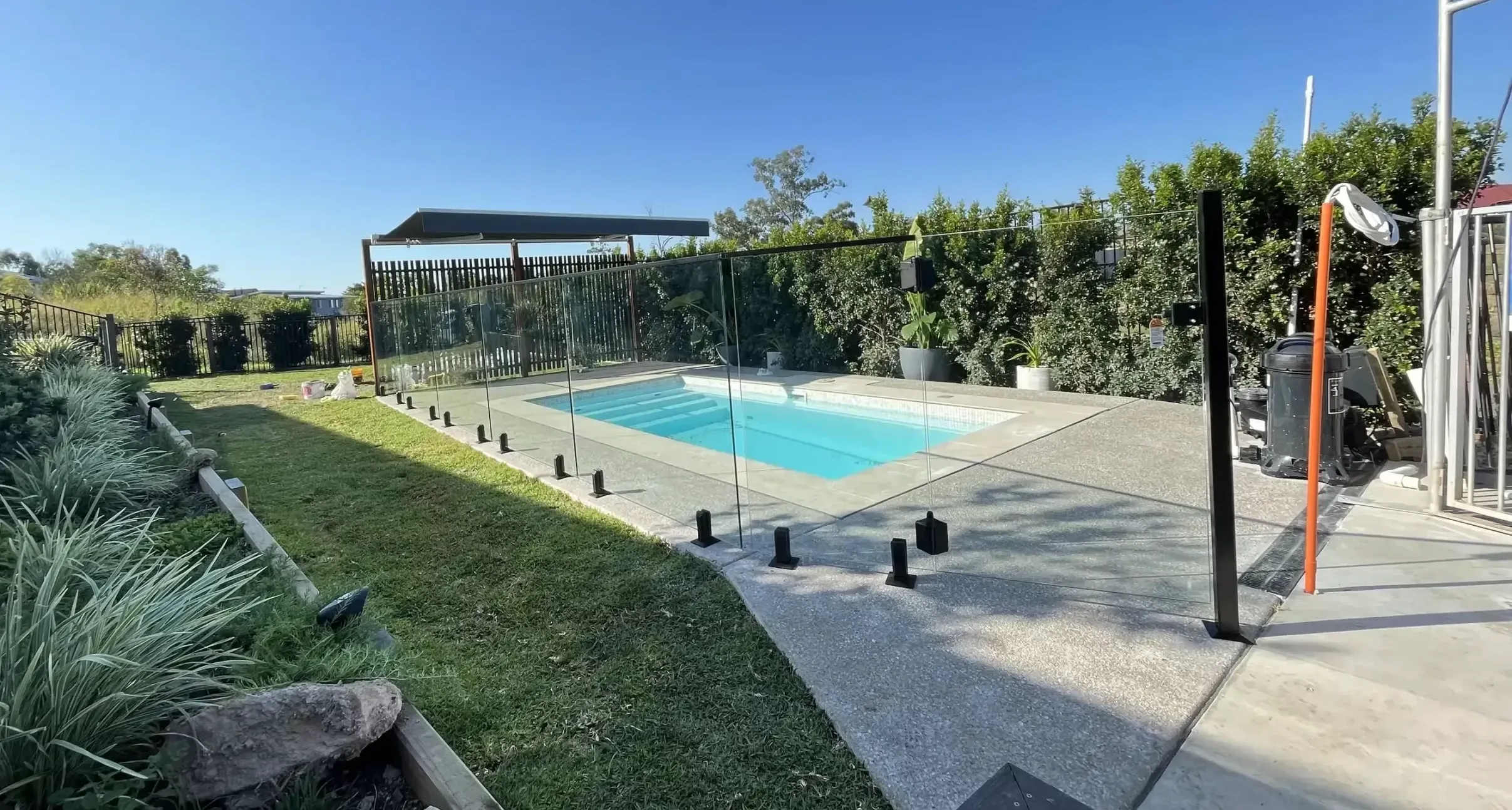
The right pool fence needs to balance safety, compliance, appearance, maintenance and site conditions. In Brisbane, homeowners can choose from frameless glass, semi-frameless glass and aluminium pool fencing. The final cost depends on the fence length, materials, access, ground conditions, gate requirements and installation details.
Choosing pool fencing in Brisbane is not simply about finding a fence that looks good around the pool.
Your pool barrier needs to suit the layout of the property, work with gates and surrounding structures, withstand Queensland conditions and comply with the requirements that apply to your pool.
For homeowners planning a new pool, renovating an existing outdoor area or replacing an older barrier, the main decisions usually come down to glass vs aluminium, the overall design, compliance and cost.
This guide explains the main pool fencing options, what affects the price, common Queensland safety requirements and what to check before you engage a fabricator.
What type of pool fencing is available in Brisbane?
AMG Fabrication provides three main pool fencing options: frameless glass, semi-frameless glass and aluminium.
Each has a different appearance and maintenance profile, so the right choice depends on the pool area and the surrounding property.
Frameless glass pool fencing
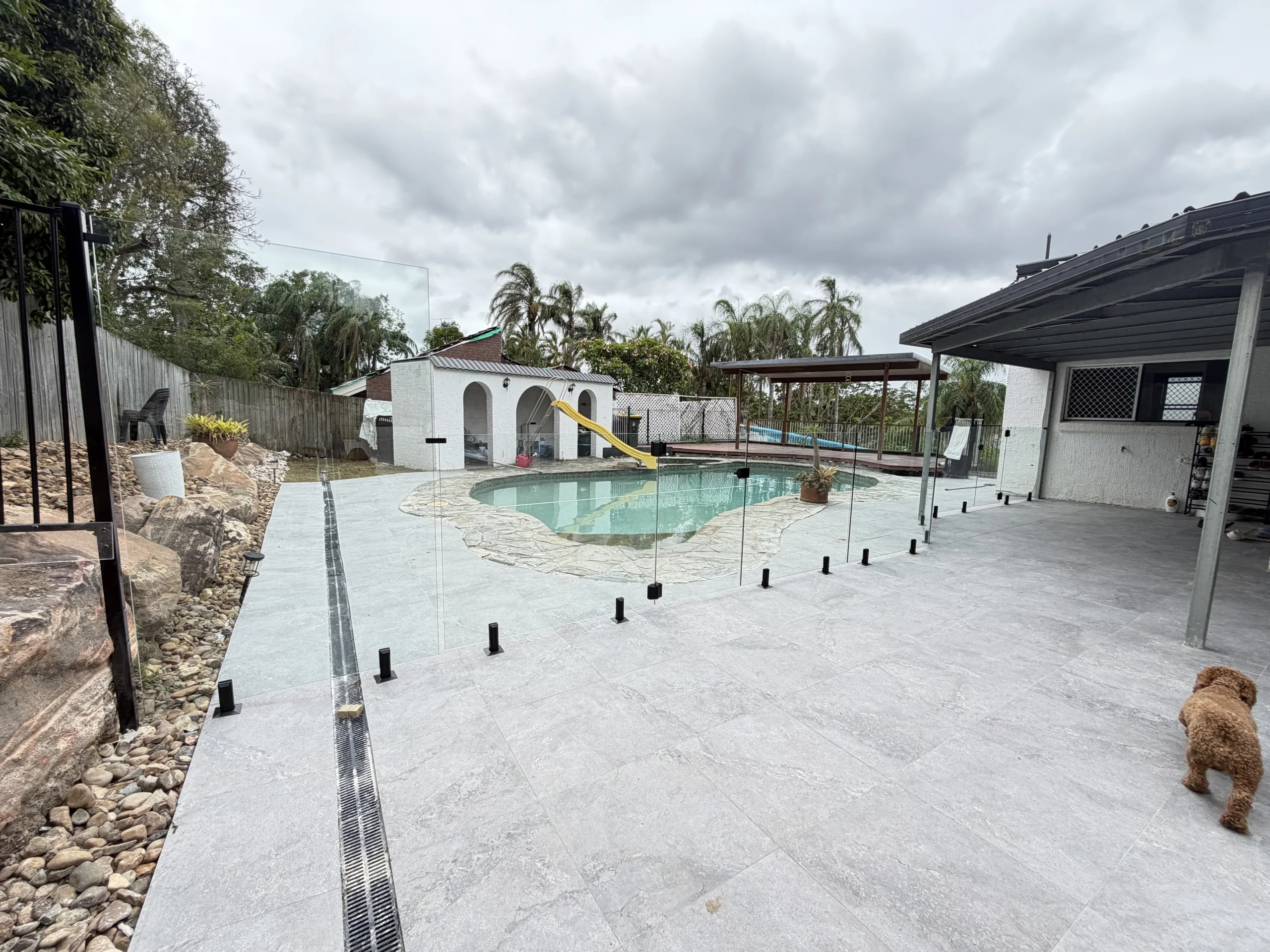
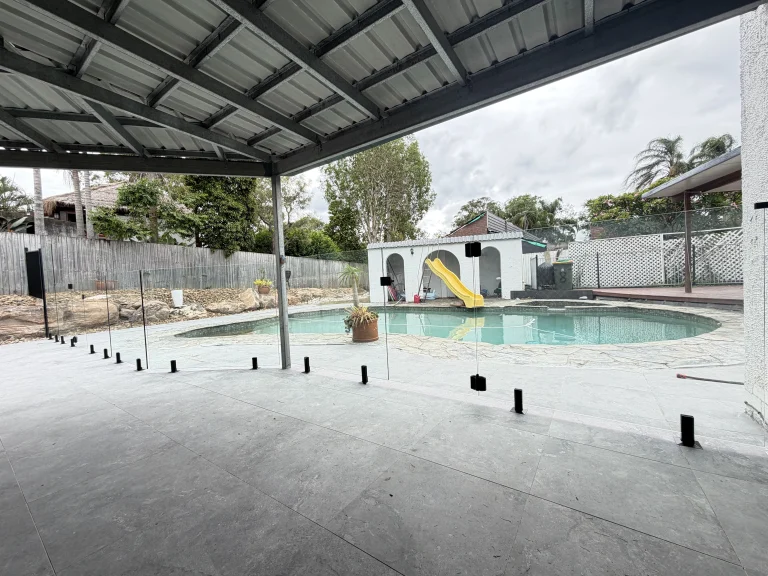
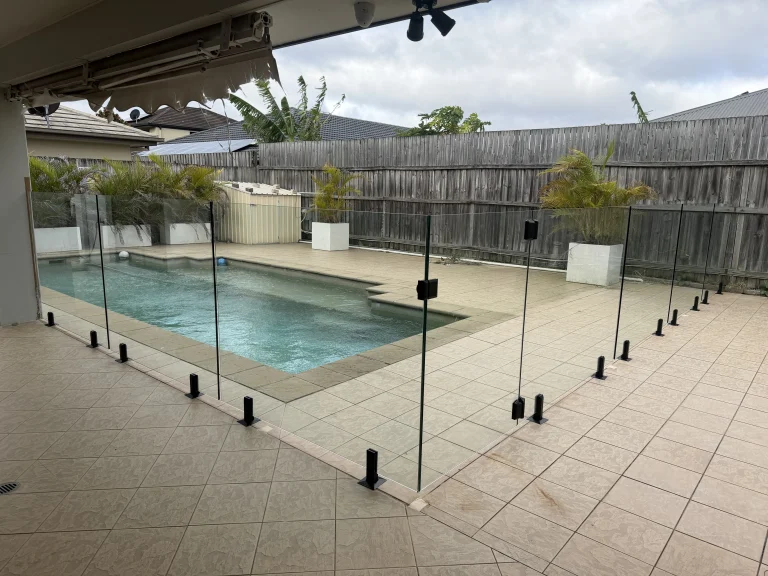
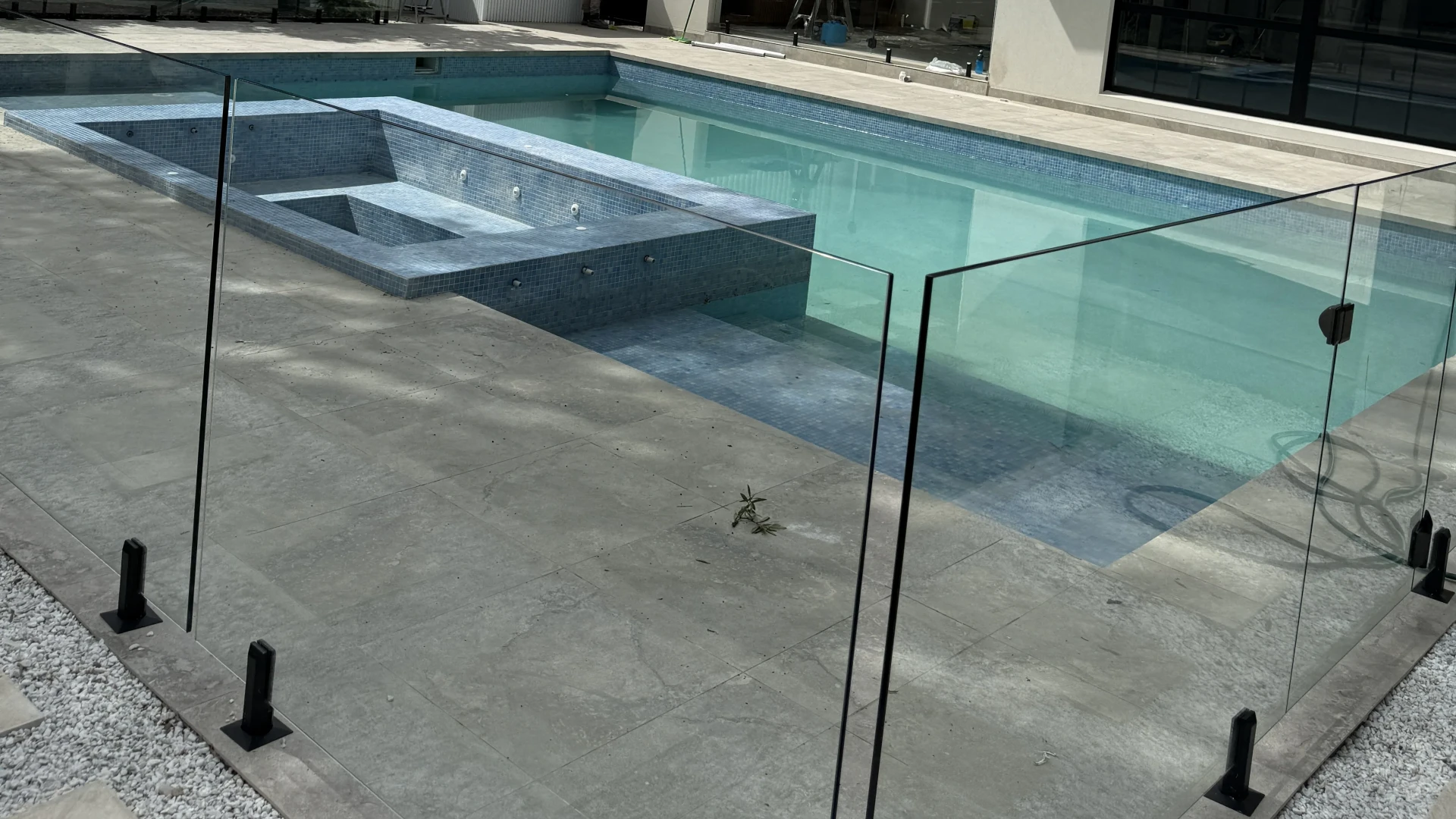
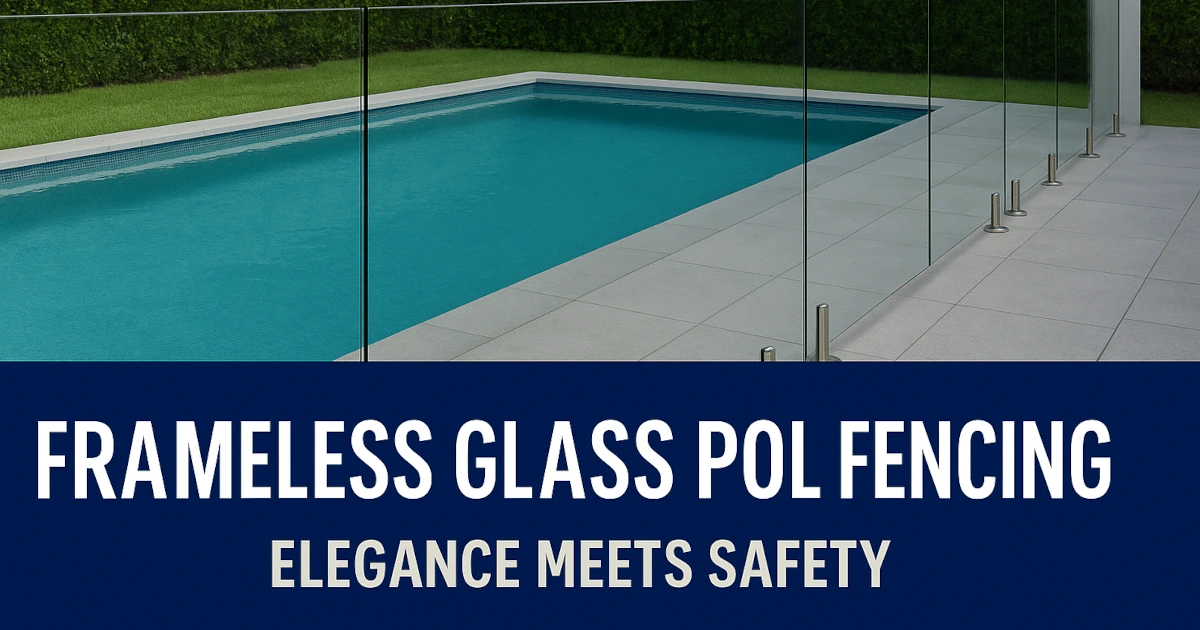
Frameless glass is often selected when homeowners want the pool area to feel open and visually connected to the rest of the backyard.
The glass provides a clear barrier without conventional vertical posts interrupting the view. This can work particularly well around contemporary pools, landscaped gardens and outdoor entertaining areas.
The trade-off is that glass needs regular cleaning. Fingerprints, dust, water marks and other residue can be more noticeable on a clear surface.
The supporting hardware and installation also need to be appropriate for the specific site.
If you are considering this style, AMG Fabrication’s custom pool fencing service includes frameless glass, semi-frameless glass and aluminium options.
Semi-frameless glass pool fencing
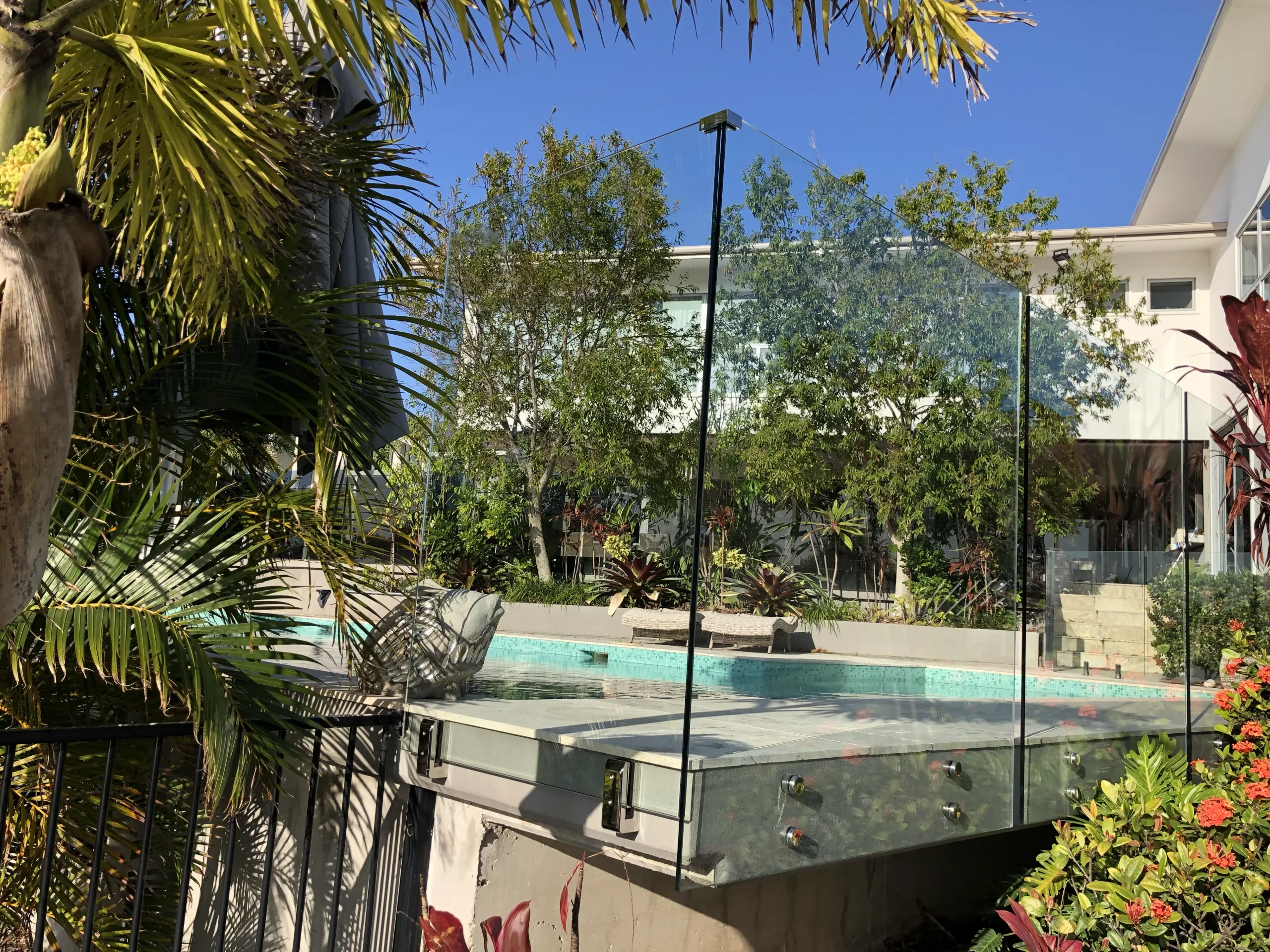
Semi-frameless glass uses glass panels with visible posts or supporting components.
It can provide some of the visual openness of glass while introducing more structure into the design.
This can be a practical option where the pool layout, fixing requirements or preferred appearance make a semi-frameless system more suitable.
Aluminium pool fencing
Aluminium can provide a practical alternative to glass and can be designed around the layout of the pool area.
It is available in different profiles and finishes, allowing the fence to coordinate with other outdoor elements.
Aluminium can also suit homeowners who prefer a more defined physical boundary rather than a predominantly transparent barrier.
Glass vs aluminium pool fencing: which should you choose?
The choice usually comes down to how you want the pool area to look and how you expect to use it.
Choose glass if:
- You want to preserve views across the backyard.
- You prefer a visually open pool area.
- You want a contemporary appearance.
- You are prepared to clean the glass regularly.
Consider aluminium if:
- You prefer a more defined boundary.
- You want a metal fencing option.
- You want the fence to coordinate with other aluminium elements.
- Privacy or visual separation is more important than uninterrupted views.
There is no single material that is right for every Brisbane pool.
The position of the pool, landscaping, surrounding walls, entertaining areas, access points and existing structures should all be considered before the final design is selected.
How much does pool fencing cost in Brisbane?

The cost of pool fencing varies considerably from one property to another.
As a general Queensland estimate, glass pool fencing in Brisbane can often sit around $350–$900 per lineal metre fully installed, depending on the specification.
This is an estimate rather than a fixed price. Site access, glass specification, ground conditions, hardware, gate requirements, installation complexity and the total amount of fencing can all affect the final cost.
Aluminium fencing can have a different price structure depending on the profile, finish, layout and installation requirements.
What affects the cost of pool fencing?
The main cost factors include:
- Fence length: More lineal metres generally means more materials and installation time.
- Material: Frameless glass, semi-frameless glass and aluminium have different material and hardware costs.
- Number of gates: Pool gates require specific hardware and installation considerations.
- Site access: A difficult-to-access backyard can make installation more labour-intensive.
- Ground conditions: Concrete, paving, grass, gardens and changes in levels can affect how the fence is installed.
- Existing fencing: If an existing barrier needs to be removed or modified, this can add to the scope.
- Pool layout: Curves, corners, retaining walls and changes in direction can make a project more complex.
For an accurate figure, a site measure and project-specific quote are more useful than relying on a generic per-metre price.
Queensland pool fencing requirements you should know

Pool fencing in Queensland is regulated by state requirements, and pool owners are responsible for ensuring their barriers remain compliant.
Queensland Government guidance states that pool fences and barriers must comply with Queensland Development Code MP 3.4 — Swimming pool barriers.
Some important requirements include:
- A pool barrier generally needs to be at least 1,200 mm high from the relevant finished ground level.
- Pool gates need to be self-closing and self-latching.
- The barrier and surrounding area need to address non-climbable zones.
- Objects such as furniture, plants, garden features and other items should not create climbing opportunities.
- Pool barriers must be maintained so they continue to comply.
Queensland guidance also identifies a 900 mm non-climbable zone around relevant pool barriers, with additional requirements depending on the barrier configuration.
These requirements are not simply checked on installation day. Pool owners have an ongoing responsibility to maintain the barrier.
For the current rules, refer to the Queensland Government pool fencing and barrier guidance and the Queensland Building and Construction Commission pool safety guidance.
Requirements can change and individual sites can have additional considerations, so a licensed pool safety inspector or relevant building professional should confirm compliance for your specific property.
Pool gates, latches and surrounding areas
The gate is one of the most important parts of a pool barrier.
A compliant pool fence can still become unsafe if the gate does not close and latch correctly.
Queensland guidance states that pool gates must not open towards the pool, must self-close and must self-latch from open positions.
The area around the fence also matters.
A pool barrier should not be assessed in isolation from the surrounding garden, paving, retaining walls and outdoor furniture.
Common things worth checking include:
- pot plants
- outdoor furniture
- garden beds
- steps and ledges
- trees and branches
- BBQs
- toys and outdoor equipment
- retaining walls
- taps and other fixtures
These can potentially create climbing points or affect the required clearance around the barrier.
If you are building a new pool or replacing an existing barrier, consider these factors before the fence is fabricated rather than trying to solve them after installation.
Designing pool fencing for Brisbane’s climate
Queensland’s climate should be considered when choosing and maintaining pool fencing.
Brisbane properties can experience strong UV exposure, heat, heavy rain and humidity. Homes around the Gold Coast and Sunshine Coast may also have additional exposure to coastal salt.
For glass fencing, regular cleaning helps keep the panels clear and makes it easier to identify damage or other issues.
For aluminium fencing, the finish and installation environment should be considered carefully.
Drainage is also important. Areas where water continually pools around posts, fittings or the base of a fence deserve attention.
Coastal properties should be particularly mindful of salt deposits and regular cleaning.
The goal is not to choose a material based on climate alone. Instead, the material, finish, fixing method and maintenance routine should all suit the location.
Maintenance: keeping your pool fence safe
Pool fencing is not a set-and-forget product.
Queensland Government guidance states that pool barriers must be maintained and that damaged barriers should be repaired.
For glass pool fencing
Regularly clean the glass and inspect the panels for damage.
Also check the hardware around the panels, including spigots and other fixing components where applicable.
For aluminium pool fencing
Wash the fence periodically to remove dirt, dust and other contaminants.
Pay attention to areas around fixings and joins, particularly in outdoor or coastal environments.
For pool gates
Test the gate regularly.
Open it from different positions and make sure it closes and latches securely each time.
Do not prop a pool gate open, even temporarily. Queensland guidance specifically identifies interference with the barrier as a safety and compliance issue.
Common pool fencing mistakes to avoid
Choosing the fence before checking the site
A pool area may look straightforward until you consider retaining walls, paving levels, gardens and existing structures.
A site measure can identify these issues before fabrication starts.
Focusing only on the fence itself
Pool safety also depends on the surrounding area.
Furniture, garden beds, trees, steps and other objects can affect the barrier’s effectiveness.
Assuming an old fence is still compliant
Existing pool fencing may have been installed under different requirements or may have deteriorated over time.
Do not assume that copying an existing design automatically means the replacement will comply.
Forgetting about the gate
A fence is only part of the system.
The gate, hinges and latch need to work correctly and should be checked regularly.
Choosing glass without considering cleaning
Glass can provide excellent visibility, but it will show fingerprints, dust and water marks.
Think about maintenance before making the final decision.
Leaving compliance until the end
If there are concerns about the pool layout or surrounding structures, address them before fabrication and installation.
This can help avoid unnecessary changes after the fence has been installed.
What to check before buying pool fencing
Before accepting a quote, ask your fabricator:
- What type of pool fencing is suitable for my site?
- Will you measure the pool area before fabrication?
- How will the fence be fixed to the existing surface?
- Are the gates and self-closing hardware included?
- What material and finish are being specified?
- Does the proposed layout address the applicable Queensland requirements?
- Are removal of existing fencing and installation included?
- What maintenance will the fence require?
- What warranty applies to the product?
- What happens if a defect is identified after installation?
A clear quote should explain what is included rather than leaving important parts of the project uncertain.
For larger projects, builders and property professionals should also confirm the relevant approvals, site responsibilities and inspection requirements before work begins.
Custom pool fencing: why the site matters
Pool areas rarely have identical layouts.
One property might have a simple rectangular pool on a level concrete surface. Another might have a pool beside a retaining wall, garden, deck, boundary fence or outdoor entertaining area.
This is where custom fabrication can be useful.
AMG Fabrication can manage the process from design and on-site measurement through to fabrication and installation, allowing the proposed fencing to be developed around the actual property.
Custom work can also help coordinate the pool barrier with existing metalwork, gates and other outdoor features.
For homeowners looking at more than just pool fencing, AMG also provides custom balustrades and other metal and glass fabrication services.
Frameless vs semi-frameless vs aluminium: a practical decision
If you are still deciding, start with the priorities rather than the product.
If visibility is your priority, frameless glass may be worth considering.
If you want a glass appearance with more visible structural elements, semi-frameless glass can be an option.
If you prefer a defined metal barrier, aluminium may be more appropriate.
Then consider the practical details: cleaning, site access, fixing points, landscaping, gate location, surrounding structures and Queensland compliance.
The right pool fence should work as part of the entire outdoor area rather than being treated as an isolated product.
FAQ: Pool fencing in Brisbane
How much does pool fencing cost in Brisbane?
The cost depends on the material, total fence length, site access, ground conditions, number of gates, hardware and installation complexity. As a general estimate, glass pool fencing in Brisbane can be around $350–$900 per lineal metre fully installed, depending on the specification and site.
What height does a pool fence need to be in Queensland?
Queensland Government guidance states that a pool barrier must generally be at least 1,200 mm high from the relevant ground level. Specific site conditions can affect how the measurement is taken, so the current requirements should be confirmed for the property.
Does a pool gate need to self-close and self-latch?
Yes. Queensland pool safety guidance requires pool gates to self-close and self-latch, with additional requirements applying to gate opening direction and latch arrangements.
Is frameless glass pool fencing safe?
Glass can be used as a pool barrier when the appropriate system, materials, fixing method and installation are selected for the application and the applicable requirements are met. A licensed pool safety inspector or relevant building professional can confirm compliance for a specific site.
Is aluminium cheaper than glass pool fencing?
The final cost depends on the specific design and installation. Aluminium and glass have different material, hardware and labour requirements, so it is better to compare project-specific quotes rather than assuming one material will always be cheaper.
Can an existing boundary fence form part of a pool barrier?
In some situations, a dividing fence can form part of a pool barrier, but it still needs to satisfy the applicable pool safety requirements. Queensland Government guidance provides specific information about using dividing fences as pool barriers.
How often should I check my pool fence?
Check the barrier and gate regularly and after events that could affect the installation. Look for loose or damaged components, changes in ground or garden levels, damaged glass and problems with the self-closing or self-latching gate. Pool owners have an ongoing responsibility to maintain the barrier.
Choosing pool fencing for your Brisbane property
The right pool fence needs to balance safety, compliance, appearance, maintenance and the conditions of the site.
Frameless glass can maintain views across the backyard, semi-frameless glass adds visible supporting elements, and aluminium provides a practical metal alternative.
Whatever option you choose, the design should be based on the actual pool area and current Queensland requirements rather than appearance alone.
AMG Fabrication provides custom pool fencing design, fabrication and installation across Brisbane, Gold Coast, Sunshine Coast and surrounding suburbs, with free consultations and obligation-free quotes.
Contact AMG Fabrication for a free consultation and quote for your pool fencing project.