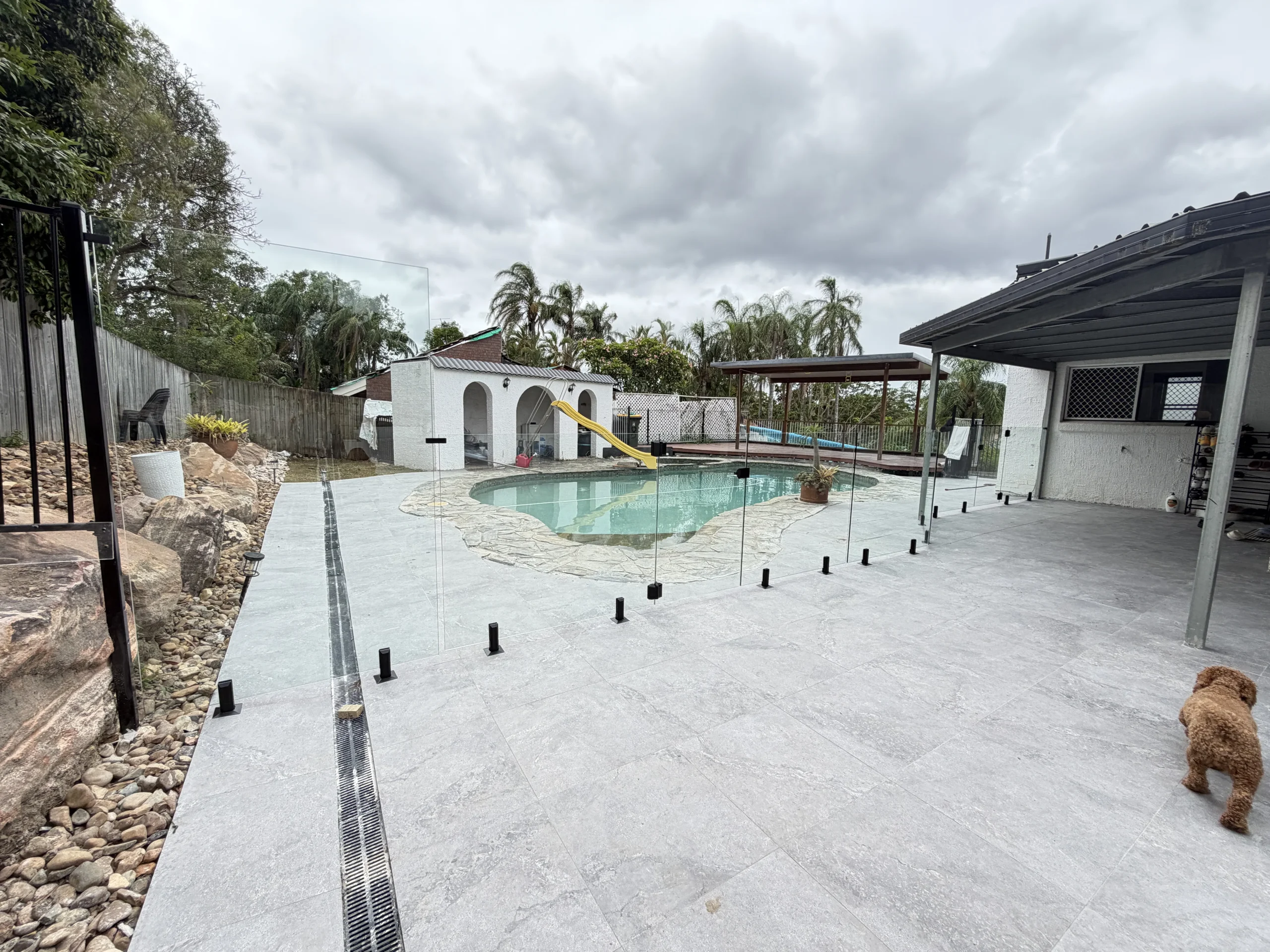
Choosing glass pool fencing in Queensland means balancing safety, appearance, maintenance and budget. Frameless glass provides uninterrupted views, semi-frameless glass offers a balance between visibility and structure, and aluminium provides a practical alternative. The right choice depends on your property, pool layout, coastal exposure and applicable safety requirements.
Pool handrails also deserve attention where steps, changes in level or access routes create additional safety considerations. This guide explains the available options, Queensland compliance considerations, estimated costs and maintenance requirements to help you plan your project.
Whether you’re upgrading a backyard in Brisbane, renovating a coastal property on the Gold Coast or building a new outdoor area on the Sunshine Coast, understanding these factors before installation can help you avoid unnecessary costs and design problems.
Why Choose Glass Pool Fencing for a Queensland Home?
Glass pool fencing allows you to create a defined pool barrier without visually closing off the backyard. Unlike conventional metal fencing, clear glass preserves views across the pool, garden and outdoor entertaining area.
For properties with smaller backyards, this transparency can make the outdoor space feel more open. It can also complement contemporary homes with large windows, tiled entertaining areas and landscaped gardens.
However, glass isn’t automatically the right choice for every property. It generally requires more frequent cleaning than aluminium, and the supporting hardware and installation method must suit the site.
Before choosing a style, consider:
- Visibility: Do you want an uninterrupted view of the pool from the house or entertaining area?
- Maintenance: Are you comfortable regularly removing fingerprints, salt deposits and water marks?
- Budget: Does your budget allow for the glass panels, hardware, gate and installation?
- Site conditions: Are the pool surrounds level, or will sloping ground and retaining walls complicate installation?
- Safety: Can the proposed design meet the requirements applicable to your pool?
AMG Fabrication provides custom glass and aluminium pool fencing for residential and commercial properties across Brisbane, the Gold Coast, the Sunshine Coast and surrounding suburbs.
The aim is to select a system that suits the property rather than choosing a style based on appearance alone.
Frameless vs Semi-Frameless vs Aluminium Pool Fencing

The three main options each offer different advantages. Understanding their trade-offs makes it easier to select a system that suits your property and maintenance preferences.
Frameless glass pool fencing
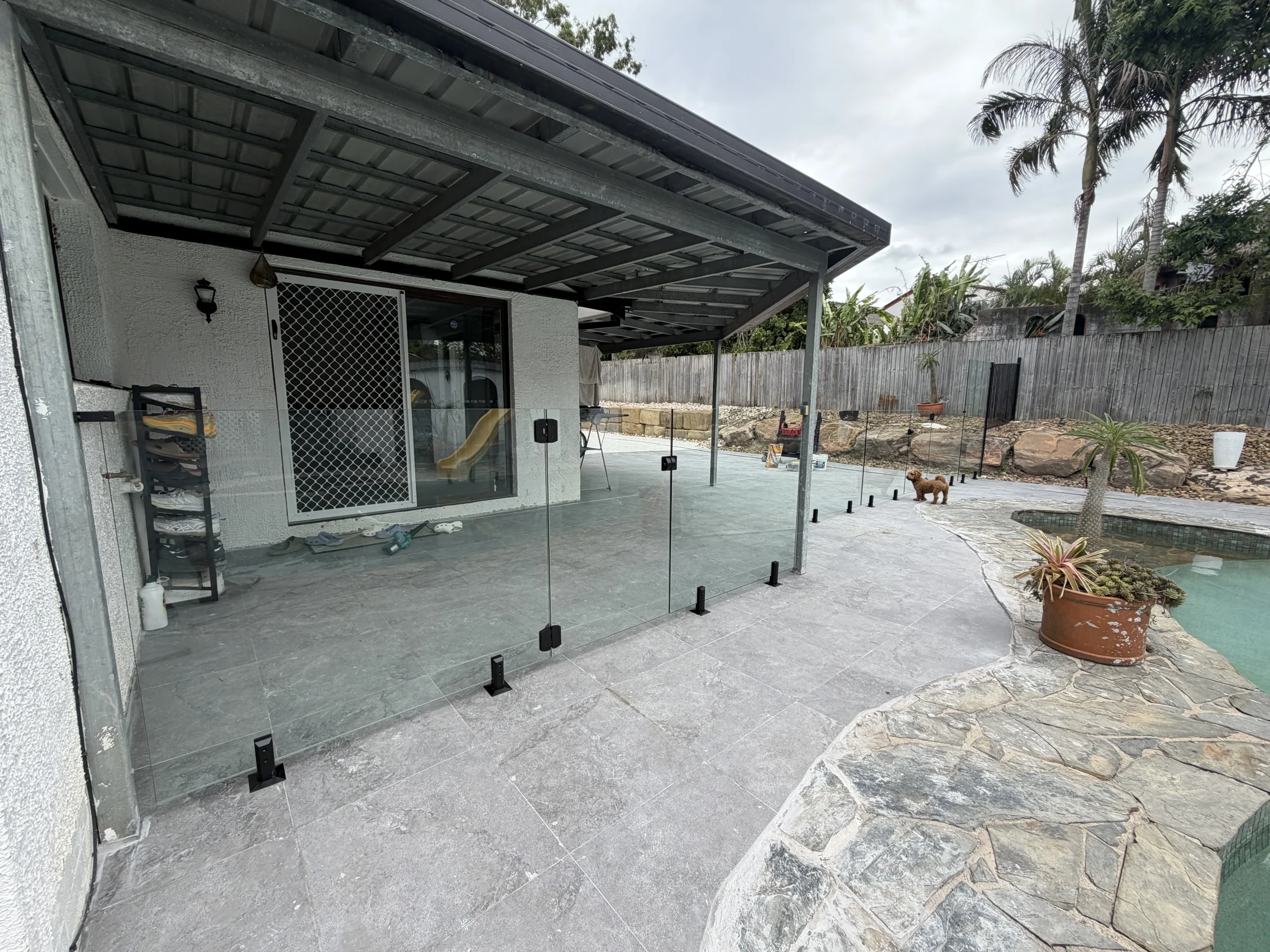
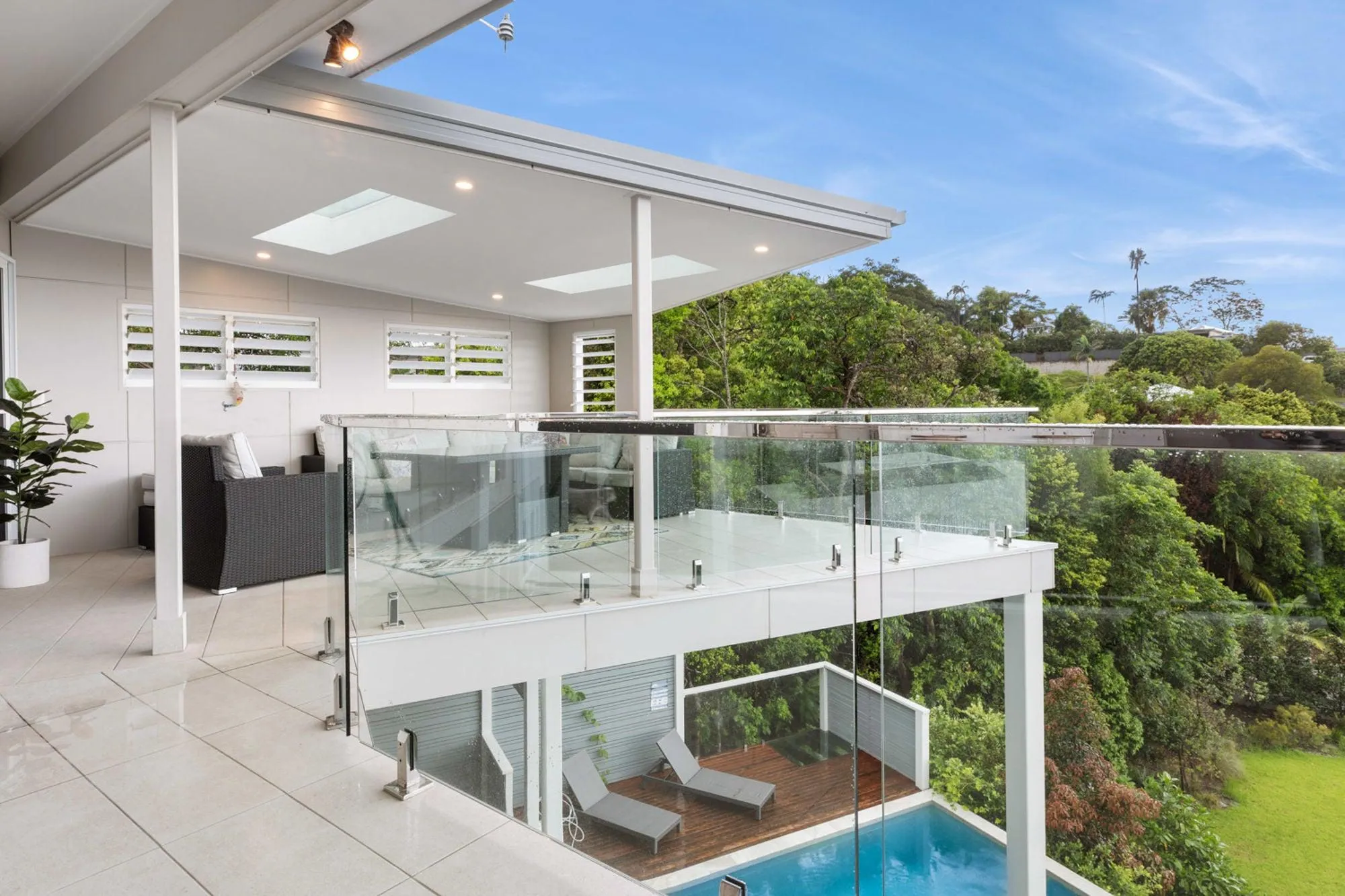
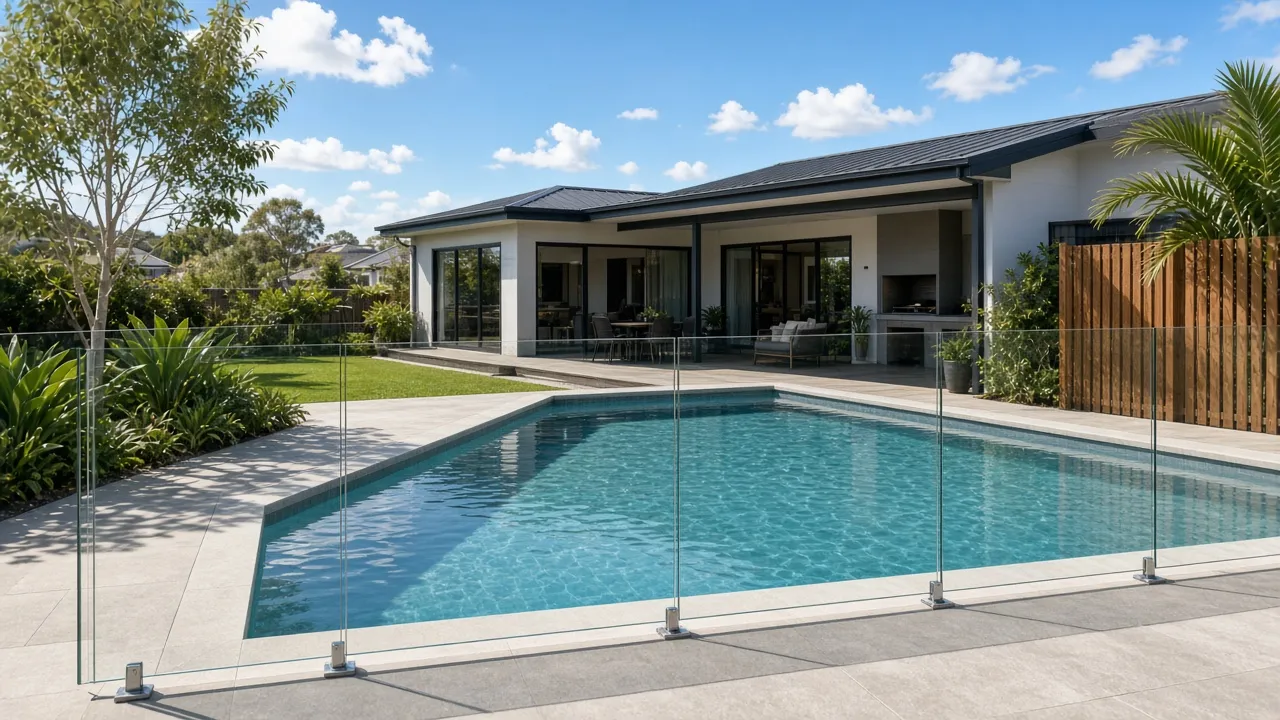
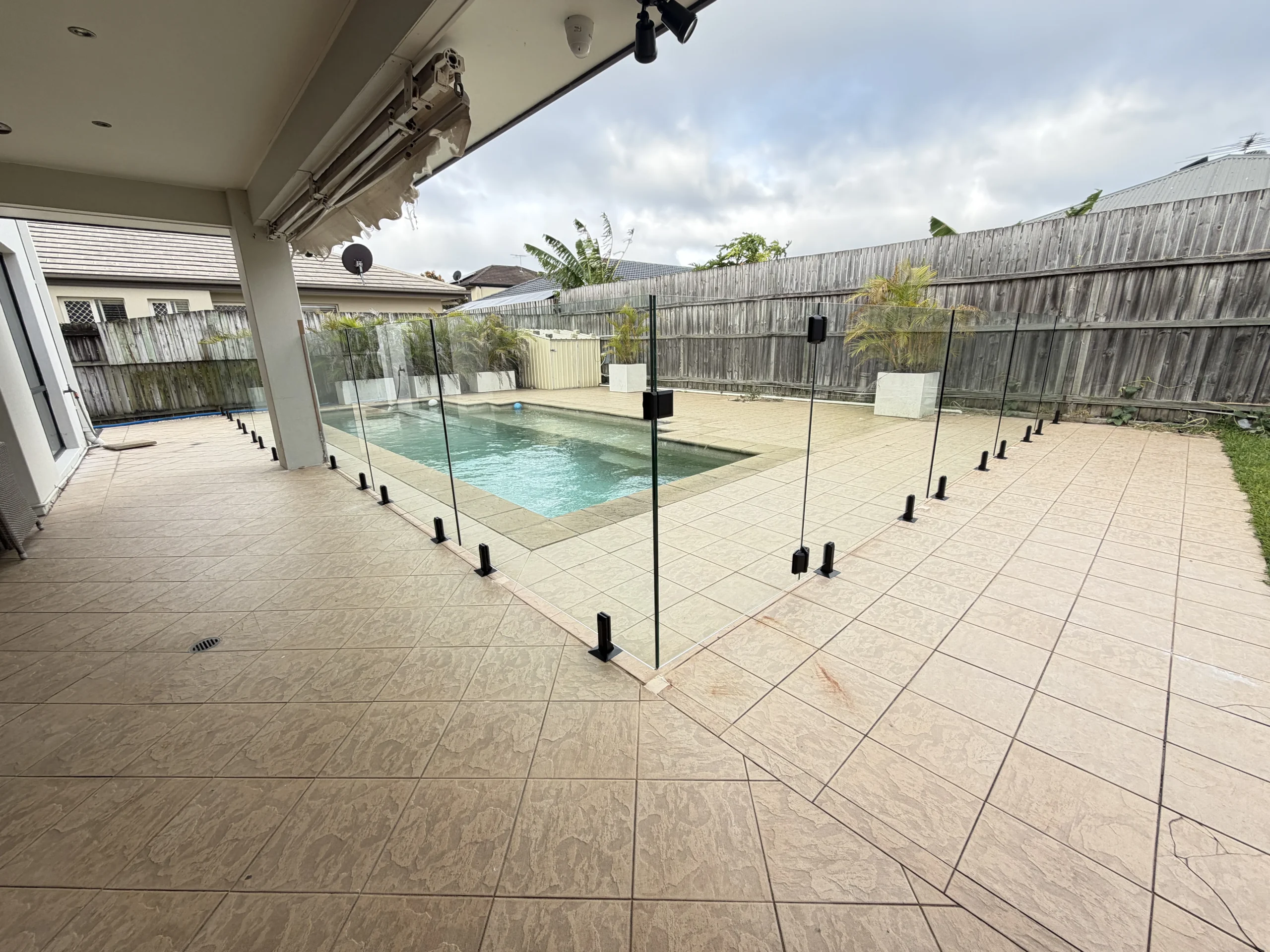
Frameless glass fencing uses glass panels supported by suitable fittings, often with stainless steel spigots securing the panels at their base.
Because there are no conventional vertical fence posts between the panels, the result is a clean, open appearance.
Advantages:
- Preserves views across the pool and garden.
- Complements modern residential architecture.
- Creates a visually uncluttered outdoor area.
- Works well where the surrounding landscape is an important design feature.
Things to consider:
- Usually involves a higher upfront cost than simpler fencing options.
- Glass surfaces show fingerprints, dust and water marks.
- Fixing points and hardware require careful specification.
- Installation can become more complex on sloping or uneven surfaces.
Frameless glass is worth considering when maintaining visibility is a priority and the budget allows for the additional material and installation requirements.
Semi-frameless glass pool fencing
Semi-frameless fencing uses glass panels supported by visible posts or other structural components.
It provides much of the transparency of frameless glass while introducing more visible structure around the panels.
Advantages:
- Maintains a relatively open view.
- Provides a defined frame between glass panels.
- Offers flexibility for different pool layouts.
- Can be a practical alternative to a fully frameless system.
The final cost depends on the selected system, panel dimensions, hardware, gate configuration and site conditions.
For homeowners who want the appearance of glass without the fully frameless design, semi-frameless fencing is worth comparing during the quoting process.
Aluminium pool fencing
Aluminium fencing provides a more defined visual boundary and can be manufactured in different profiles and powder-coated colours.
It’s often worth considering when straightforward maintenance, a more traditional fence appearance or budget control is a priority.
Advantages:
- Generally requires less day-to-day cleaning than glass.
- Offers a range of colours and profiles.
- Provides a clear physical boundary around the pool.
- Can suit coastal properties when the material and finish are appropriately selected.
The main trade-off is visibility. Depending on the profile and layout, aluminium fencing can interrupt views more than glass.
For a more detailed comparison, see AMG Fabrication’s existing guide to glass versus aluminium pool fencing.
Pool Handrails: Where Do They Fit In?
Pool fencing and handrails serve different purposes.
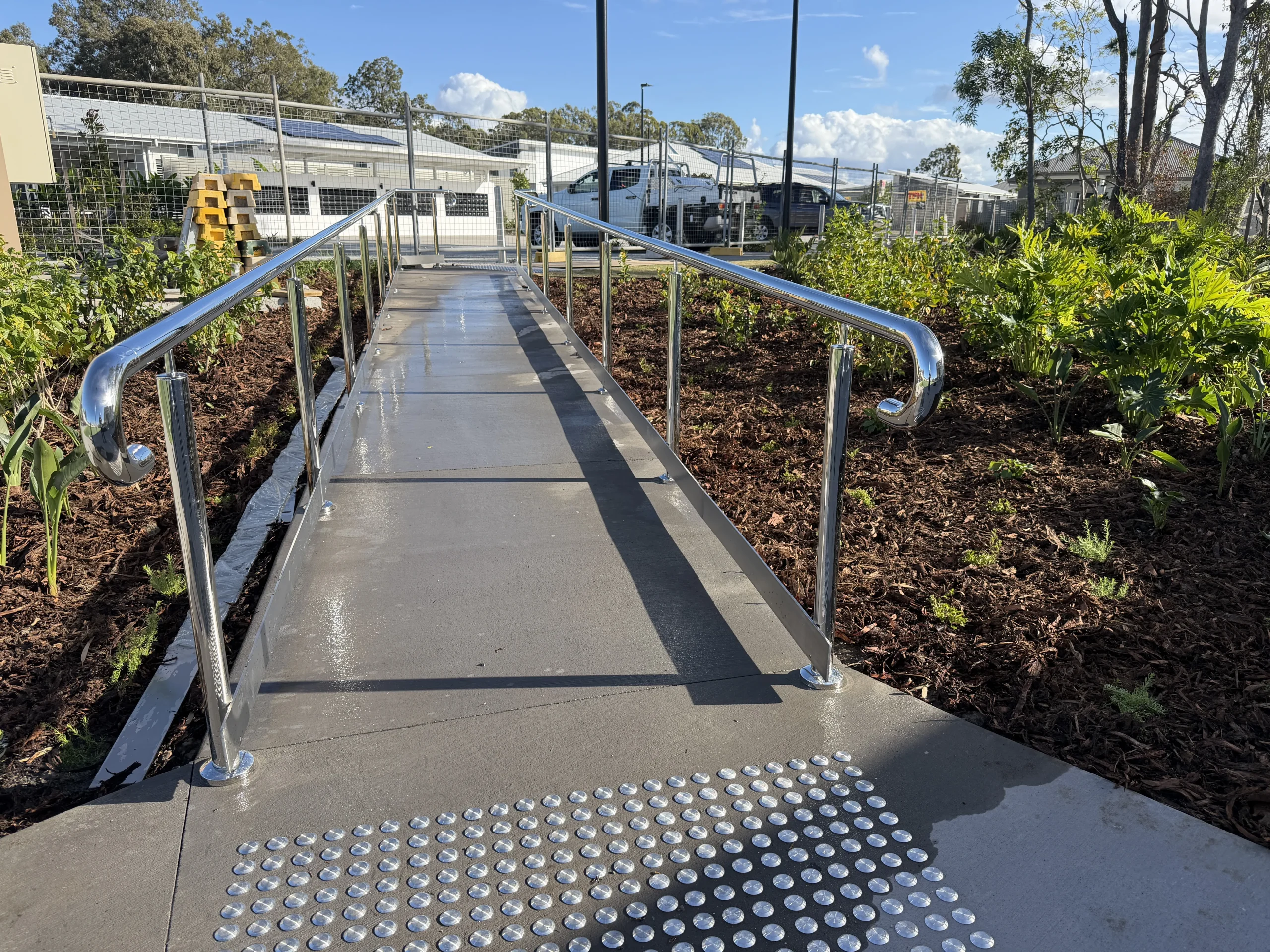
A pool fence or barrier restricts access to the pool in accordance with the applicable safety requirements. A handrail provides support when someone moves along stairs, steps, ramps or other access routes where a suitable handrail is required or beneficial.
For example, a property might need a compliant pool barrier around the swimming area and a separate handrail beside steps leading down to the pool.
The two systems should be planned together where they share the same outdoor space, but one shouldn’t be treated as a replacement for the other.
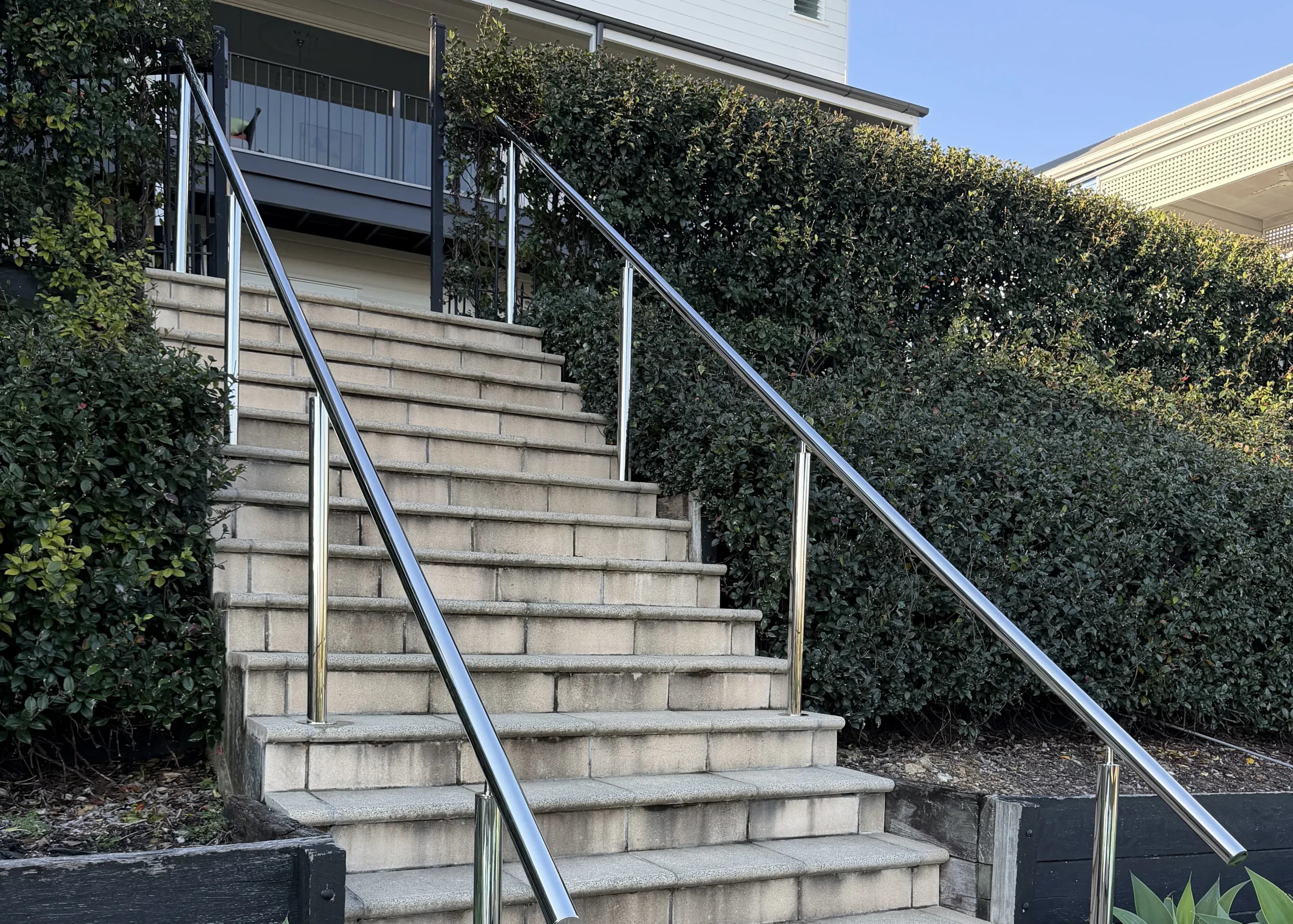
Stainless steel handrails
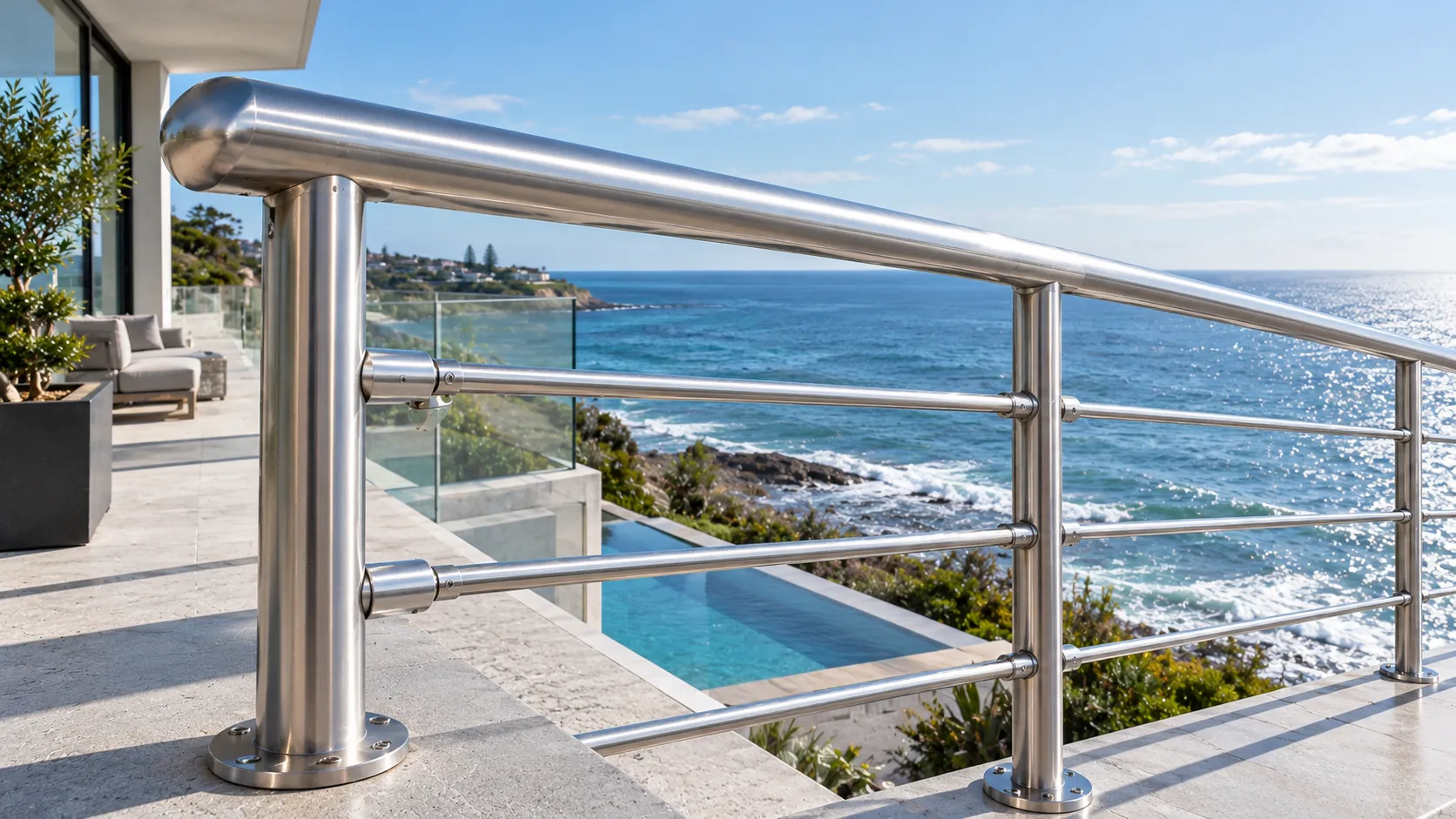
Stainless steel can provide a clean, contemporary finish for outdoor steps and pool access routes.
Its suitability depends on the stainless steel grade, finish, exposure and maintenance. In coastal areas, salt deposits and moisture can contribute to corrosion or surface staining if the material and maintenance regime are unsuitable.
Aluminium handrails
Aluminium is lightweight and naturally resistant to rust in the way ordinary steel is not. Powder coating provides an additional finish and allows the rail to coordinate with other outdoor metalwork.
It’s worth considering for residential properties where appearance, durability and straightforward maintenance matter.
Galvanised steel handrails
Galvanised steel offers a protective zinc coating and can suit applications where a robust metal handrail is required.
The suitability of the finish depends on the environment, fabrication details and exposure. Cut edges, damaged coatings and areas where water collects deserve particular attention.
For a more detailed discussion of material selection, see AMG Fabrication’s guide to aluminium versus stainless steel handrails in Queensland.
Important: Handrail requirements depend on the application. Stairs, ramps, raised walkways and commercial access areas may have different requirements from a residential pool surround. Confirm the applicable design requirements before fabrication.
Queensland Pool Safety Requirements: What Homeowners Should Know
Pool fencing isn’t simply a design feature. Queensland has specific legal requirements for swimming pool barriers, and the relevant requirements must be established before the fence is designed and installed.
The Queensland Government’s official guidance explains the responsibilities of pool owners, the requirements for barriers and common reasons pool fences fail.
Read the current guidance on Queensland pool fences and barriers.
Check the barrier height and surrounding area
A commonly applicable requirement is a minimum barrier height of 1,200 millimetres, measured in accordance with the relevant rules.
However, checking the height alone isn’t enough. The surrounding ground level, garden beds, retaining walls and nearby structures can affect compliance.
For example, raising a garden bed beside an existing fence may reduce the effective barrier height.
Check gates and latches
Pool gates are a critical part of the safety system.
Depending on the applicable requirements, gates must self-close and self-latch correctly. A gate that sticks, fails to latch or has been altered after installation can create a serious safety problem.
The gate’s position and opening direction also need to be assessed against the applicable requirements.
Check for climbing points
Outdoor furniture, plant pots, trees and other objects can create opportunities for children to climb over a barrier.
The fence design and surrounding area should be assessed together. A compliant panel can become unsafe if the surrounding layout changes.
Confirm the current requirements before installation
Queensland pool safety requirements can depend on the pool, property and work being undertaken.
The Queensland Government identifies the applicable pool safety framework, including Queensland Development Code MP 3.4. Requirements and referenced standards can change, so confirm the current provisions with a suitably qualified professional before committing to a design.
The National Construction Code guidance on common building features is also useful when planning related work involving stairs, handrails and balustrades.
A fabricator can help assess the proposed layout and installation requirements, but don’t assume that choosing glass automatically makes a pool barrier compliant.
How Much Does Glass Pool Fencing Cost in Queensland?
The cost of glass pool fencing depends on the design, materials, site conditions and installation requirements.
As an indicative guide, glass pool fencing in Brisbane can sit around $350–$900 per lineal metre fully installed. This is an estimate rather than a fixed price, and the actual cost may fall outside that range depending on the project.
Frameless glass generally involves a different cost structure from semi-frameless glass because the hardware, support arrangements and installation requirements differ.
Aluminium fencing can be a more economical alternative, although the final comparison depends on the selected profile, finish, gate and site conditions.
What affects the final price?
1. Fence length
A longer fence generally requires more materials and installation work. However, the cost per lineal metre may vary with the overall layout and the number of corners and gates.
2. Glass and hardware specifications
Glass dimensions, panel configuration, supporting fittings and hardware finishes affect the overall quote.
3. Ground and fixing conditions
Installing a fence into suitable concrete may be more straightforward than working around existing pavers, uneven surfaces, retaining walls or difficult fixing points.
4. Gate requirements
The number of gates, hardware selection, opening arrangements and installation details can influence the final cost.
5. Access and removal work
Restricted site access, removal of existing fencing, landscaping protection and making good around fixing points may add to the work required.
6. Compliance and approvals
Some projects require additional assessment, approvals or professional input. Confirm what is included in the quote rather than assuming every project has the same requirements.
How to compare quotes properly
Ask each fabricator to clarify:
- Which fencing system and materials are included.
- Whether the quote covers measurement, fabrication and installation.
- What gate hardware is included.
- Whether removal of existing fencing is included.
- Whether additional site work or approvals may be required.
- What warranty and defect-rectification arrangements apply.
AMG Fabrication offers free consultations and obligation-free quotes. You can also read its existing glass pool fencing cost guide for Brisbane for more information about pricing factors.
Choosing Materials for Queensland’s Climate
Queensland’s outdoor conditions can be demanding, particularly near the coast.
Heat, UV exposure, humidity, rain and airborne salt can affect metal finishes, fittings and the condition of outdoor installations over time.
Choosing appropriate materials at the beginning can reduce avoidable maintenance problems.
Glass and stainless steel fittings
Glass can suit exposed outdoor areas, but the quality and specification of the panels and supporting hardware matter.
Stainless steel fittings should be selected for the actual environment. Coastal exposure may justify a more corrosion-resistant grade, subject to the project requirements.
Regularly rinsing away salt and other deposits can help maintain the appearance of glass and metal components.
Powder-coated aluminium
Aluminium can be a practical option for coastal homes because the metal itself doesn’t rust like ordinary steel.
However, the condition of its protective finish still matters. Scratches, damaged coatings and dirt around joints should be addressed rather than left to deteriorate.
Choose a suitable finish and follow the manufacturer’s care recommendations.
Galvanised steel
Galvanised steel can be useful for suitable handrail and fabrication applications.
Its protective coating needs to remain in good condition, and the design should avoid unnecessary water traps where practical.
For any material, good detailing, suitable fixings and routine maintenance are important parts of long-term performance.
Maintenance: Keeping Pool Fencing and Handrails in Good Condition
Even a well-designed installation needs regular attention.
Maintenance is particularly important around swimming pools because gates, fittings and barrier components are exposed to weather, moisture, cleaning products and everyday use.
Cleaning glass pool fencing
To keep glass panels looking their best:
Rinse away salt, dust and pool residue.
Use a suitable glass cleaner or mild soapy water.
Clean with a soft cloth or squeegee.
Avoid abrasive pads and unsuitable chemicals.
Check the panels for visible damage.
Regular cleaning helps prevent residue from building up and makes it easier to notice changes in the condition of the installation.
Inspecting gates and fittings
Check that pool gates close and latch correctly. Don’t wait for a gate to fail before arranging repairs.
Inspect accessible fittings for visible corrosion, movement or damage. If a panel, fixing or structural component appears loose or damaged, restrict access to the affected area and arrange an appropriate inspection.
Never modify a pool barrier in a way that could compromise compliance.
Caring for aluminium and steel
Wash metal surfaces with a suitable cleaning solution and rinse away salt, dirt and other deposits.
Inspect powder-coated finishes for chips or scratches. Check exposed metal components for corrosion and address problems in accordance with the manufacturer’s recommendations.
Handrails should also be checked for movement, damaged fixings and deterioration, particularly where they receive regular use.
Queensland pool owners have an ongoing responsibility to maintain compliant barriers. Refer to the Queensland Government’s pool safety guidance if you need to review your responsibilities.
Common Mistakes to Avoid Before Buying
A few decisions made early can help prevent unnecessary expense and rework.
Choosing on appearance alone
Frameless glass may suit a modern home, but it isn’t automatically the most practical option for every property.
Consider maintenance, access, fixing conditions and the budget before settling on a design.
Overlooking the gate
The gate is an essential part of the pool barrier, not an accessory to be selected at the end.
Its location, hardware and operation should be incorporated into the design from the beginning.
Ignoring ground levels and drainage
Sloping ground, raised garden beds and retaining walls can affect the layout and compliance of a pool barrier.
Poor drainage and water pooling can also contribute to maintenance problems around metal fittings and fixings.
An on-site assessment can identify these issues before fabrication begins.
Using unsuitable materials near the coast
A finish that performs adequately in a sheltered inland location may require more attention in a salt-exposed coastal setting.
Discuss the property’s exposure with your fabricator and confirm the suitability of the proposed materials and hardware.
Assuming a handrail solves every access issue
A handrail can provide support, but it doesn’t replace a required balustrade or pool barrier.
Where a project includes stairs, raised decks or changes in level, each element should be assessed for its own purpose and applicable requirements.
Accepting a quote without checking what’s included
Two quotes can look similar while covering different materials, hardware and installation work.
Ask for a clear breakdown of the proposed system and confirm how additional work will be handled.
What to Ask Your Pool Fencing Fabricator
Before choosing a supplier, use these questions to clarify the scope and quality of the proposed work.
- Which fencing style best suits my pool layout and budget?
- Will you measure the site before fabrication?
- What glass, metal and hardware specifications are included?
- How will the fence be fixed to the existing surface?
- Have the applicable Queensland pool safety requirements been considered?
- Is the gate and its self-closing and latching hardware included?
- Are removal work, additional site preparation and other exclusions clearly listed?
- What maintenance will the materials require in my location?
- What product warranty and defect-rectification arrangements apply?
- Who should I contact if I notice a problem after installation?
A clear answer to these questions helps you compare proposals on more than price alone.
AMG Fabrication brings more than 20 years of welding experience through its founder, Sam, to custom metal and glass fabrication projects. Its work includes design, manufacture and installation for residential and commercial clients.
You can learn more about the company and its approach to custom fabrication on the AMG Fabrication About Us page.
Frequently Asked Questions
Is glass pool fencing suitable for Queensland homes?
Yes. Glass can be suitable for Queensland homes when the selected system is appropriate for the site and installed to meet the applicable pool safety requirements. The main considerations are visibility, maintenance, hardware, fixing conditions and budget.
What is the difference between frameless and semi-frameless pool fencing?
Frameless fencing uses glass panels with minimal visible supporting structure, creating an open appearance. Semi-frameless fencing uses visible posts or other supporting components between panels. Both can suit residential pools, depending on the layout and design requirements.
Is aluminium pool fencing cheaper than glass?
Aluminium can be a more economical option, but the final price depends on the fence profile, finish, gate, site conditions and installation work. Compare itemised quotes rather than relying on a material-only price.
Do Queensland pools need compliant barriers?
Queensland has pool safety laws that require regulated swimming pools to have compliant barriers. Owners must also maintain those barriers. Check the current Queensland Government guidance and confirm which requirements apply to your property.
Can a handrail be installed near a swimming pool?
Yes. A handrail may be suitable for stairs, steps or access routes near a pool, depending on the design and applicable requirements. It serves a different purpose from the pool barrier and must not compromise the barrier’s safety or compliance.
How do I maintain glass pool fencing near the coast?
Rinse away salt and pool residue, clean the glass with suitable products, and inspect the supporting fittings for visible corrosion or damage. Regular maintenance is particularly important in coastal locations exposed to salt air and moisture.
How can I get a quote for glass pool fencing in Brisbane?
Contact AMG Fabrication to discuss your pool layout, preferred fencing style, materials and site conditions. The company offers free consultations and obligation-free quotes across Brisbane, the Gold Coast, the Sunshine Coast and surrounding suburbs.
Conclusion: Choose a Pool Fencing Solution That Suits Your Home
The right pool fencing system should balance safety, appearance, maintenance and budget. Frameless glass offers uninterrupted views, semi-frameless glass provides a balance of transparency and structure, and aluminium can be a practical alternative.
Handrails should also be considered where stairs or access routes require support. Planning these elements together helps create an outdoor area that works for everyday use while addressing the requirements relevant to your property.
AMG Fabrication provides custom metal and glass fabrication, including pool fencing and handrails, for residential and commercial projects across South East Queensland.
Planning a new pool fence or upgrading an existing installation?
Contact AMG Fabrication for a free consultation and obligation-free quote to discuss your project in Brisbane, the Gold Coast or the Sunshine Coast.