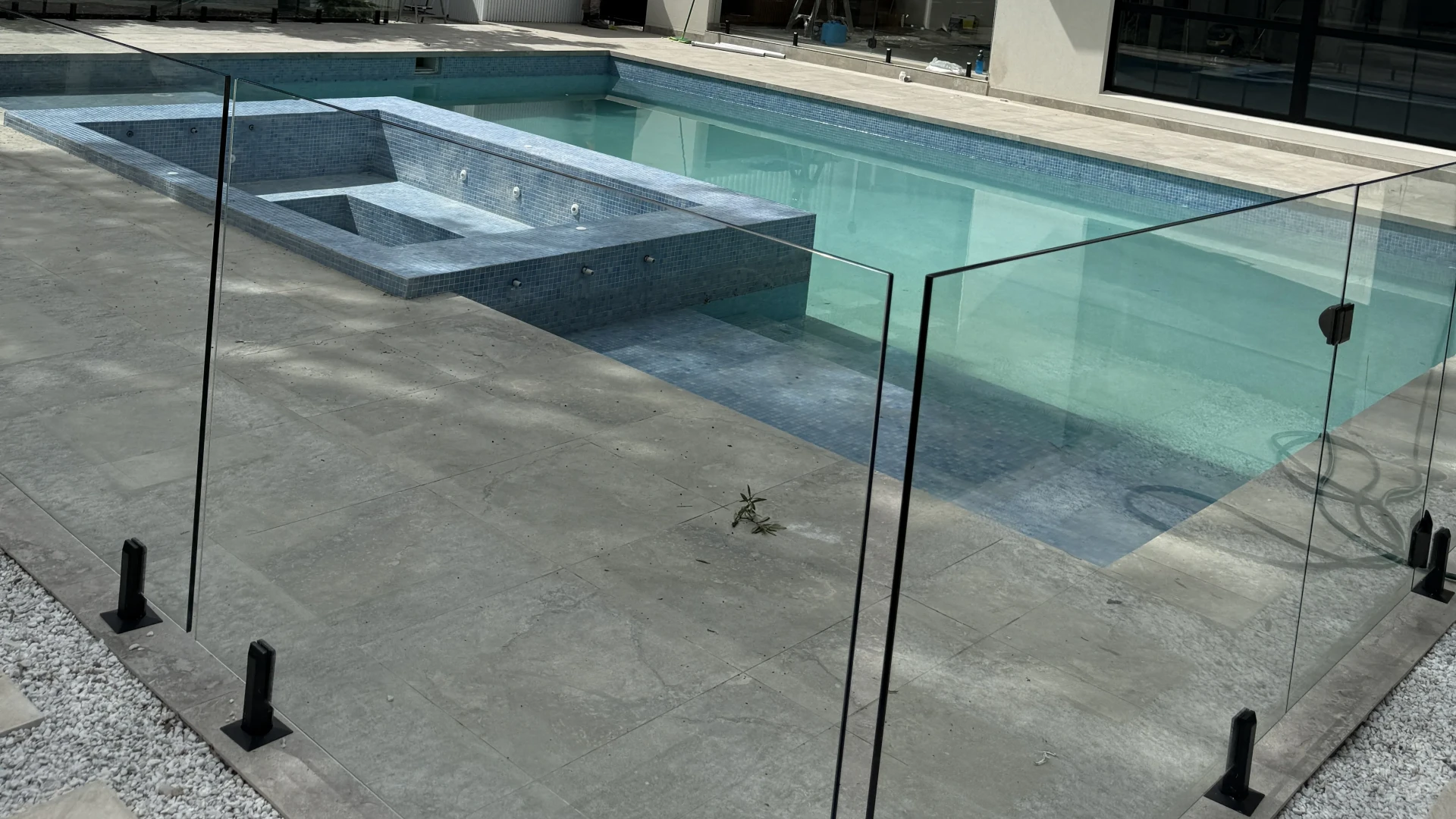
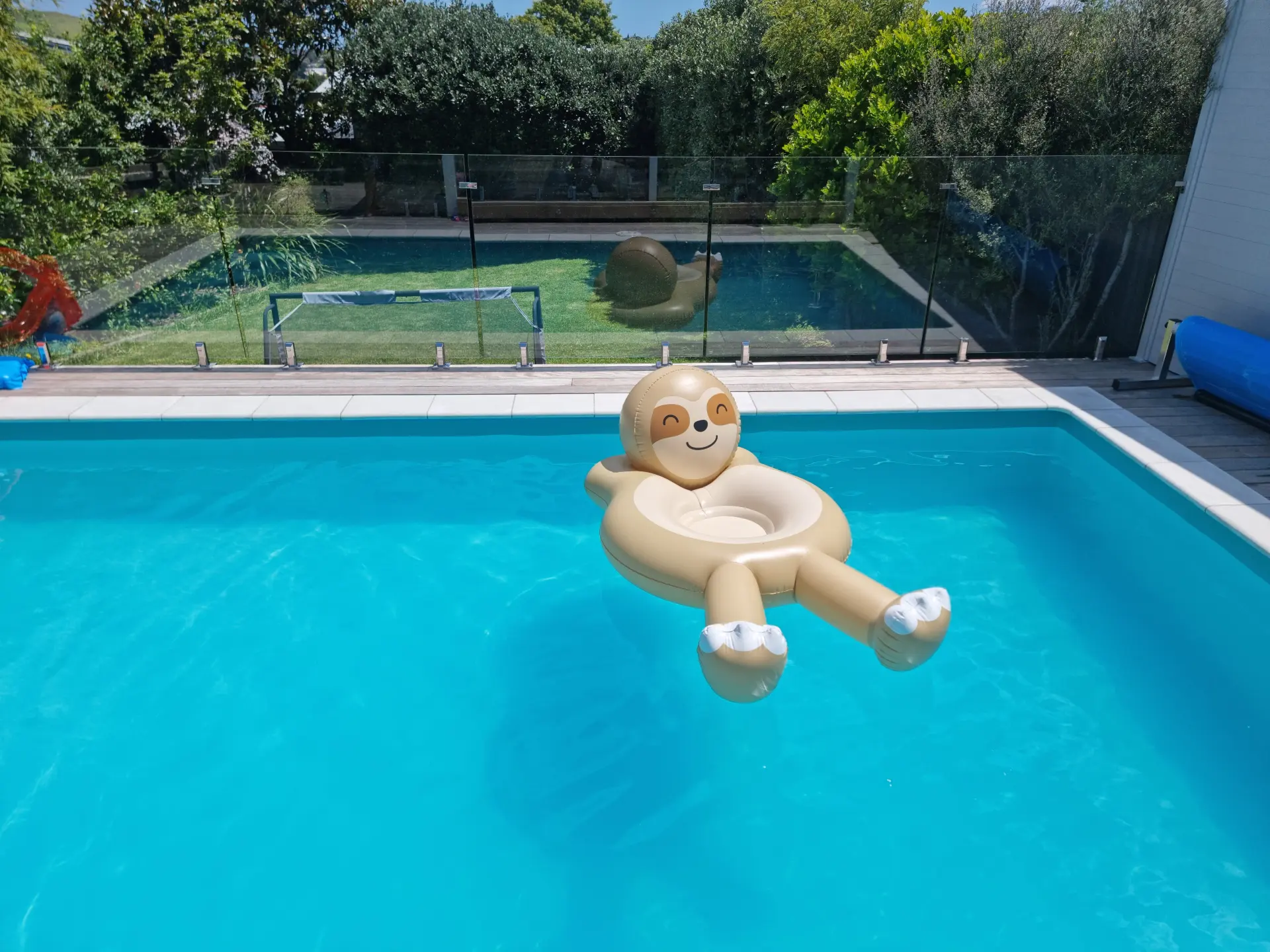
A compliant, well-maintained pool barrier is one of the important physical controls used to prevent young children from gaining unsupervised access to a swimming pool. In Queensland, pool fencing is a legal requirement for regulated pools, and the barrier must continue to meet applicable safety requirements after installation. The right fence also needs to suit the pool layout, surrounding ground levels, gates and everyday use.
Why pool fencing matters for child safety
Swimming pools can become dangerous very quickly when a young child gains access without an adult noticing. This is why Queensland pool safety requirements focus heavily on preventing children from entering the pool area rather than simply making the pool itself safer once someone is in the water.
A pool fence is not a replacement for active supervision, swimming education or CPR knowledge. Instead, it creates a physical barrier between the child and the pool and gives adults an additional layer of protection.
Queensland Government guidance states that pool fences and barriers must be compliant and maintained. It also identifies common causes of non-compliance, including gates that no longer self-close or self-latch, insufficient barrier height, climbable objects and changes to surrounding ground or garden levels.
For families in Brisbane, Gold Coast and Sunshine Coast homes, this means choosing a pool fence should be about more than appearance. The design needs to work with the actual property and remain safe and compliant as the area changes over time.
What makes a pool fence child-safe?
A child-safe pool barrier needs to restrict access to the pool area and meet the requirements that apply to the particular pool and property.
Some of the important considerations include:
- Barrier height: Queensland guidance generally requires a pool barrier to be at least 1,200 mm high, measured from the relevant ground level.
- Self-closing and self-latching gates: Pool gates need appropriate hardware so they automatically close and latch.
- Non-climbable areas: The barrier and its surrounding area need to be designed so children cannot easily use rails, furniture, plants or other objects to climb into the pool area.
- Gaps and damage: Broken, loose or incorrectly positioned components can create access points.
- Ground levels: New garden beds, landscaping or changes in ground level can reduce the effective height of an existing barrier.
- Ongoing maintenance: A fence that complied when it was installed can become non-compliant if components move, gates become misaligned or the surrounding area changes.
These requirements are not simply design details. They are part of the reason professional measurement and installation matter.
Always confirm the current requirements for your property with the relevant Queensland authority, licensed pool safety inspector, building certifier or other qualified professional.
Choosing the right pool fencing material
There is no single pool fencing material that suits every property.
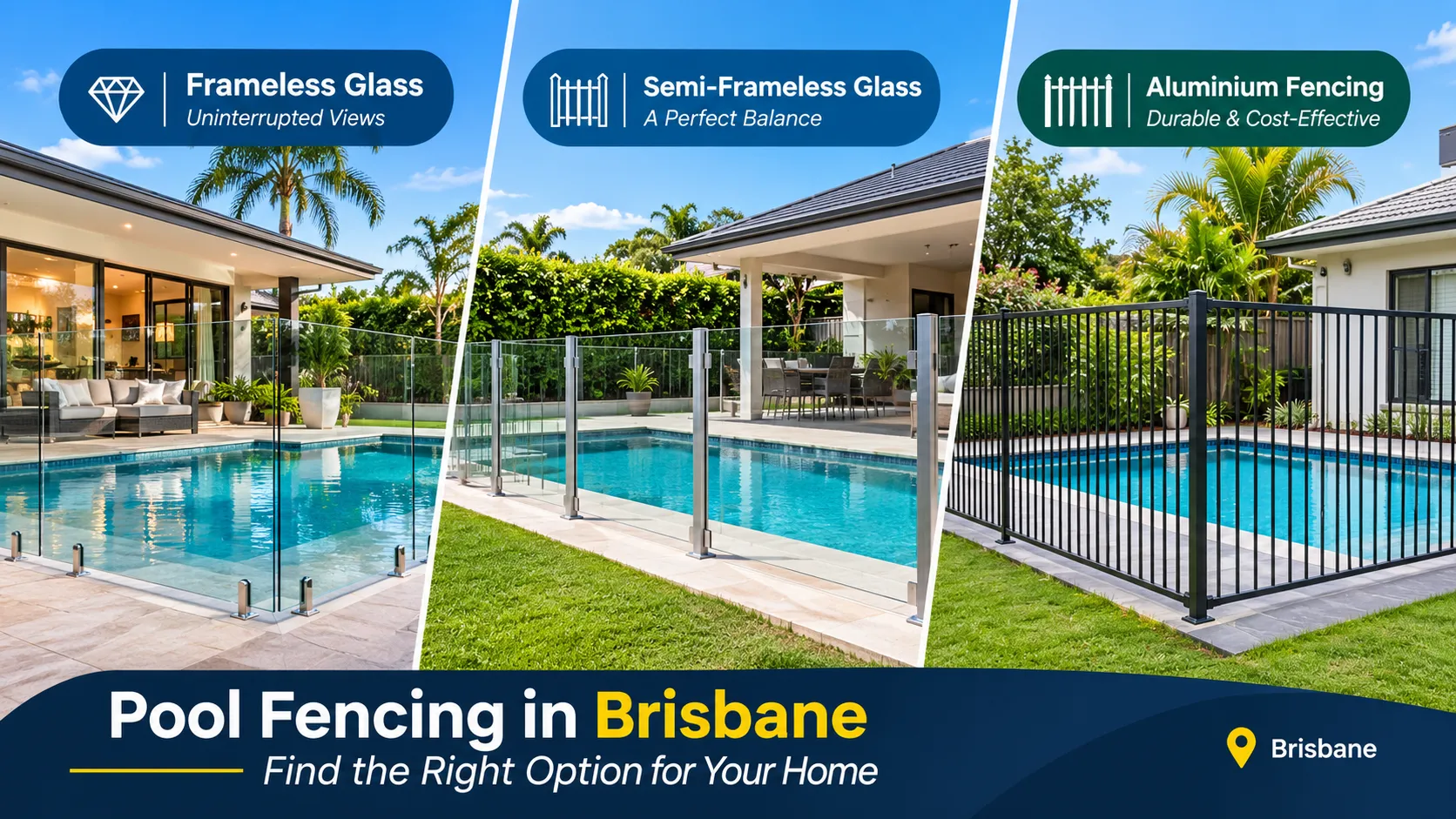
In Queensland, common options include frameless glass, semi-frameless glass and aluminium. The decision should consider safety requirements, visibility, maintenance, budget, fixing conditions and the surrounding architecture.
Frameless glass pool fencing
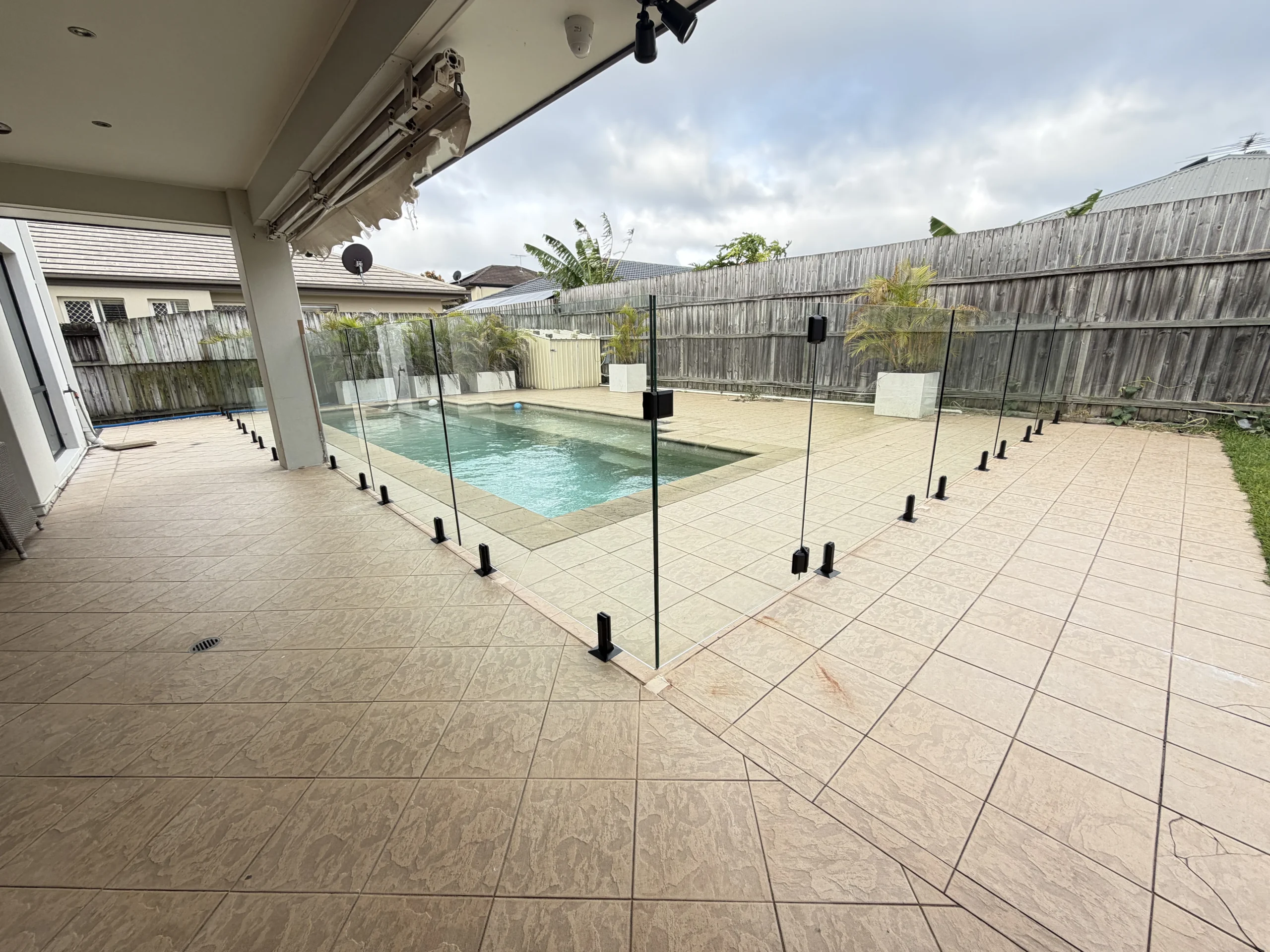
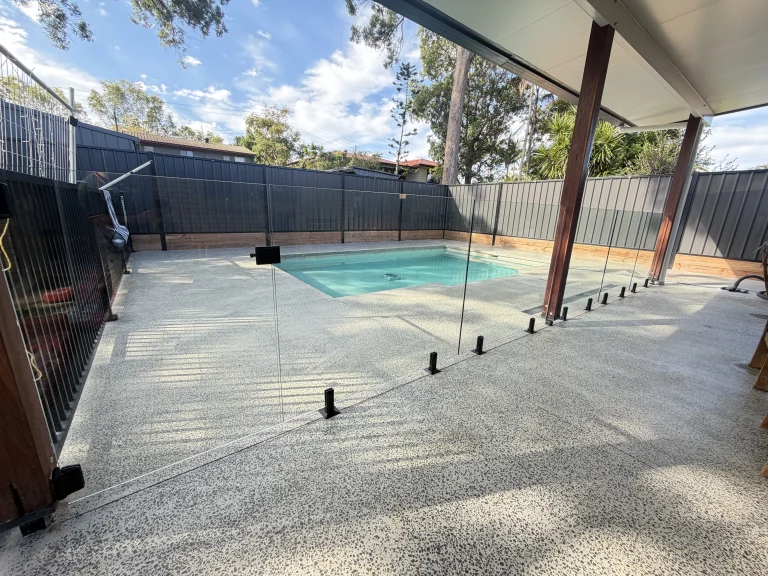
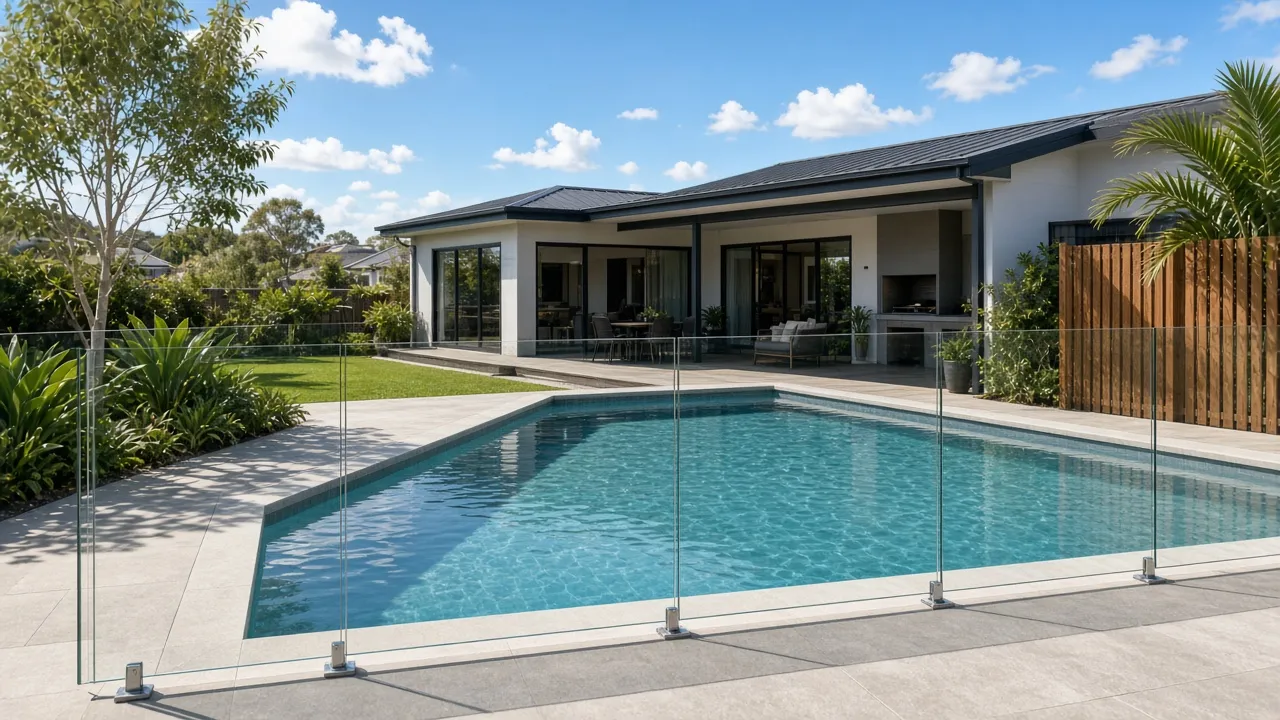
Frameless glass creates a clear visual barrier around the pool with minimal visible structural elements.
It can be particularly useful where homeowners want to preserve views across a backyard or keep the pool area visually connected with an outdoor entertaining space.
The main trade-off is maintenance. Glass makes water marks, fingerprints, dust and other residue more visible, so regular cleaning is part of keeping the fence looking its best.
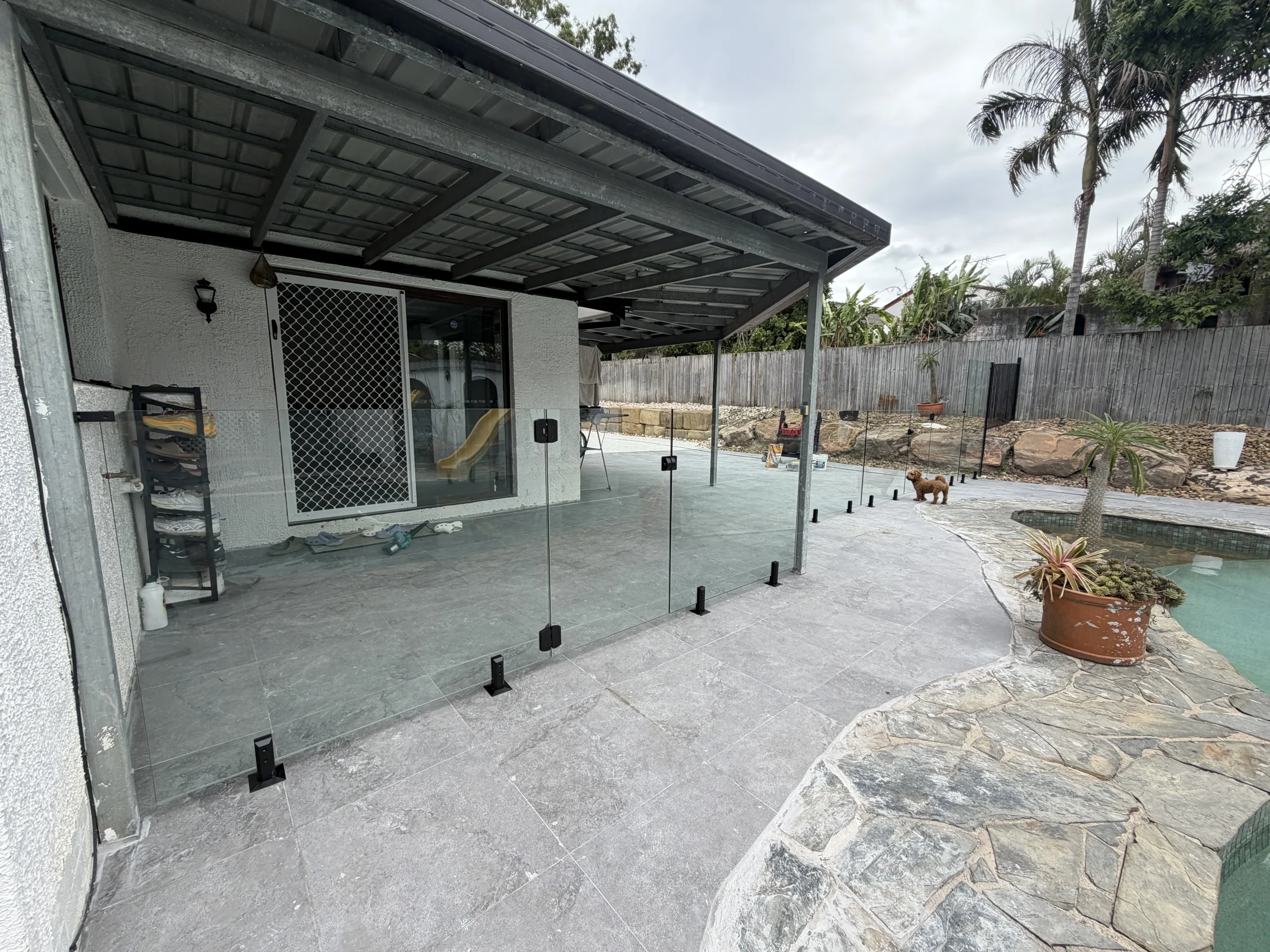
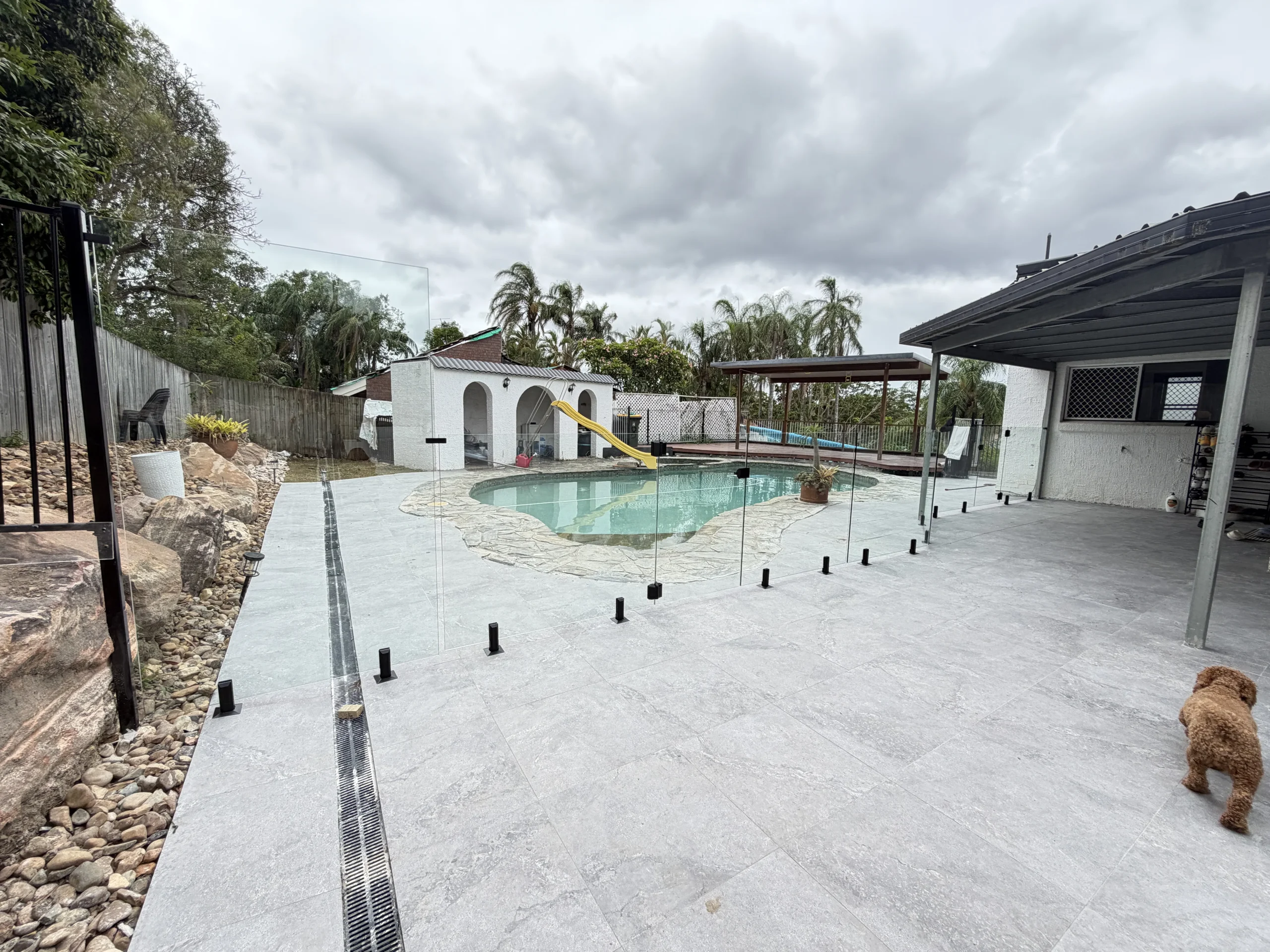
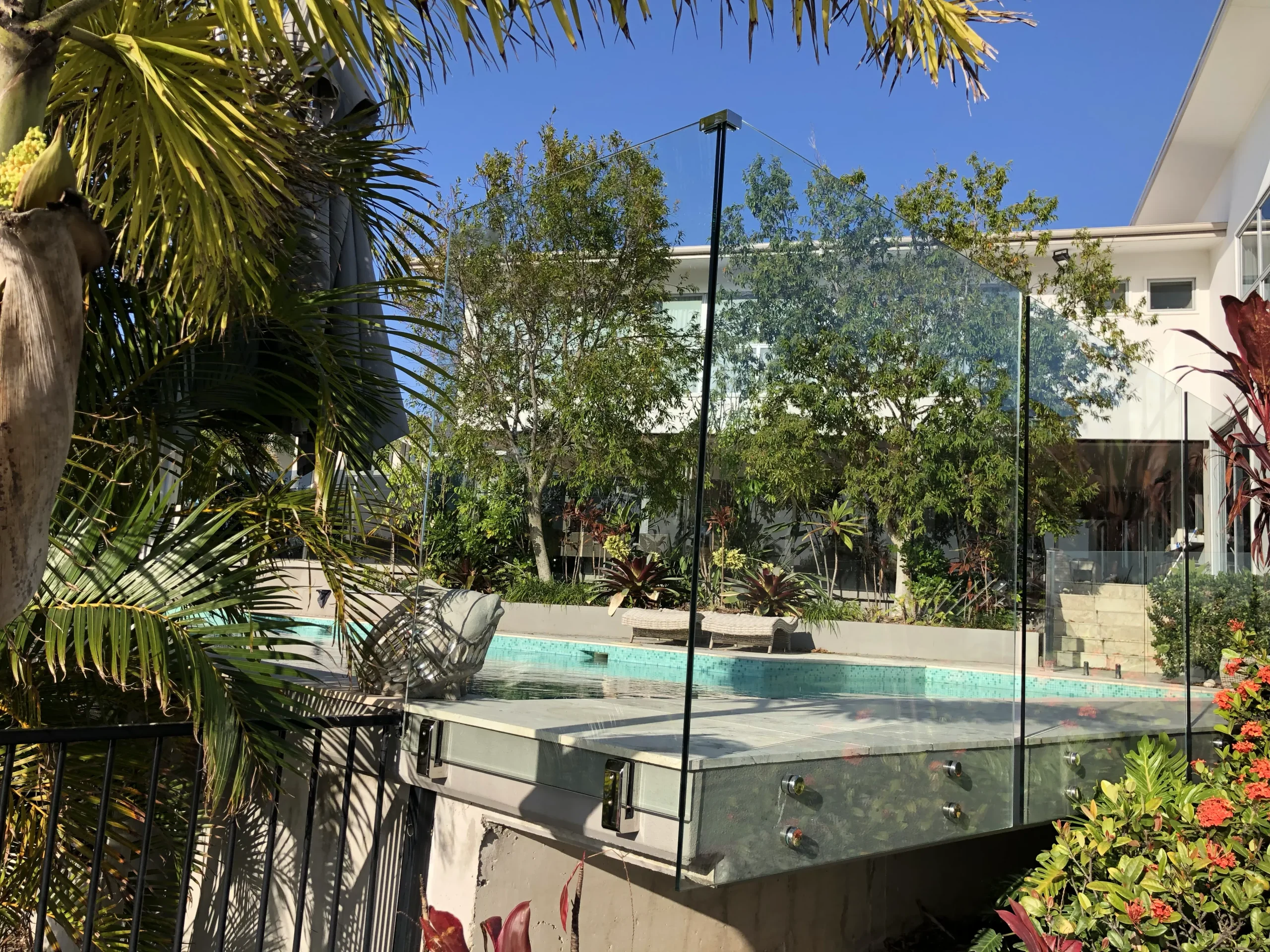
The supporting hardware and fixing method are also important. A frameless system needs to be designed around the actual surface and site conditions rather than treated as a standard one-size-fits-all installation.
Semi-frameless glass pool fencing
Semi-frameless systems use glass panels with visible posts or other supporting components.
This provides much of the openness of glass while giving the fence a more defined structural appearance. Depending on the pool layout and fixing conditions, semi-frameless fencing can be a practical middle ground between a fully frameless system and a conventional metal fence.
Aluminium pool fencing
Aluminium is another practical option for Queensland pool areas.
It provides a more defined visual boundary than clear glass and can be finished in different colours and profiles. Aluminium can also be useful where the homeowner wants a straightforward, durable fencing solution without the cleaning requirements associated with large glass panels.
For properties exposed to humidity, rain and coastal conditions, material selection and finish are worth discussing before fabrication.
Pool fencing in Brisbane, Gold Coast and coastal Queensland

Queensland conditions can be hard on outdoor materials.
Heat, UV exposure, humidity, heavy rain and coastal salt can all affect outdoor metalwork and hardware over time. Properties closer to the coast may need particular attention to the material and finish selected for fittings and other exposed components.
The location of the pool also matters.
A fence beside a sheltered backyard on a level concrete surface has different installation considerations from one installed beside a garden, retaining wall, sloping block or coastal property.
This is one reason an on-site measure is useful before fabrication. The fence should be designed around the actual conditions rather than relying only on measurements supplied remotely.
How much does pool fencing cost?
Pool fencing prices vary considerably depending on the material, total length and complexity of the site.
As a Queensland estimate, glass pool fencing in Brisbane can often sit around $350–$900 per lineal metre fully installed. This is an estimate, not a fixed price.
The final cost can be affected by:
- Total lineal metres
- Frameless versus semi-frameless construction
- Aluminium versus glass
- Number and type of gates
- Gate hardware
- Glass specification
- Fixing method
- Concrete, paving or other existing surfaces
- Ground levels and landscaping
- Difficult site access
- Curves, corners and changes in direction
- Removal or modification of existing fencing
- Additional work required to achieve compliance
A low per-metre price is not necessarily comparable with another quote if one quote excludes gates, removal, difficult fixing work or other installation requirements.
When comparing quotes, ask for the complete scope rather than comparing only the headline price.
Common pool fencing mistakes that can create safety problems
1. Treating the fence as a one-time installation
Pool fencing requires ongoing attention. Gates can become misaligned, fittings can loosen and landscaping can change.
Regularly check the entire barrier rather than assuming it remains compliant indefinitely.
2. Leaving the pool gate propped open
A self-closing gate cannot provide its intended protection if it is deliberately left open.
The gate should close and latch correctly every time.
3. Adding climbable objects near the barrier
Outdoor furniture, pots, garden features, toys and other objects can potentially provide climbing opportunities.
The area around the barrier should be considered as part of the overall safety arrangement.
4. Ignoring changes to garden beds
Raising garden beds or changing landscaping levels can reduce the effective height of an existing pool barrier.
Landscaping should therefore be considered before making changes around the pool.
5. Choosing a fence based only on appearance
A pool fence can look excellent in a photograph but still be unsuitable for a particular site.
The layout, gate position, ground conditions, surrounding structures and applicable requirements should all be considered before fabrication.
What to check before buying pool fencing

Before choosing a fabricator, ask these practical questions:
- Will the site be measured before fabrication?
- Which fencing system is suitable for the existing pool layout?
- What material and finish are included?
- What type of gate and self-closing hardware will be installed?
- How will the fence be fixed to the existing surface?
- Are existing fences or structures part of the pool barrier?
- Does the proposed layout address the applicable Queensland pool safety requirements?
- Is removal of an existing fence included?
- What maintenance will the fence require?
- What warranty applies to the product?
- What happens if a defect is identified after installation?
- Is the quote based on the actual site conditions?
A professional quote should make the scope clear before fabrication begins.
For a custom project, the process can include site measurement, design, fabrication and installation so that the fence is developed around the property rather than forcing the property to fit a standard system.
Pool fencing is only one part of pool safety
A compliant barrier is an important part of reducing the risk of child access, but it should not be treated as the only safety measure.
Queensland child-safety guidance also recommends active supervision of young children around water. Adults should know who is responsible for supervision and avoid distractions when supervising children.
Homeowners should also keep the barrier in good condition, make sure the gate operates correctly and remove objects that could provide access to the pool area.
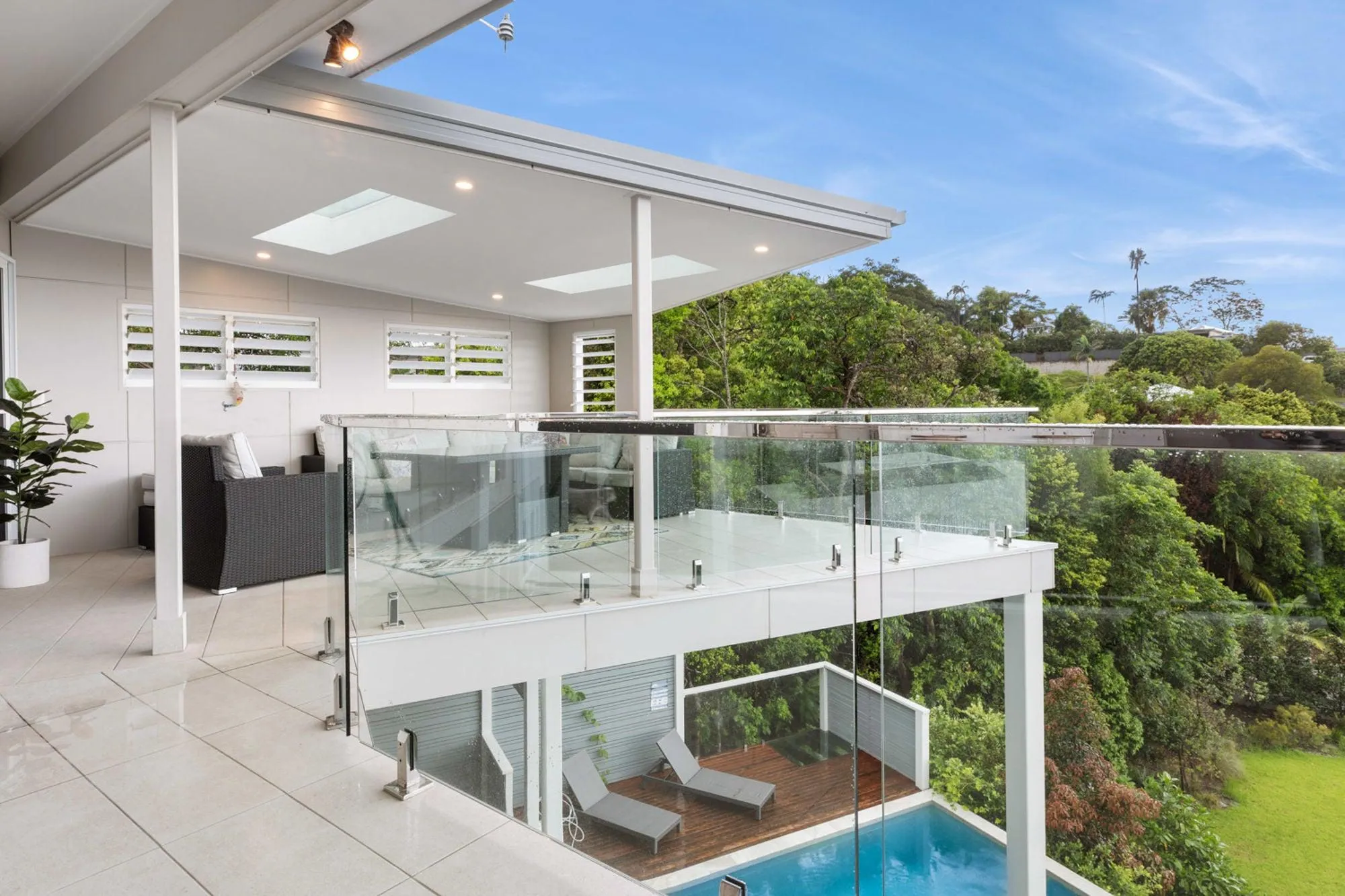
For properties with other fall risks, such as balconies, decks or stairs overlooking outdoor areas, separate safety considerations may also apply. If your project includes these areas, AMG Fabrication also provides custom glass and aluminium balustrades and staircase balustrades for residential and commercial properties.
Maintaining your pool fence
Regular maintenance can help identify problems before they become serious.
For glass pool fencing:
- Clean glass regularly to remove dirt, water marks and residue.
- Inspect glass panels for visible damage.
- Check that panels remain firmly positioned.
- Inspect spigots, hinges and other hardware.
- Check that the gate closes and latches correctly.
For aluminium fencing:
Wash the fence periodically to remove dirt and salt residue.
Check posts, connections and gate hardware.
Look for movement, damage or loose components.
Keep surrounding vegetation trimmed.
Check that landscaping has not reduced the effective barrier height.
After storms, impacts or significant landscaping work, it is sensible to inspect the barrier again.
If there is any doubt about compliance, contact a licensed pool safety inspector or other relevant qualified professional rather than assuming the fence remains compliant.
Why custom fabrication can make a difference
Pool areas are rarely identical.
One Brisbane property may have a simple level pool surround, while another may have gardens, paving, retaining walls, existing boundary fencing and different ground levels around the pool.
A custom approach allows the design and installation to account for those conditions.
AMG Fabrication provides custom glass and aluminium pool fencing, with design, manufacture and installation for residential and commercial projects across Brisbane, Gold Coast, Sunshine Coast and surrounding suburbs.
The available options include frameless glass, semi-frameless glass and aluminium pool fencing. The appropriate option depends on the property’s layout, desired appearance, maintenance preferences and project requirements.
Frequently asked questions
Does every pool in Queensland need a pool fence?
Queensland requires regulated swimming pools to have compliant barriers. The specific requirements can vary according to the pool and property, so owners should confirm the current requirements that apply to their situation.
What height should a Queensland pool fence be?
Queensland Government guidance states that a pool barrier must generally be at least 1,200 mm high from the relevant ground level. Other requirements also apply, including provisions concerning gates, climbable areas and gaps.
Is glass pool fencing safe around children?
A properly designed and compliant glass pool barrier can provide a physical barrier that restricts children’s access to the pool area. However, no fence replaces active adult supervision, and the complete barrier and surrounding area must be maintained.
Is frameless glass more expensive than aluminium pool fencing?
Generally, frameless glass has higher material and installation costs than many aluminium systems. However, the actual price depends on the design, site conditions, fixing method, gate requirements and project size.
How often should I check my pool fence?
Pool owners should check their barrier regularly and after events that could affect it, such as impacts, storms, gate problems or landscaping changes. Any damage or suspected non-compliance should be addressed promptly.
Can my existing boundary fence be used as a pool barrier?
In some circumstances, a dividing fence can form part of a pool barrier, but it must meet the applicable requirements. The condition, height, climbability and surrounding area all need to be considered.
Do I need a professional inspection?
If you are unsure whether an existing or proposed barrier complies with Queensland requirements, engaging a licensed pool safety inspector or relevant building professional is a sensible step. Compliance requirements can change, and individual properties can have different considerations.
Conclusion: choose pool fencing with safety in mind
Pool fencing plays an important role in preventing young children from gaining unsupervised access to swimming pools. In Queensland, the barrier also needs to meet applicable safety requirements and remain compliant through ongoing maintenance.
For homeowners in Brisbane, Gold Coast and Sunshine Coast, the choice between frameless glass, semi-frameless glass and aluminium should be based on the property’s layout, safety requirements, maintenance expectations and budget — not appearance alone.
AMG Fabrication provides custom pool fencing design, fabrication and installation for residential and commercial properties.
For a free consultation and obligation-free quote, contact AMG Fabrication to discuss your pool fencing project and arrange an assessment of your site.