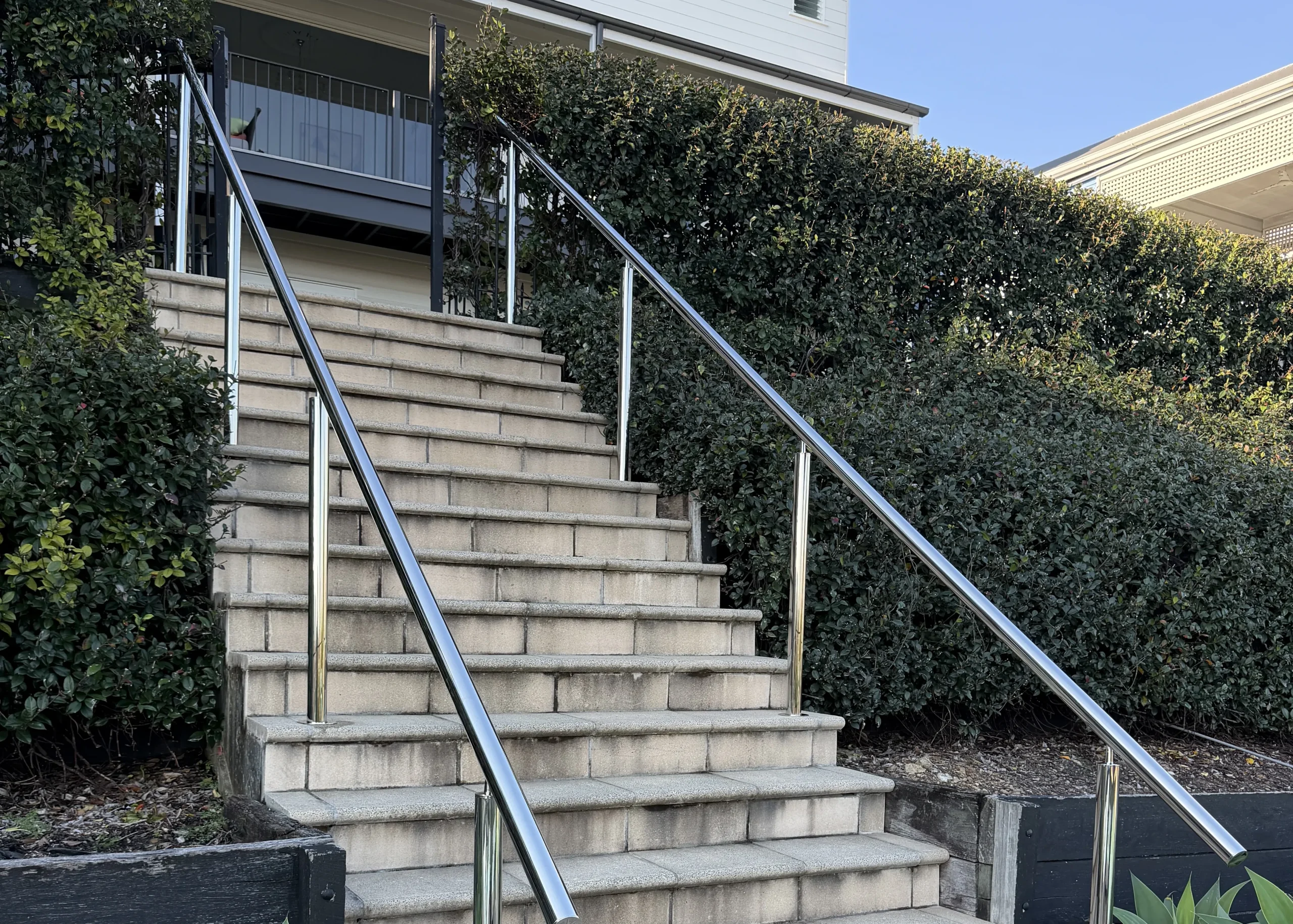
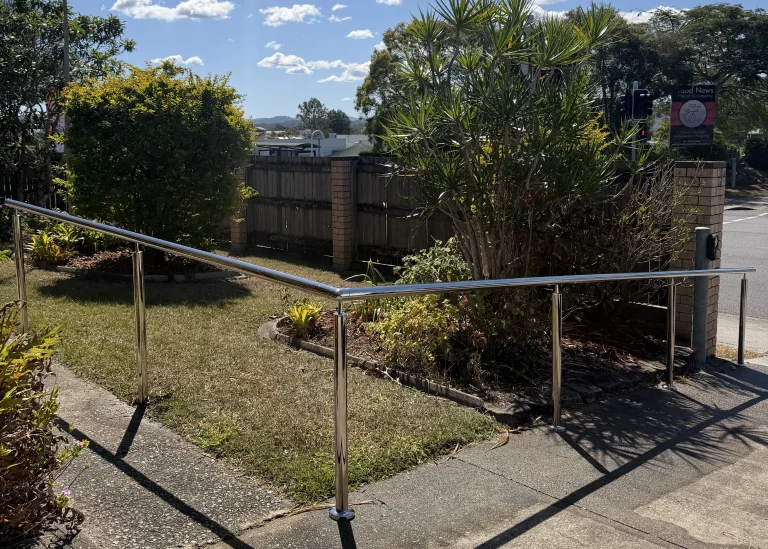
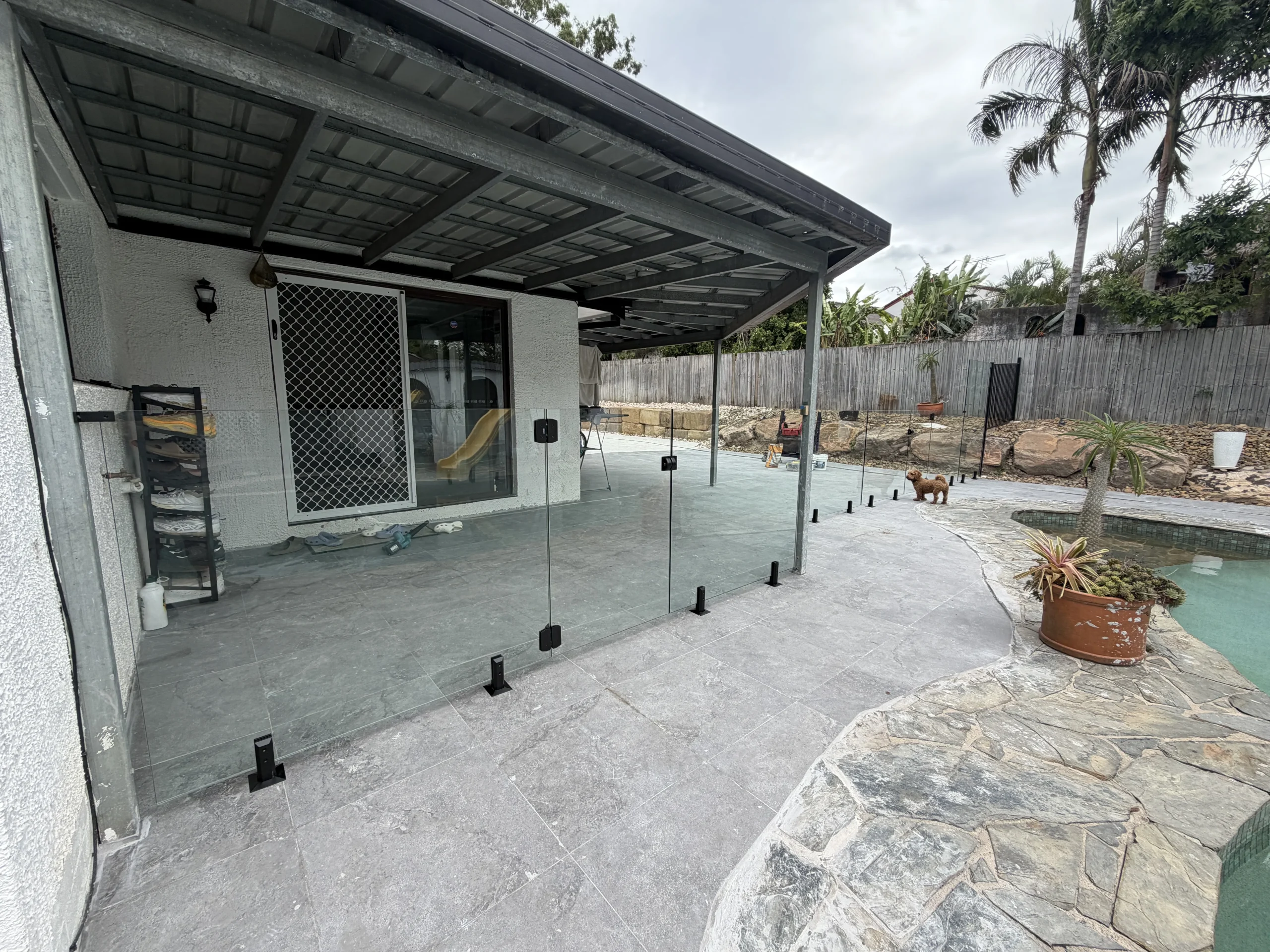
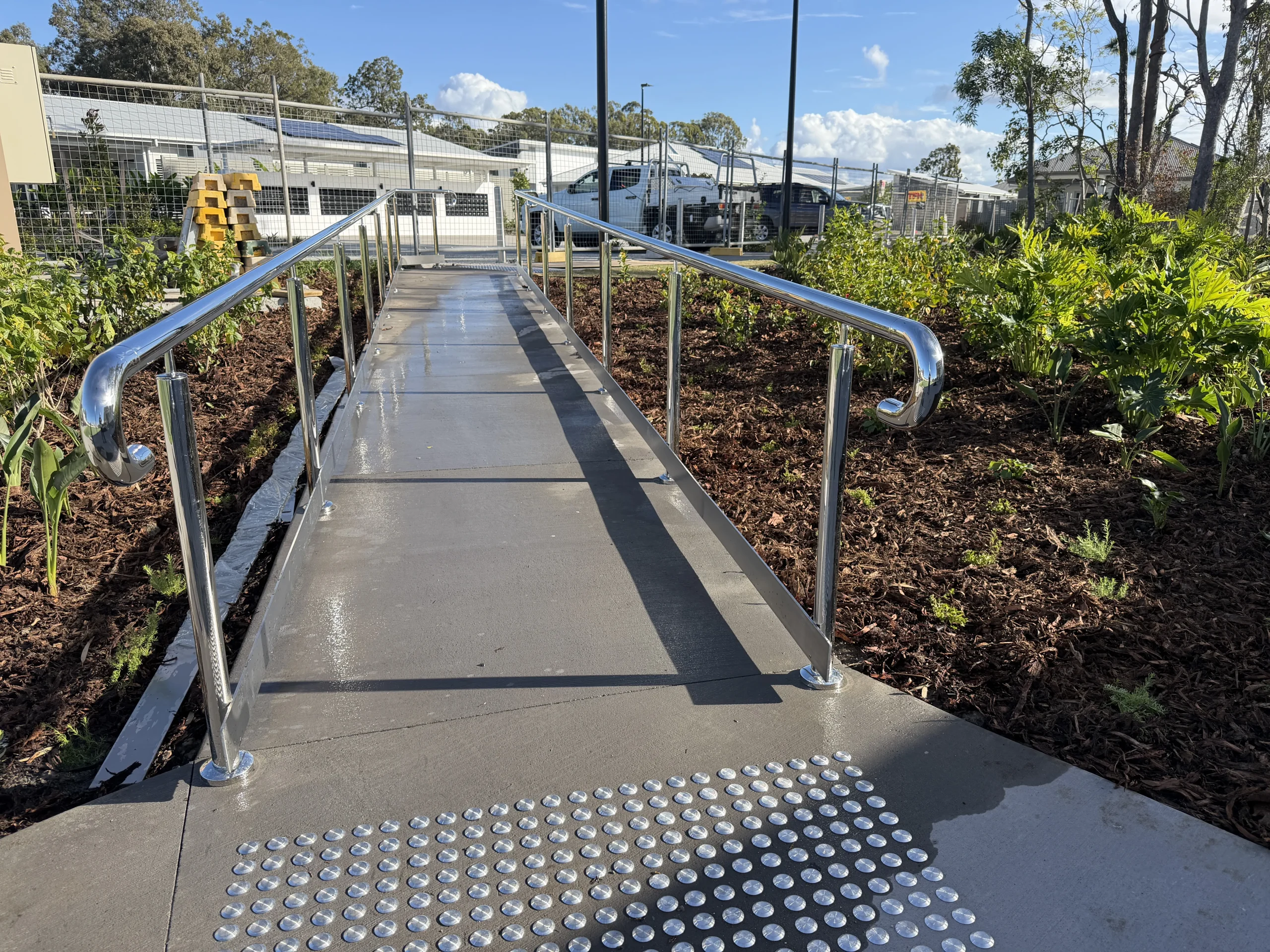
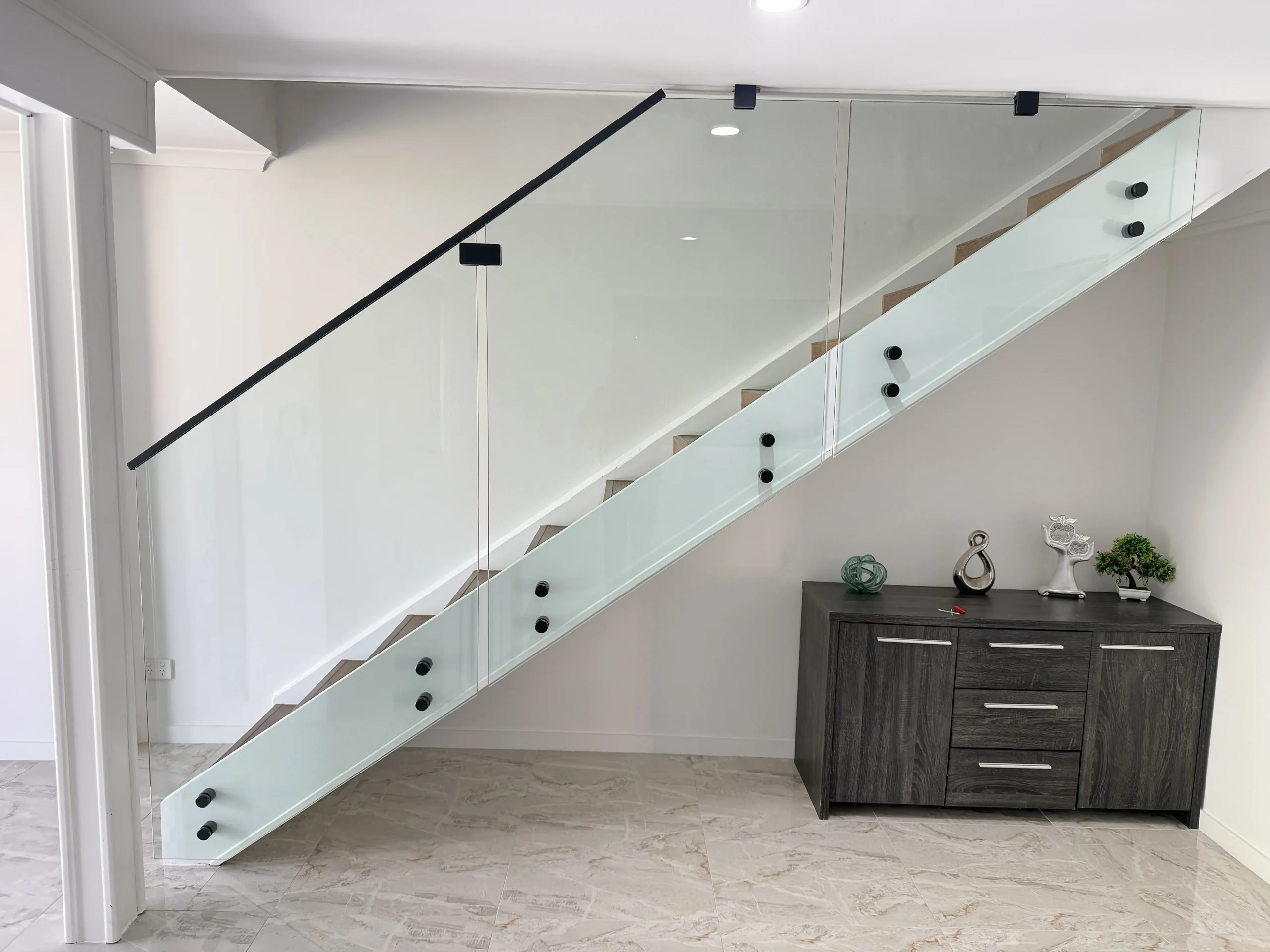
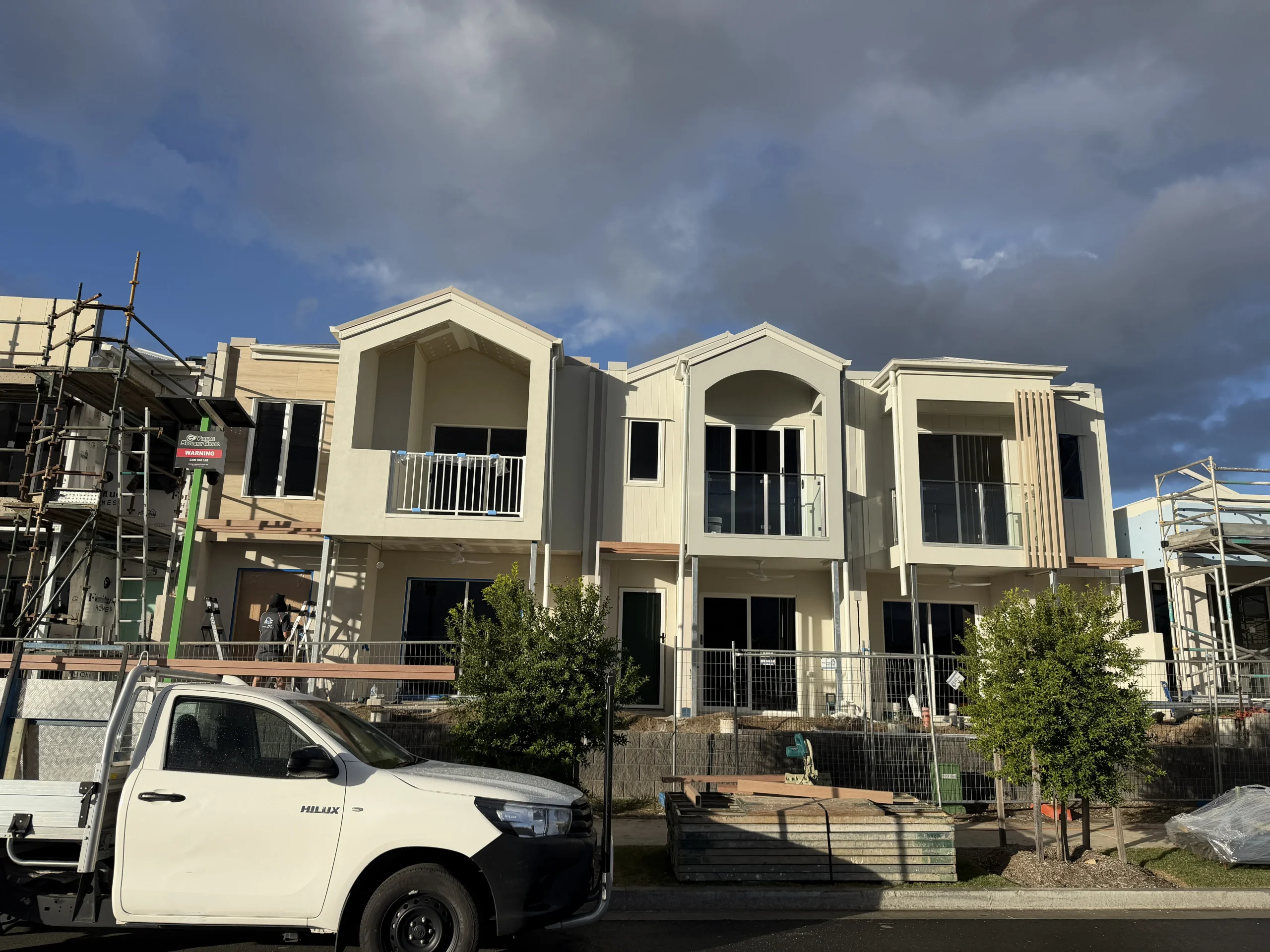
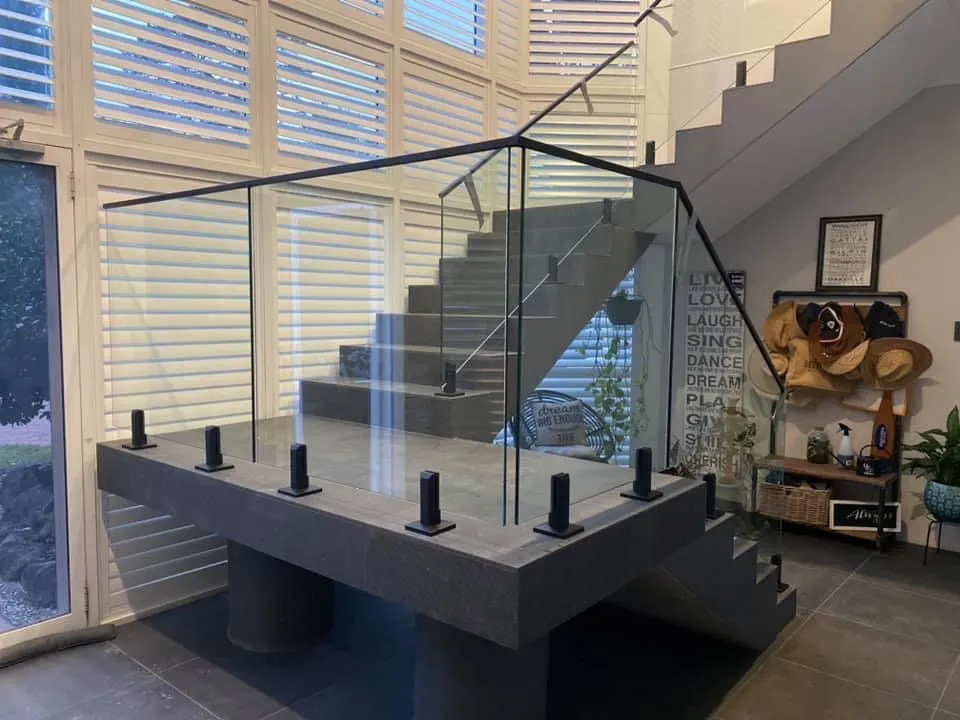
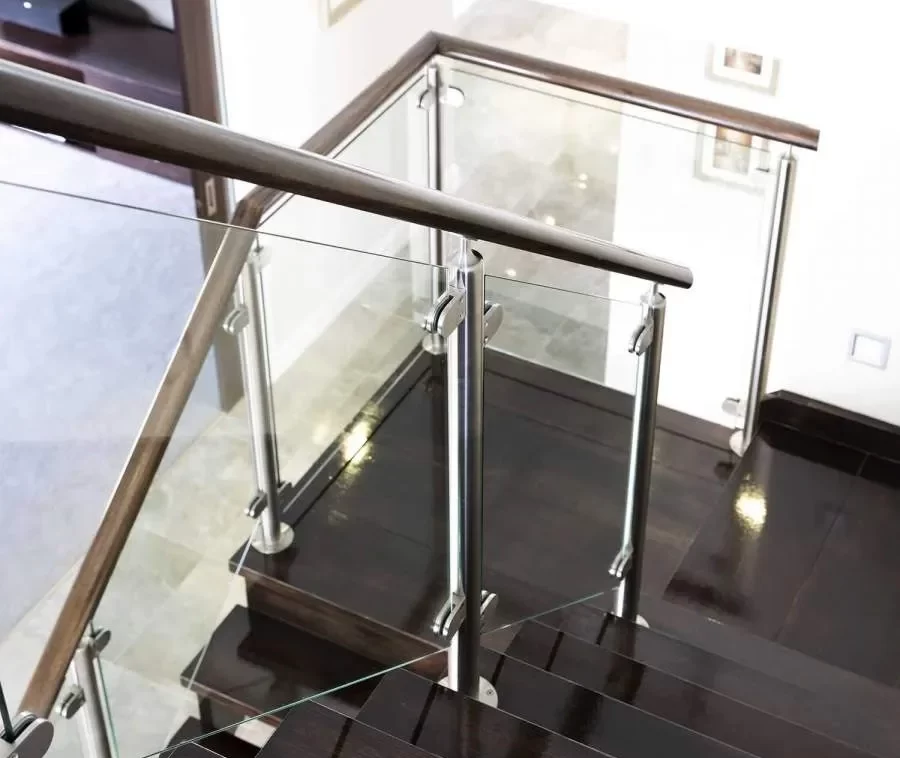
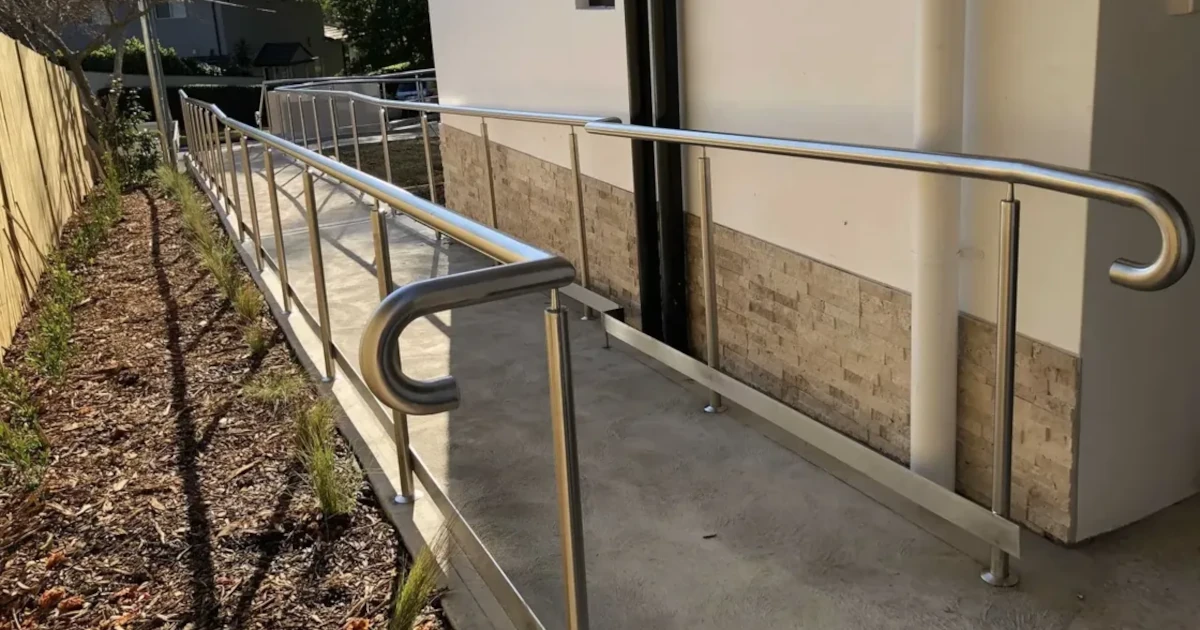
Stainless steel handrails provide a practical, modern option for outdoor stairs, front paths and entryways. They offer a clean appearance and can perform well in Queensland’s climate when the correct grade, finish, fixings and maintenance routine are selected. However, coastal exposure, installation conditions and safety requirements all need to be considered before choosing a system.
For homeowners in Brisbane, the Gold Coast and the Sunshine Coast, the right handrail should provide reliable support, suit the property’s appearance and withstand local weather conditions. This guide explains the available options, material differences, compliance considerations, costs and maintenance requirements to help you make an informed decision.
Why Install Stainless Steel Handrails Outdoors?
Outdoor stairs and front paths can become difficult to navigate when surfaces are wet, uneven or steep. A properly designed handrail provides a stable point of support, helping people maintain balance as they move between different levels.
For households with children, older residents or visitors with limited mobility, suitable handrails can make everyday access more practical. They can also help improve access around commercial entrances, shared walkways and outdoor staircases.
Stainless steel is popular for these applications because it combines a contemporary appearance with useful corrosion resistance. It can complement concrete steps, tiled entryways, rendered walls, timber features and modern architectural designs.
However, stainless steel is not maintenance-free. Its performance depends on the grade, surface finish, surrounding environment and quality of installation.
Before selecting a design, consider:
- Safety: Does the handrail provide a suitable, continuous grip along the intended route?
- Weather exposure: Will it be exposed to rain, strong sunlight, humidity or coastal salt?
- Fixing conditions: Can the handrail be securely attached to the existing steps, concrete or supporting structure?
- Appearance: Would polished stainless steel, brushed stainless steel or powder-coated aluminium suit the property?
- Maintenance: Are you prepared to clean the rail and inspect its fittings periodically?
AMG Fabrication provides custom handrail fabrication and installation for residential and commercial properties across Brisbane, the Gold Coast, the Sunshine Coast and surrounding suburbs.
Choosing the Right Handrail Design for Outdoor Stairs and Paths
The shape and position of a handrail should reflect how people use the space. A rail for a short set of front steps may have different requirements from one installed along a long external staircase or a commercial access route.
Wall-mounted handrails
Wall-mounted handrails are fixed to a suitable wall or supporting structure beside the stairs.
They can be a good option when a staircase runs alongside a house, retaining wall or building entrance.
Advantages include:
- A relatively unobstructed staircase.
- A simple appearance that suits many residential properties.
- No floor-mounted posts occupying additional space along the stairs.
- Flexibility in rail length and mounting position, subject to applicable requirements.
The wall and fixings must be suitable for the loads involved. Rendered masonry, lightweight cladding and other finishes may require different fixing arrangements.
Post-mounted handrails
Post-mounted systems use vertical supports secured to an appropriate structural surface.
They’re useful where a wall isn’t available or where the handrail needs to follow an open staircase or path.
The posts, base plates, anchors and supporting substrate must be considered as one system. Fixing a rail to a weak surface or unsuitable paving can compromise its stability.
Handrails integrated with balustrades
Where stairs or paths have an exposed edge, a handrail may form part of a larger balustrade system.
The handrail provides a gripping surface, while the balustrade acts as a barrier against falls. Although these elements can be integrated, they serve different functions.
For raised outdoor areas, balconies and staircases, the design may need to address both requirements.
AMG Fabrication also provides custom balustrade solutions for projects where a handrail and fall-prevention barrier need to work together.
What about front paths?
A handrail isn’t automatically necessary along every flat garden path. However, steps, steep sections and changes in level may justify additional support, depending on the layout and intended users.
Consider the path’s gradient, surface condition, lighting and drainage before deciding where a rail should begin and end.
A site assessment can help determine whether a wall-mounted rail, a post-supported design or a different access arrangement is more suitable.
Stainless Steel vs Aluminium vs Galvanised Steel

Stainless steel is not the only suitable material for outdoor handrails. Aluminium and galvanised steel can also work well, depending on the project.
The right choice depends on the environment, appearance, budget and maintenance expectations.
Stainless steel handrails
Stainless steel offers a clean, contemporary finish and good corrosion resistance when the grade is appropriate for the environment.
It’s commonly considered for modern homes, outdoor stairs, entryways and commercial properties where a metal finish suits the architecture.
Advantages:
- Contemporary appearance.
- Available in different surface finishes.
- Good corrosion resistance when correctly specified.
- Suitable for custom fabrication and a range of mounting arrangements.
Considerations:
- Generally costs more than some simpler metal handrail options.
- Can show fingerprints, water marks and surface contamination.
- Coastal installations may require a more corrosion-resistant grade.
- Regular cleaning is important to maintain appearance and performance.
Powder-coated aluminium handrails
Aluminium provides a lightweight alternative and can be finished in different colours to coordinate with windows, fencing and other outdoor features.
Its lower weight can be useful during fabrication and installation, although the complete system still needs to be designed for the required loads.
Advantages:
- Lightweight material.
- Available in a range of powder-coated colours.
- Suitable for many residential outdoor applications.
- Can coordinate with existing aluminium fencing and architectural features.
Considerations:
- The protective finish can be damaged by impact or abrasion.
- Scratched or chipped coatings need appropriate attention.
- Its appearance differs from exposed stainless steel.
- The design and fixing details must suit the installation environment.
Galvanised steel handrails
Galvanised steel has a zinc coating that helps protect the underlying steel from corrosion.
It can suit projects where a robust metal handrail is required, including some external access and commercial applications.
However, the coating needs to remain in suitable condition. Damaged areas, exposed edges and locations where water collects may require particular attention.
Stainless Steel Handrails in Queensland’s Coastal Climate
Queensland’s climate can be demanding on outdoor metalwork.
Heat, UV exposure, heavy rain, humidity and airborne salt can all influence the long-term condition of handrails and their fixings.
The risks are particularly relevant for homes near the ocean, including properties on the Gold Coast and Sunshine Coast.
Choosing a suitable stainless steel grade
Stainless steel contains chromium, which helps form a protective surface layer. Different grades have different corrosion-resistance characteristics.
For example, a grade suitable for a sheltered outdoor entryway may not be the best choice for a location regularly exposed to salt spray.
Discuss the site’s exposure with your fabricator before choosing a grade. The correct specification should account for the location, surface finish, cleaning routine and nearby materials.
Brushed or polished finishes
Brushed stainless steel has a more subdued appearance and can suit contemporary residential architecture.
Polished finishes provide a more reflective surface. Both can work outdoors, but the choice affects appearance, cleaning and how visible surface marks may be.
Neither finish eliminates the need for appropriate material selection and maintenance.
Managing rainwater and drainage
Poor drainage can contribute to corrosion problems when water and contaminants remain around fittings or joints.
Where practical, the design should avoid unnecessary water traps and allow surfaces to drain and dry appropriately.
This is especially important around base plates, connections and areas where the handrail meets concrete or masonry.
Matching fixings to the environment
The fixings are just as important as the visible rail.
Anchors, brackets and other components need to suit the supporting material and the exposure conditions. Using unsuitable components can create weak points or corrosion issues even when the handrail itself is made from a suitable grade of stainless steel.
A properly specified system considers the rail, fixings, mounting surface and surrounding environment together.
Outdoor Handrail Safety and Building Requirements
A handrail should look appropriate for the property, but safety needs to guide the design.
Requirements can vary according to the building classification, stair configuration, intended use and applicable building regulations.
The Australian Building Codes Board explains that the National Construction Code (NCC) addresses stair dimensions, handrails, slip resistance and fall-prevention barriers.
Its official guidance on stairways, barriers and handrails is a useful starting point for homeowners and builders.
Handrail height and position
Handrail height must be assessed against the requirements applicable to the particular project.
For example, the NCC contains specific handrail provisions for certain stairways and ramps. Accessible paths and commercial buildings may have additional requirements.
Don’t assume that a measurement suitable for one staircase will automatically be correct for another.
Continuity and grip
The rail should provide a usable gripping surface along the required section of the stairs or ramp.
Its shape, clearance from adjacent walls and placement relative to the steps can influence how easily people can use it.
Corners, transitions and terminations should be considered during design rather than improvised during installation.
Handrails and balustrades are different
A handrail assists people with balance and support. A balustrade provides a barrier where there is a risk of falling from an exposed edge.
Some installations combine these functions, but a handrail alone may not provide adequate fall protection where a compliant barrier is required.
For elevated decks and external staircases, the complete arrangement should be assessed.
Commercial and accessible routes
Commercial properties may have additional requirements related to accessibility, building classification, pedestrian traffic and emergency egress.
Designers and builders should confirm the relevant requirements before fabrication.
For background on accessible building design, see Standards Australia’s overview of AS 1428.1:2021.
Building requirements and referenced standards can change, and the NCC’s application depends on the jurisdiction and project. Confirm the current requirements with your building certifier or other suitably qualified professional before finalising the design.
How Much Do Outdoor Stainless Steel Handrails Cost?
The cost of an outdoor stainless steel handrail depends on the design and installation conditions. There isn’t one reliable price that applies to every staircase or front path.
A straightforward wall-mounted rail is generally a different job from a long external staircase with multiple corners, custom brackets or difficult fixing conditions.
Rather than choosing a supplier on the lowest initial figure, compare the complete scope of work.
What affects the price?
1. Overall length
Longer handrails require more material and fabrication. The layout also matters because changes in direction and additional sections can increase the work involved.
2. Stainless steel grade and finish
The selected grade, rail dimensions and finish influence material costs. A coastal installation may need a different specification from a sheltered residential entryway.
3. Mounting method
Wall-mounted systems and post-supported arrangements require different brackets, supports and installation work.
The suitability of the existing wall, concrete or masonry can also affect the final price.
4. Staircase layout
Straight runs are generally simpler to fabricate than installations involving multiple flights, corners, landings and changes in direction.
Custom measurements and carefully planned transitions help ensure the finished rail suits the staircase.
5. Site access and preparation
Restricted access, difficult working conditions, removal of existing handrails and repairs to the mounting surface may add to the total.
6. Compliance requirements
Some residential and commercial installations require additional design, assessment or certification work.
Confirm what is included in the quote and whether separate professional fees may apply.
How to compare handrail quotes
Before accepting a proposal, check whether it specifies:
- The stainless steel grade and finish.
- Rail dimensions and overall length.
- Brackets, posts, anchors and other fixings.
- Site measurement and installation.
- Removal of existing handrails, if required.
- Any repairs or preparation needed before installation.
- Warranty terms and defect-rectification arrangements.
AMG Fabrication offers free consultations and obligation-free quotes. You can discuss the layout, material options and installation requirements before deciding how to proceed.
Maintaining Stainless Steel Handrails Outdoors
Stainless steel still needs routine care, particularly in coastal environments.
Regular maintenance helps preserve the appearance of the rail and makes it easier to identify corrosion, loose fittings or damage before problems worsen.
Clean the surface regularly
Wash the handrail with fresh water and a suitable mild detergent to remove dust, grime and salt deposits.
Use a soft cloth or non-abrasive cleaning material. Avoid steel wool, harsh chemicals and unsuitable abrasive products that could damage the finish.
Rinse away cleaning residue and dry the surface where practical.
Inspect the fixings
Check accessible brackets, base plates and mounting points for visible movement, damage or corrosion.
If the handrail feels loose or a fixing appears damaged, arrange an inspection and repair. Don’t rely on tightening a bolt without checking whether the supporting material or anchor has deteriorated.
Check the surrounding structure
The condition of the mounting surface matters just as much as the handrail.
Look for cracking concrete, damaged masonry, water pooling and other changes around the fixing points.
If the surface is deteriorating, the cause may need to be addressed before the handrail can be repaired properly.
Protect powder-coated components
If the installation includes powder-coated aluminium or other coated metal components, inspect the finish for chips and scratches.
Clean the surface using the manufacturer’s recommended products and repair damage appropriately.
Increase attention near the coast
Properties exposed to salt spray may need more frequent cleaning than sheltered inland homes.
A suitable maintenance routine depends on the location, material grade, finish and exposure. Follow the fabricator’s or manufacturer’s care recommendations.
Common Mistakes When Choosing Outdoor Handrails
A few avoidable mistakes can affect the safety, appearance and durability of a handrail installation.
Choosing a finish without considering exposure
A polished finish may look good in a product photograph, but the correct material specification is more important than the appearance alone.
Discuss coastal exposure and maintenance expectations before choosing a finish.
Ignoring the mounting surface
A strong handrail can still be unsafe if its fixings are attached to an unsuitable wall or deteriorating concrete.
The supporting structure should be checked before the final fixing method is selected.
Treating a handrail as a complete fall barrier
A rail intended for gripping doesn’t necessarily provide adequate protection along an exposed edge.
Where a balustrade is required, the barrier must be designed to meet the applicable requirements.
Overlooking water drainage
Water that collects around base plates, brackets or joints can contribute to deterioration.
Consider drainage and cleaning access during the design stage.
Leaving measurements until installation day
Measuring only the visible length of a staircase may overlook important details such as landings, wall clearances, mounting points and changes in direction.
An on-site measure before fabrication helps identify these issues early.
Choosing on price alone
Two quotes may appear similar while specifying different materials, finishes, fixings or installation work.
Ask for a clear breakdown so you can compare the complete proposal.
Questions to Ask Before Buying Stainless Steel Handrails
Before proceeding with a handrail project, ask your fabricator the following questions:
- Which stainless steel grade is suitable for my property’s location?
- Would stainless steel or powder-coated aluminium better suit the site?
- What mounting method will be used?
- Is the existing concrete, masonry or wall structure suitable for the proposed fixings?
- Does the design need to comply with specific handrail, accessibility or balustrade requirements?
- What finish and cleaning routine do you recommend?
- Does the quote include site measurement, fabrication and installation?
- Are removal work and repairs to existing surfaces included?
- What warranty and defect-rectification arrangements apply?
- Who should I contact if the rail becomes loose or develops corrosion?
Clear answers make it easier to understand what you’re purchasing and whether the proposed design suits your property.
AMG Fabrication provides custom metal fabrication, design, manufacture and installation for residential and commercial clients. Its founder, Sam, has more than 20 years of welding experience.
You can learn more about the company’s work through the AMG Fabrication About Us page.
Frequently Asked Questions
Are stainless steel handrails suitable for outdoor stairs?
Yes. Stainless steel can be suitable for outdoor stairs when the grade, finish, fixings and installation are appropriate for the environment. Coastal locations may require greater attention to material selection and maintenance.
What is the best stainless steel grade for coastal handrails?
The right grade depends on the property’s exposure to salt, moisture and other contaminants. Discuss the location with your fabricator before selecting a grade, and follow the recommended cleaning and maintenance routine.
Are stainless steel handrails better than aluminium?
Neither material is automatically better for every project. Stainless steel offers a distinctive metal finish, while powder-coated aluminium provides a lightweight option with different colour choices. Compare durability, exposure, appearance, cost and maintenance before deciding.
Do outdoor stairs need a handrail in Queensland?
Requirements depend on the staircase, building classification, height changes and applicable building regulations. The NCC contains specific provisions for handrails, stairs and barriers. Check the requirements for your project with a building certifier or suitably qualified professional.
Can stainless steel handrails be installed on existing concrete steps?
They can often be installed on existing concrete steps, provided the concrete and proposed fixing locations are suitable. The mounting method depends on the condition and construction of the surface, as well as the handrail design.
How do I maintain stainless steel handrails near the coast?
Clean the rail regularly with fresh water and a suitable mild detergent to remove salt and dirt. Inspect brackets and fixings for visible corrosion or movement, and follow the manufacturer’s recommendations for the selected grade and finish.
Can AMG Fabrication make custom handrails for front paths?
AMG Fabrication offers custom metal fabrication and handrail installation for residential and commercial properties. Contact the team to discuss your path layout, material preferences and site conditions and request an obligation-free quote.
Conclusion: Choose a Handrail That Suits Your Property
Stainless steel handrails can provide a practical, modern solution for outdoor stairs and front paths. The key is to select a suitable material grade, plan the mounting details properly and ensure the design addresses the applicable safety requirements.
Queensland’s coastal conditions also make material selection and regular maintenance important. A well-planned installation should account for weather exposure, drainage, fixing strength and how people will use the stairs or path.
AMG Fabrication provides custom handrail fabrication and installation across Brisbane, the Gold Coast, the Sunshine Coast and surrounding suburbs.
Planning an outdoor handrail installation?
Contact AMG Fabrication for a free consultation and obligation-free quote.