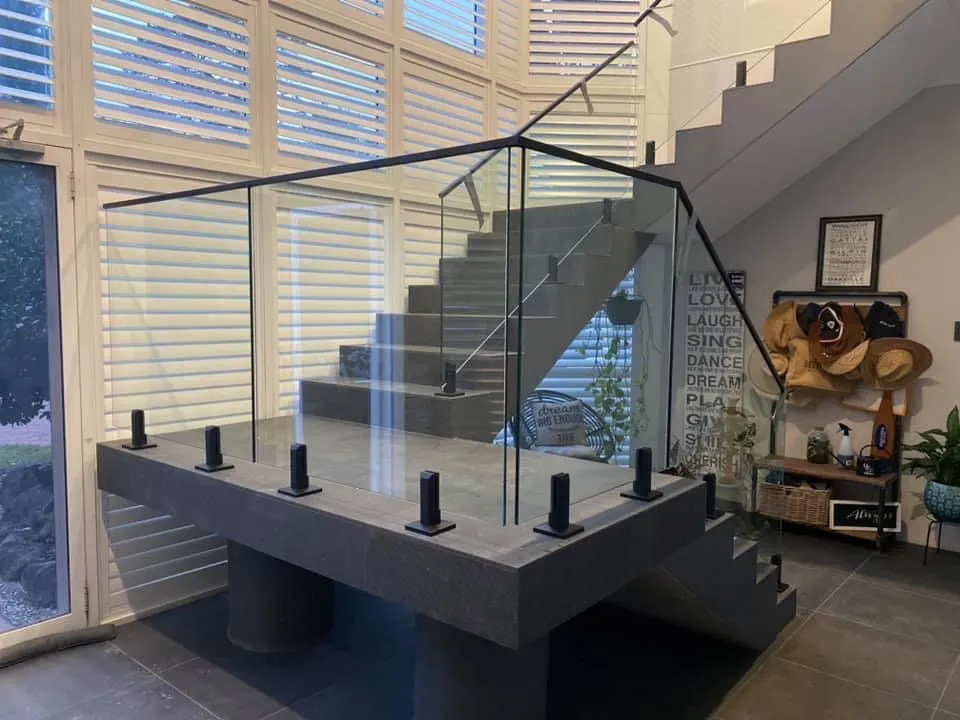
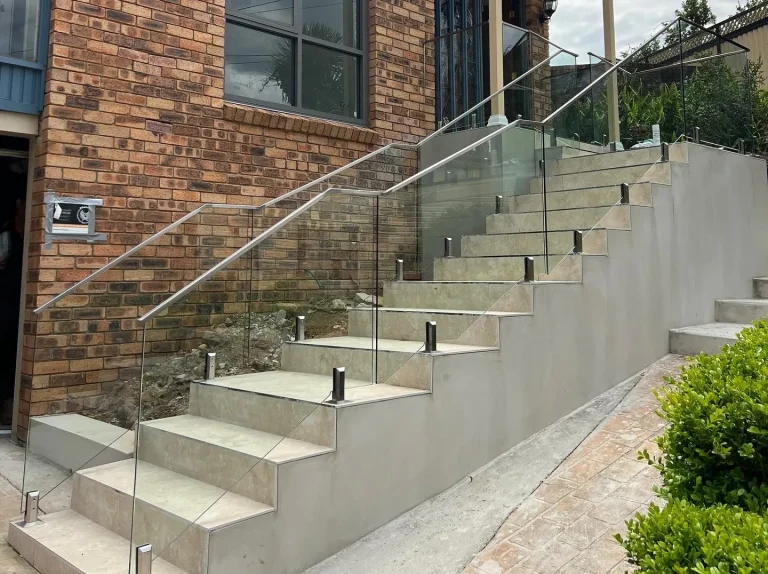
A glass stair handrail is usually a stainless (or aluminium) rail fixed to a glass balustrade — not glass you hold. The glass is the barrier; the metal rail is the grip. Spec toughened or laminated glass correctly, set the rail about 865 mm above the nosings for many houses, and use 316 stainless near the coast.
A stair that looks open and modern still has to feel safe in the hand. That is where a glass stair handrail comes in: clear panels for the view, a proper rail for support.
This guide is for homeowners (and the builders quoting them) in Brisbane, the Gold Coast and the Sunshine Coast who are choosing glass on an internal stair, void or outdoor flight. It covers how glass and handrails work together, frameless vs semi-frameless, materials for Queensland climate, NCC height in plain English, cost factors, maintenance, and what to ask before you buy.
AMG Fabrication designs, fabricates and installs custom handrails and staircase balustrades — glass, metal and hybrid systems — as one measured job.
What a glass stair handrail actually is

People search “glass stair handrail” and mean three different things. Mixing them up is how quotes go wrong.
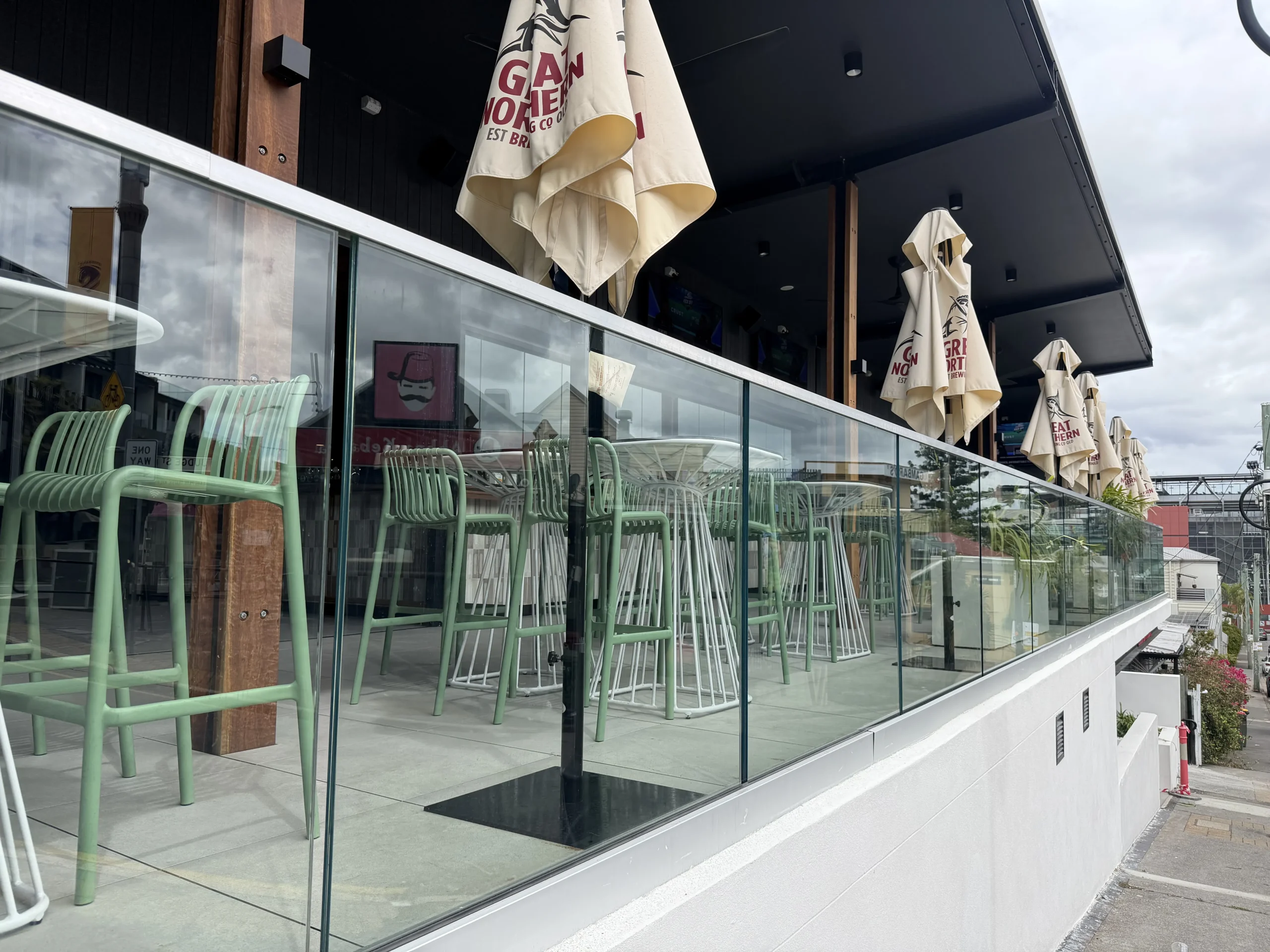
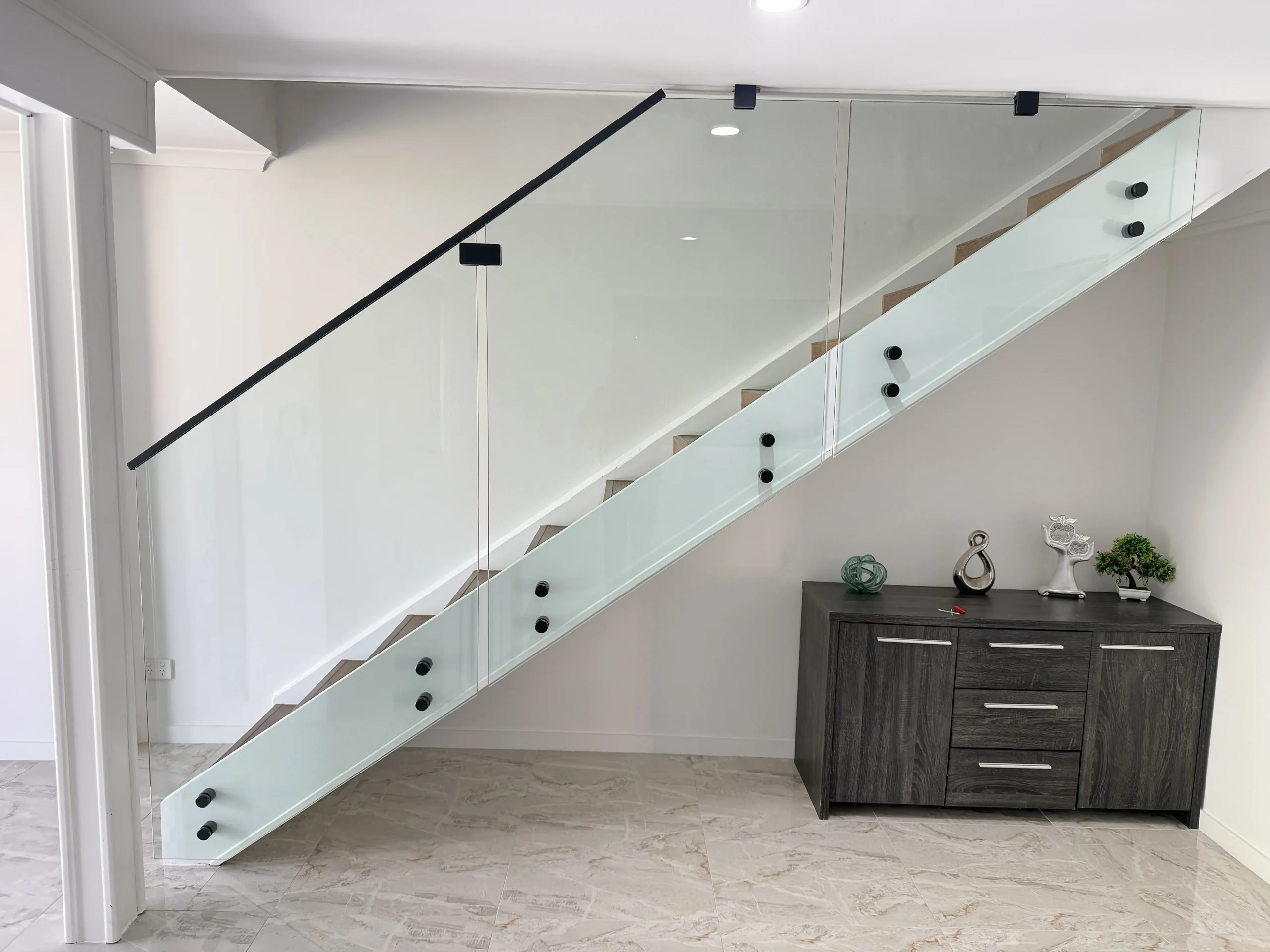
- Glass balustrade + metal handrail — Toughened or laminated glass panels form the barrier. A stainless or aluminium rail sits on top, or as an offset rail on standoffs fixed to the glass. This is the usual residential setup.
- Glass panels with no separate rail — The top edge of the glass is used as a “rail”. That can look minimal, but many people (kids, older adults, wet hands) need a graspable profile. A true handrail is something you can close a hand around.
- Wall-mounted handrail beside a glass stair — Glass may be on one side; a wall rail on the other. Still a handrail job, even if the photos show glass.
The glass does the fall protection. The handrail does the grip. Treat them as related specs, not one product name.
Glass stair handrail options for Brisbane homes
Frameless glass with offset stainless rail
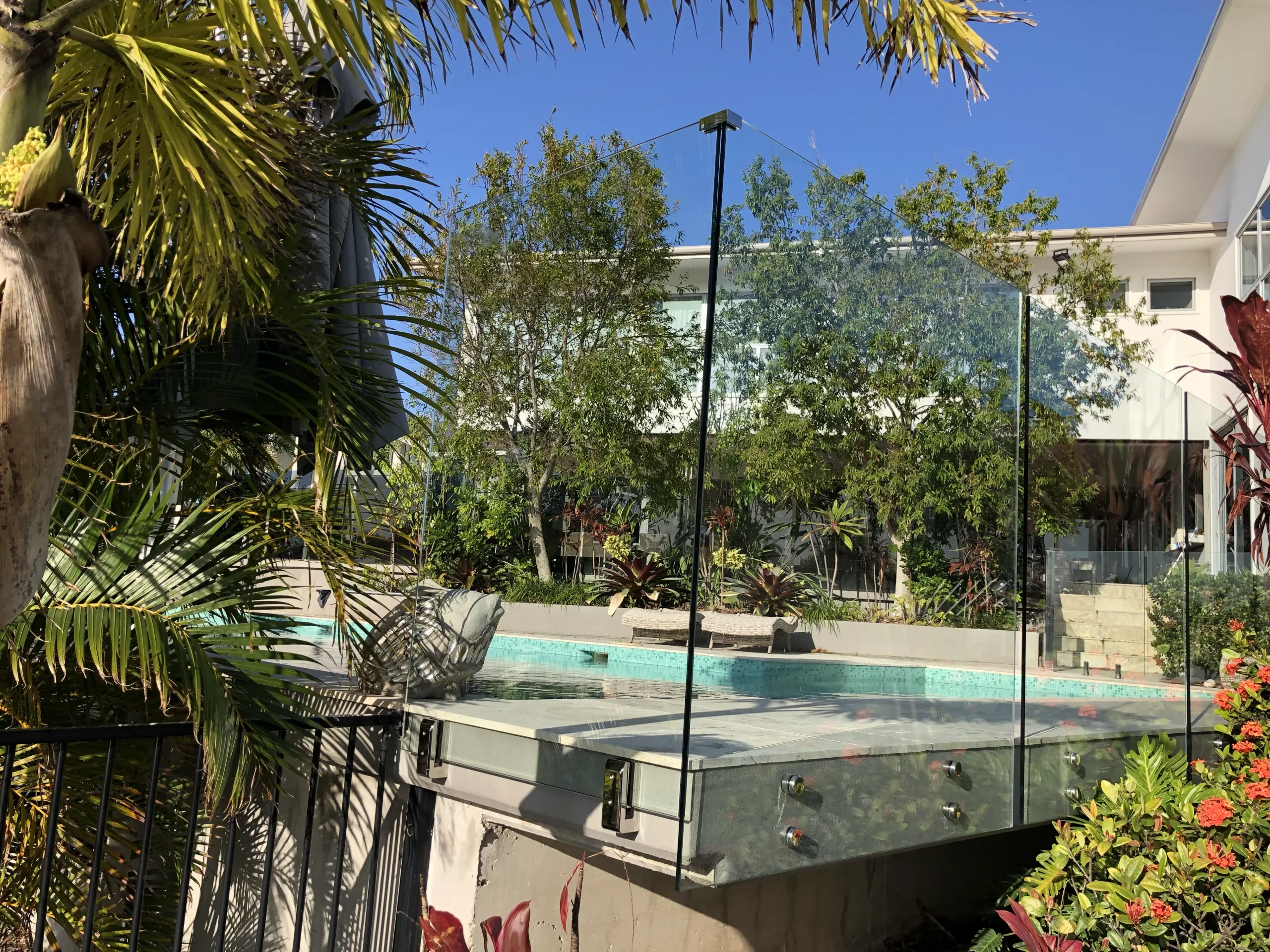
Toughened panels on standoffs or spigots, with a round or oval stainless rail fixed off the glass face. Maximum light, clean look, common on open voids and feature stairs. Coastal jobs need 316 stainless hardware and a wash routine.
Semi-frameless glass with top rail
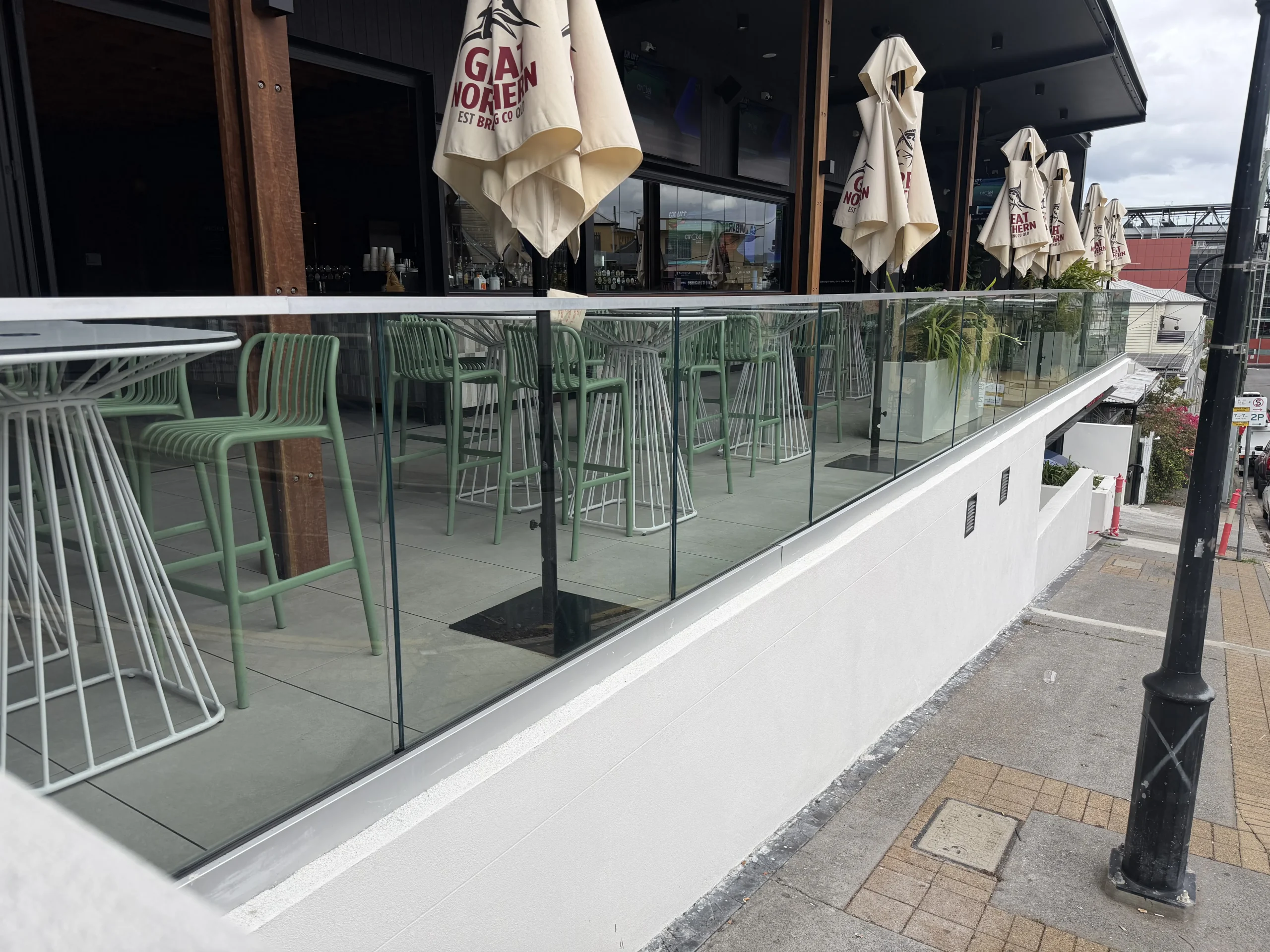
Slim posts or channels hold the glass; a continuous top rail doubles as the handrail if it is graspable and at the right height. Often more cost-effective than full frameless, with a slightly “framed” look.
Glass balustrade + wall-mounted rail
Useful on a stair against a wall: glass on the open side, a dedicated rail on the wall for continuous support. Good for accessibility and for people who want a solid grip without relying on the glass edge.
Materials that suit Queensland stairs
Glass: Toughened safety glass is standard for many residential panels; laminated is used where the design or load case needs it. Thickness depends on panel size, fixing method and wind/load — it is not a DIY guess. AS 1288 covers glass in buildings more broadly; stair barriers also sit under the NCC. Confirm with your fabricator and certifier. Requirements can change.
Stainless steel: The usual offset rail. 304 can suit indoor, air-conditioned stairs. 316 (marine grade) is the sensible outdoor and coastal choice for Gold Coast and Sunshine Coast salt. Tea staining on the wrong grade is a maintenance headache, not proof that “stainless rusts”.
Aluminium: Light, colourable, no rust. A quality powder coat matters on north and west elevations. Compatible screws only — no mild steel into aluminium.
Fixings: Standoffs, clamps and wall brackets must match the metal and the glass. Dissimilar-metal contact stains and weakens joints. Queensland humidity and coastal air punish shortcuts.
Indoor stairs see less UV and salt; outdoor or void stairs that open to a deck cop heat, storms and, near the coast, chlorides. Spec for the worst face of the flight, not the Pinterest photo.
NCC handrail height and safety
For many Class 1 houses, the NCC Housing Provisions on barriers and handrails (opens in a new tab) require a handrail on at least one side of a stair flight where the rise is 1 m or more, with the top of the handrail not less than 865 mm vertically above the nosings.
The ABCB FAQ on stairways, barriers and handrails (opens in a new tab) is a readable overview of when a rail is needed and how it relates to barriers. Barrier height on landings and open edges is often higher (commonly around 1 m in many locations) — the handrail and the barrier are related but not always the same line.
That is a summary, not a design. Apartments, public buildings, schools and accessible stairs use different clauses (including lower secondary rails in some cases). Workplace access may sit under AS 1657 and Safe Work Australia guidance on falls — see the model Code of Practice: Managing the risk of falls at workplaces (opens in a new tab). Confirm the current rules with a licensed installer and building certifier.
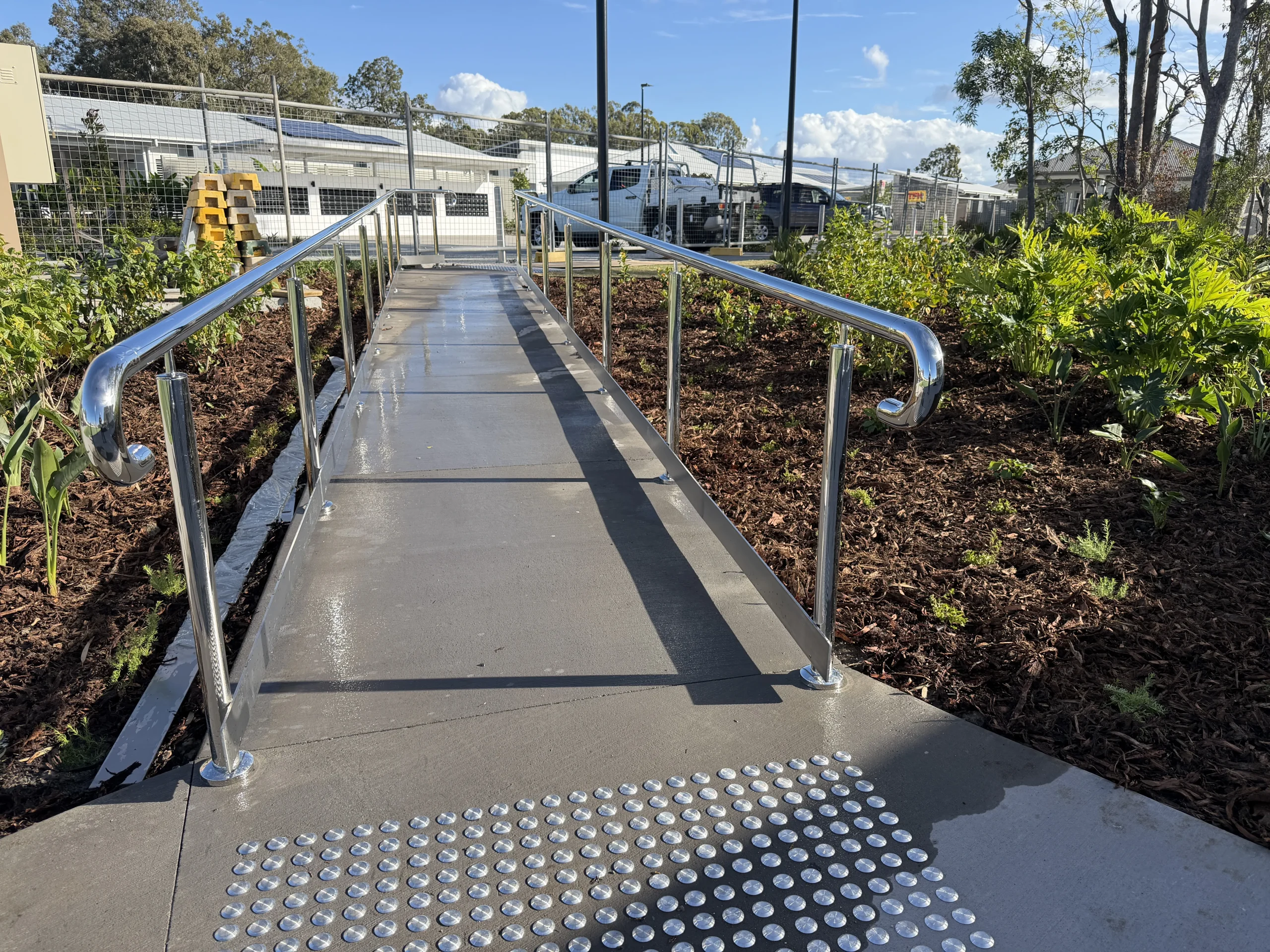
Grip still matters: A 40–50 mm round tube you can wrap a hand around beats a wide flat glass edge. Continuous where required, enough clearance off the wall, no sharp interruptions. Kids, guests and older relatives use stairs in socks and in the dark — design for that, not only for photos.
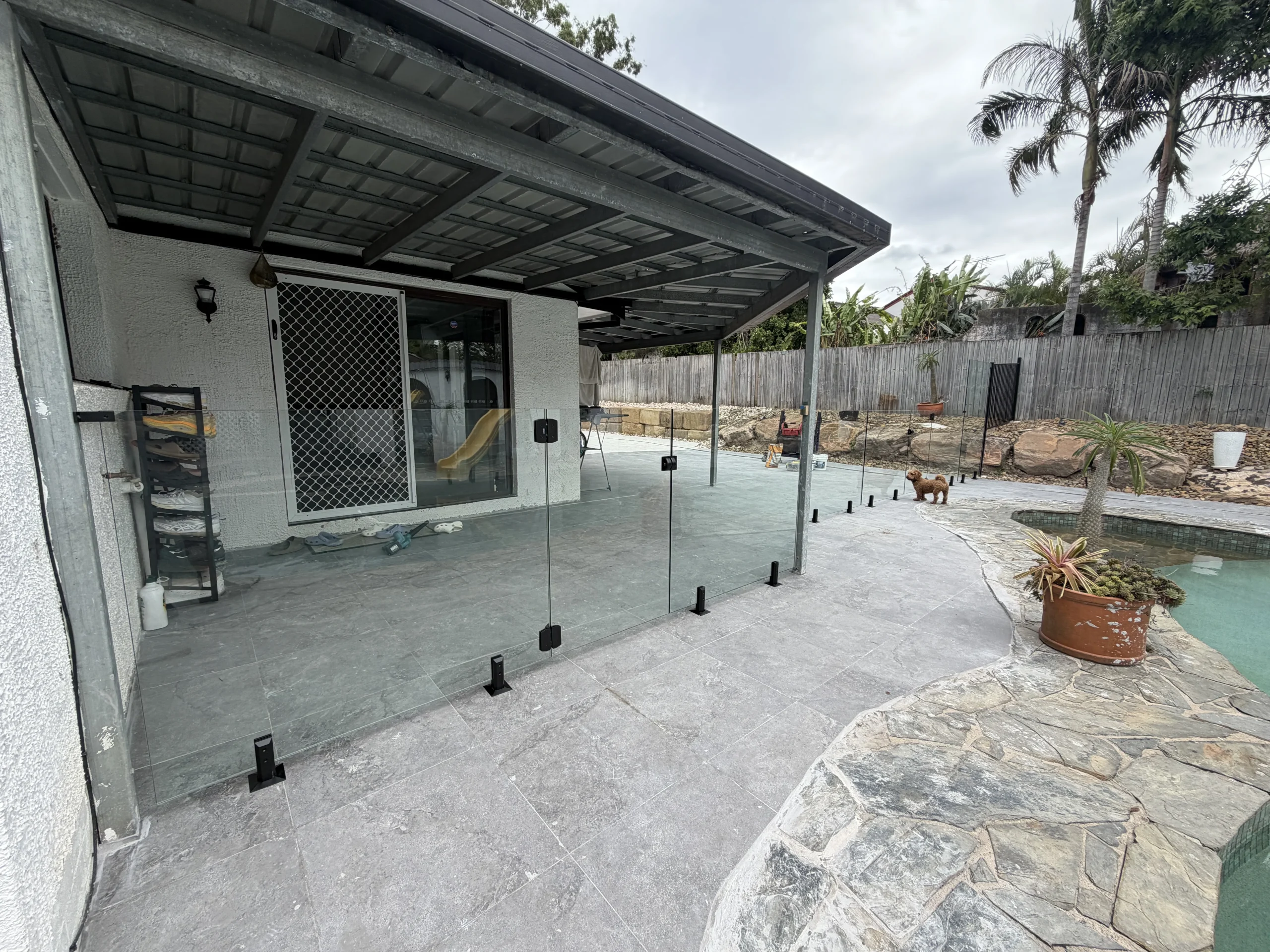
A glass stair beside a pool is not a pool barrier. The water still needs compliant pool fencing if it is a regulated pool.
Maintenance that keeps glass stairs looking sharp
Glass
- Soft cloth or squeegee; avoid abrasive pads
- Clean fingerprints and silicone residue after install
- Check standoffs and clamps after the first wet season and after storms
Stainless rail
- Mild soapy water; stainless cleaner for tea stain
- Coastal homes: rinse more often so salt does not sit in joints
- Do not use steel wool — it seeds rust marks
Aluminium rail
- Wash the powder coat; touch up chips
- Check screws and wall plugs after movement or renovation (new tiles change height)
Both
- Keep the grip dry when possible; wet glass + socks is a fall risk
- After floor sanding or tiling, re-check rail height and continuity
Common mistakes to avoid
- Using the top of the glass as the only “handrail” when users need a real grip
- Speccing 304 stainless on a coastal outdoor stair
- Mild-steel brackets against stainless or aluminium
- Confusing balcony/pool barrier rules with stair handrail rules
- Quoting lineal metres with no glass thickness, grade or fixing method
- Ignoring landings, winders and returns — stairs are not a straight stick
What to check before you buy
- Is the glass the barrier, the rail the grip, or both? Get it written down.
- Toughened or laminated — and what thickness?
- 304 or 316 stainless? Coastal outdoor = ask for 316.
- Offset rail, top rail, or wall rail?
- Which code path — house NCC, apartment, or workplace?
- Who measures, fabricates and installs? One workshop is simpler when a bend must match the void.
- Lead time for glass and replacement panel policy?
If the quote only says “glass stair handrail” with no grades or heights, you are not comparing like with like.
Which setup should you choose?
Choose frameless glass + offset 316 rail if the stair is a feature and you want maximum light — especially outdoors near the coast with the right grade.
Choose semi-frameless + graspable top rail if you want glass with a clearer budget and a continuous handhold.
Choose glass on the open side + wall rail if grip and accessibility matter more than a floating look.
Choose aluminium rail (with or without glass) if colour match and lower heat gain matter more than a polished metal showpiece.
The best glass stair handrail in Queensland is the one you can actually hold, at a code-compliant height, with glass and metals specified for sun and salt — not only for the photo.
Frequently asked questions
What is a glass stair handrail?
Usually a metal handrail used with a glass stair balustrade. The glass stops falls; the rail gives you something to hold. Sometimes people mean glass panels with no separate rail — that is a different, often weaker, grip solution.
Do I need a handrail if I have glass balustrades on the stairs?
Often yes. For many houses, the NCC still wants a handrail on at least one side of a flight with a 1 m or greater rise. Glass can be the barrier; you may still need a graspable rail. Confirm with your certifier.
How high should a glass stair handrail be in Australia?
For many residential stairs, the top of the handrail is not less than 865 mm above the nosings. Barrier height on open edges can differ. Always check the current NCC clause for your building class.
How much does a glass stair handrail cost in Brisbane?
A simple metal rail can sit around $200–$450 per lineal metre installed. Full frameless glass plus rail often lands higher — roughly $400–$900+ per lineal metre depending on spec. These are estimates only. A site measure is the real price.
Is frameless glass safe on stairs?
Yes when thickness, fixing and barriers meet the relevant standards and NCC requirements, and when a proper handrail is provided where required. Safety glass is not a substitute for correct design and installation.
Will stainless fittings rust near the Gold Coast?
316 resists coastal chlorides better than 304. All stainless still needs washing. Wrong grade, dirty welds and steel contamination cause tea staining.
Can AMG supply glass and the handrail together?
Yes. Custom measure, fabrication and installation of glass staircase balustrades and matching handrails is part of the usual workflow, with a 3-year product warranty on the work supplied.
Conclusion
A glass stair handrail is a system: safety glass for the barrier, a graspable metal rail for support, and fixings that survive Queensland heat, UV and, on the coast, salt. Frameless with an offset rail is the open look; semi-frameless or a wall rail can be smarter for grip and budget. Height and continuity follow the NCC for your building — confirm with a certifier.
AMG Fabrication can measure on site, fabricate glass and metal to your stair, and install across Brisbane, the Gold Coast and the Sunshine Coast. Book a free consultation and obligation-free quote via the contact page.