Stainless steel handrails are a practical option for outdoor stairs, ramps, walkways and access areas where durability, clean design and regular use matter. The right grade, finish, fixing method and installation details should be selected for the specific site, particularly where the handrail is exposed to Queensland weather or coastal conditions.
Outdoor handrails need to do more than look good. They need to provide a comfortable, reliable point of support while coping with sun, rain, humidity, regular handling and, in some locations, airborne salt.
That is why stainless steel handrails are commonly considered for outdoor stairs, ramps, walkways, balconies and access areas. They offer a clean architectural appearance and can be fabricated into different configurations to suit the property.
But stainless steel is not automatically the right choice for every project. Aluminium and galvanised steel can also be practical depending on the location, design, budget and maintenance requirements.
This guide explains where stainless steel works well, how it compares with other handrail materials, what affects the cost and what to check before ordering an outdoor handrail in Brisbane or elsewhere in Queensland.
Why Choose Stainless Steel Handrails for Outdoor Areas?
The main attraction of stainless steel is the combination of appearance, strength and corrosion resistance.
Unlike painted or powder-coated steel, stainless steel does not rely on a surface paint coating for its basic corrosion resistance. This makes it particularly appealing where you want a clean metal finish that remains part of the design.
For outdoor applications, stainless steel can suit:
- Residential entrance paths
- External stairs
- Ramps and accessways
- Balconies and decks
- Commercial walkways
- Apartment common areas
- Public-facing entrances
- Garden and landscaped access paths
The design can also be relatively understated. A slim stainless steel rail can provide the required handhold without making a pathway or entrance feel visually heavy.
For a custom installation, the handrail can be measured and fabricated around the actual path, stairs, walls, posts and fixing points rather than relying on a generic off-the-shelf configuration.
AMG Fabrication provides custom stainless steel, aluminium and galvanised steel handrails for residential and commercial projects across Brisbane, the Gold Coast and Sunshine Coast.
Where Stainless Steel Makes Sense Outdoors
Not every outdoor handrail faces the same conditions.
A handrail beside a covered entrance is exposed differently from one installed beside an open staircase near the coast. Before choosing the material, consider the location and how the handrail will actually be used.
Outdoor Stairs
External stairs can be exposed to rain, dirt and temperature changes. A stainless steel handrail provides a solid grip and can complement modern concrete, tiled or metal stair designs.
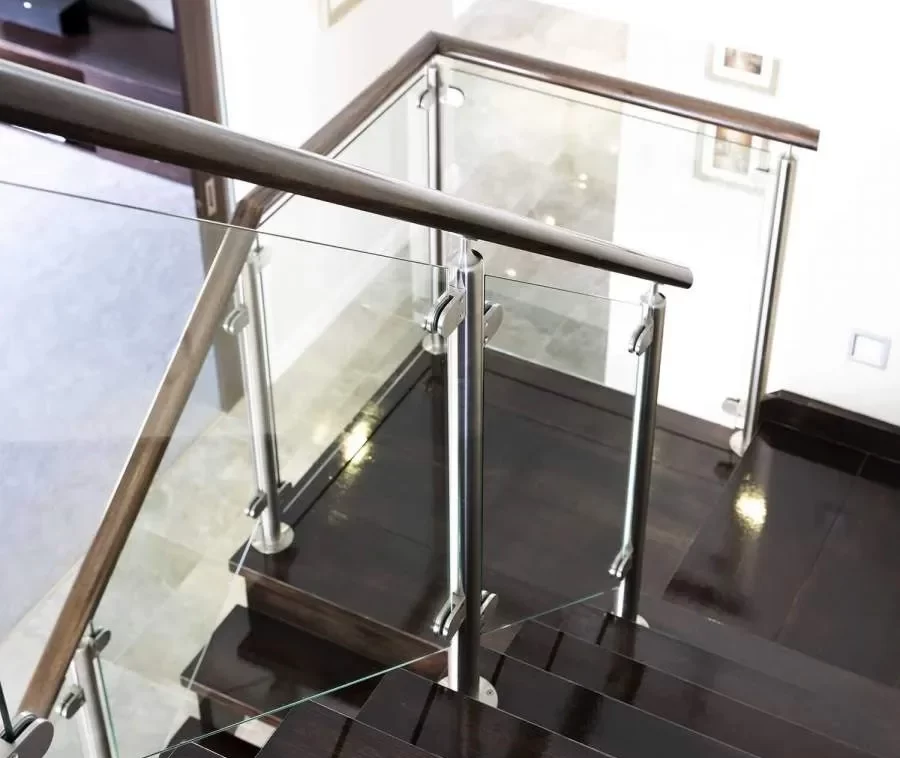
Where stairs are part of a larger balustrade system, the handrail can also be incorporated into the overall design rather than treated as a separate feature.
Ramps and Accessways
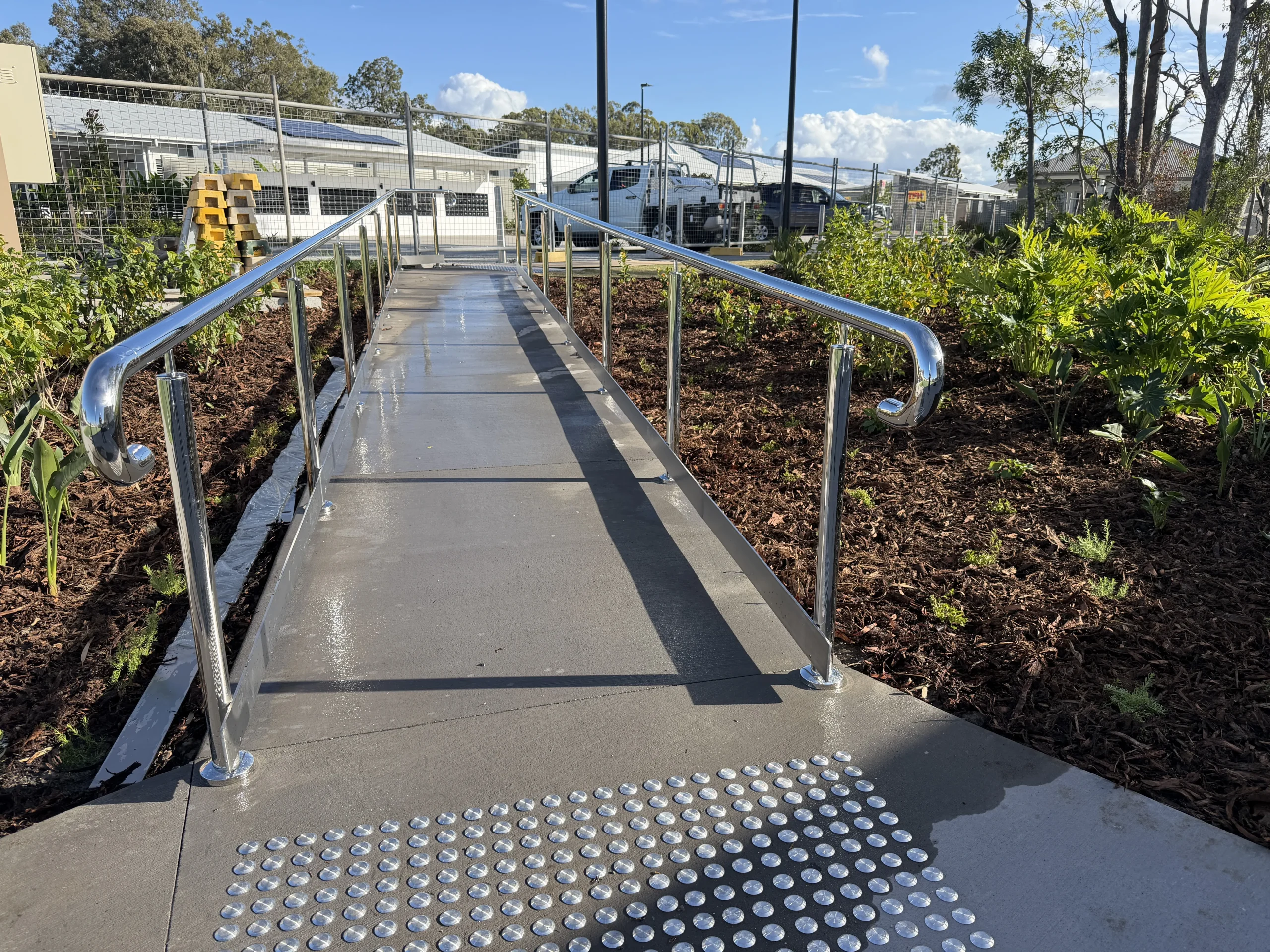
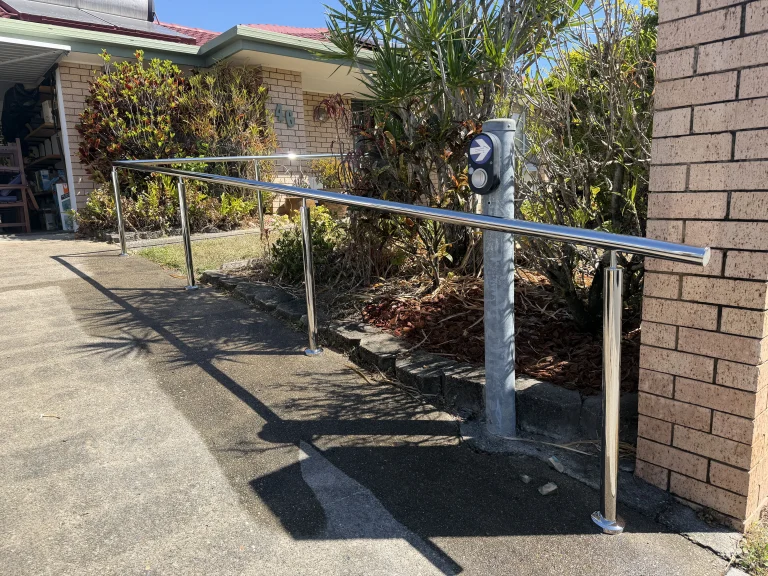
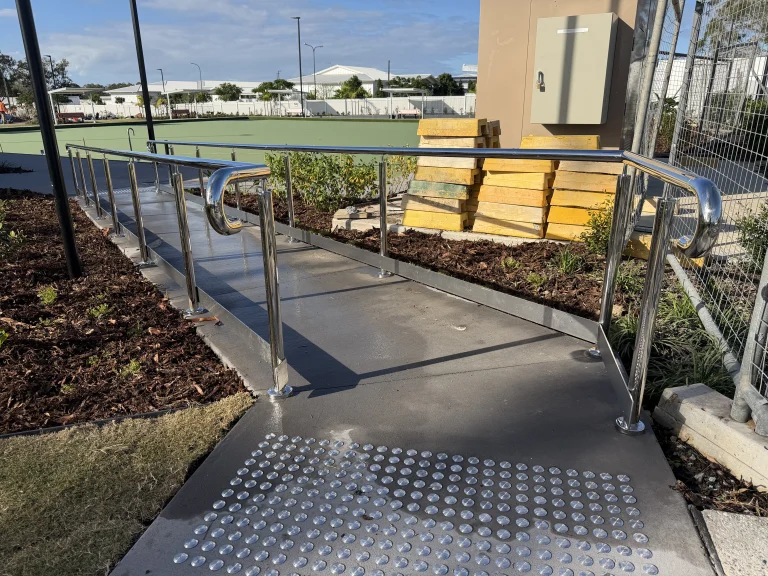
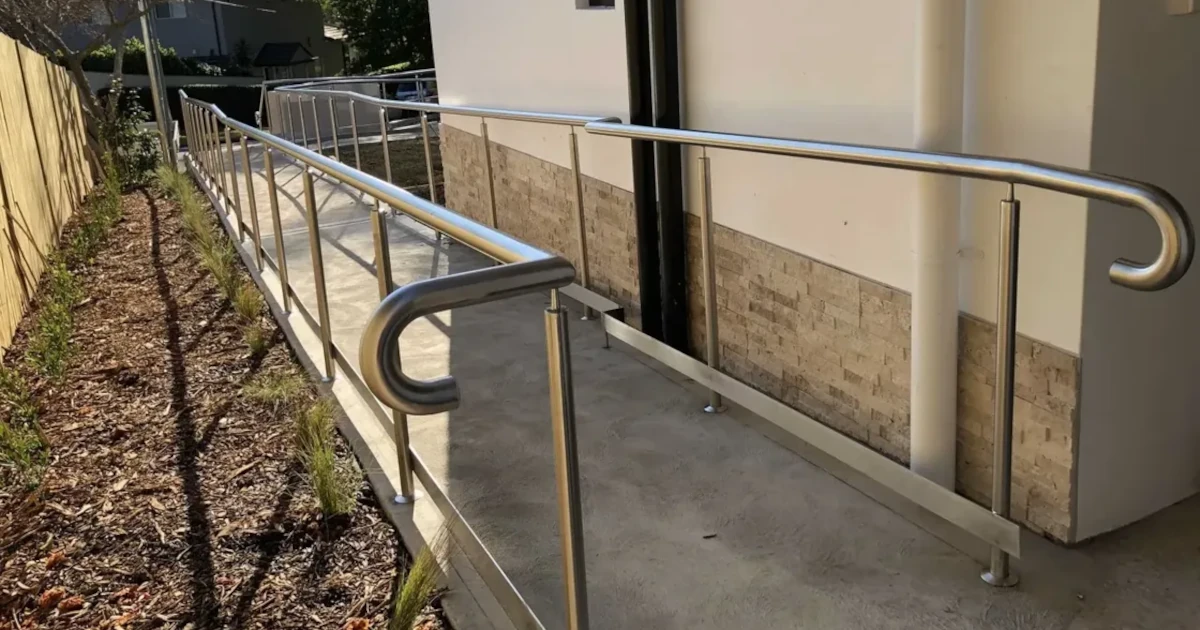
The photographs accompanying this article are a good example of where stainless steel can work visually: a straightforward handrail following an outdoor access path.
For ramps and other accessways, the layout, height, continuity and fixing details need to be considered as part of the overall design.
Requirements can vary according to the building type and application, so compliance should be checked for the specific project.
The National Construction Code includes provisions covering handrails on stairs and ramps, including requirements relating to their location, height and continuity.
Balconies and Decks
Stainless steel can also be used as part of a balcony or deck balustrade system.
In these applications, it is important to distinguish between a handrail and a balustrade or barrier.
A handrail provides a graspable support, while a barrier is designed to prevent people from falling from a raised area.
If your project involves a balcony, deck or raised platform, the complete barrier system needs to be designed for the applicable building requirements.
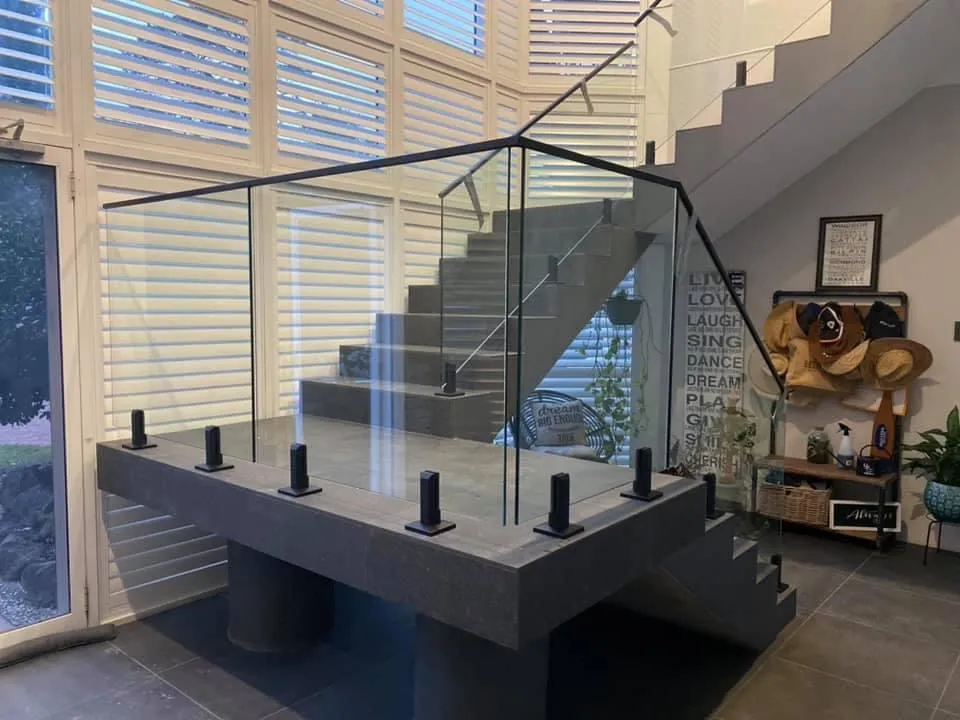
For projects involving balustrades as well as handrails, AMG Fabrication also offers custom balustrade solutions in glass and aluminium.
Stainless Steel vs Aluminium vs Galvanised Steel Handrails
Stainless steel is one option among several.
The right material depends on the project rather than simply choosing the material with the most premium appearance.
Stainless Steel
Stainless steel is well suited to projects where you want a clean metal appearance combined with corrosion resistance and durable everyday use.
It can work particularly well with contemporary architecture, glass, concrete, brick and other modern building materials.
The grade and finish should be selected according to the environment. Coastal properties and areas exposed to salt require particular consideration.
Aluminium
Aluminium is lightweight and can be powder coated in a wide range of colours.
This makes it useful when the handrail needs to coordinate with existing windows, doors, fencing, balustrades or other architectural elements.
For homeowners who want a coloured finish rather than exposed metal, aluminium can be a practical option.
Galvanised Steel
Galvanised steel provides a robust option where strength and practicality are important.
Its appearance is generally more industrial than stainless steel, which can make it particularly suitable for functional outdoor applications where the finish is less important than the overall construction.
AMG Fabrication works with stainless steel, aluminium and galvanised steel, allowing the material to be selected according to the location, appearance, use and project requirements.
Stainless Steel or Aluminium: Which Should You Choose?
There is no universal answer.
Stainless steel can make sense when you want an exposed metal finish and a clean contemporary appearance.
Aluminium may be more suitable when a lightweight material and powder-coated colour are important considerations.
The surrounding environment also matters.
For example, an outdoor handrail near the coast may face more salt exposure than one installed in a sheltered suburban area. The material grade, finish, fixing method and maintenance requirements should therefore be considered together.
Instead of asking which material is generally better, ask which material is appropriate for your particular site.
A fabricator should be able to explain the differences between the available options and recommend an approach based on the actual installation.
Queensland Weather and Outdoor Handrails
Queensland outdoor structures have to deal with more than occasional rain.
Depending on the location, an outdoor handrail may be exposed to:
- Strong sunlight and UV
- High temperatures
- Heavy rainfall
- Humidity
- Coastal salt
- Dust and airborne contaminants
- Storm conditions
- Frequent contact and handling
This is particularly relevant when comparing stainless steel with coated metals.
A good material choice is only part of the solution. The design needs to account for the environment, fixing method, drainage, joints and the way the handrail is cleaned and maintained.
For properties close to the coast, it is worth discussing the appropriate stainless steel grade and finish with the fabricator before fabrication begins.
Stainless Steel Handrail Finishes

Stainless steel does not have to look the same on every project.
Two common approaches are polished and brushed finishes.
Polished Stainless Steel
A polished finish creates a brighter, more reflective appearance.
It can work well where the handrail is intended to become a noticeable architectural detail.
The trade-off is that fingerprints, marks and surface contamination can be more visible.
Brushed Stainless Steel
A brushed finish has a more subdued appearance and can suit modern residential and commercial projects where you want the metal to look refined without being highly reflective.
The finish should be considered alongside the surrounding materials, including glass, brick, concrete, timber and painted surfaces.
The aim is not simply to choose the most expensive finish. It is to select one that suits the building and the level of maintenance the owner is comfortable with.
Handrail Design and Compliance
A handrail can look simple once installed, but several details need to be considered before fabrication.
The National Construction Code contains requirements for handrails associated with stairs and ramps.
For example, the NCC Housing Provisions specify requirements relating to the position, height and continuity of handrails in applicable situations.
For many houses, the Housing Provisions refer to a minimum handrail height of 865 mm above the nosings of stair treads or the floor surface of a ramp, subject to the relevant provisions and exceptions.
That does not mean every outdoor handrail can simply be fabricated at 865 mm.
Requirements depend on the building classification, location, type of work and applicable provisions. Existing buildings can also be subject to different considerations from new work.
The ABCB’s guidance on stairs, barriers and handrails is a useful starting point, but project-specific requirements should be confirmed with the relevant building professional or certifier.
Requirements and referenced standards can change, so avoid relying on an old measurement or previous project as the basis for a new installation.
What Affects the Cost of Stainless Steel Handrails?
There is no single price for an outdoor stainless steel handrail because every installation is different.
The main cost factors include:
Length
A longer handrail generally requires more material and additional fixing points.
Curves, changes in direction and multiple sections can also increase fabrication time.
Number of Posts and Fixing Points
A simple straight rail and a handrail with several posts, returns or changes in direction require different amounts of fabrication and installation work.
The existing structure also affects the type of fixing required.
Surface and Access
Installing into a straightforward concrete pathway is different from working around existing landscaping, brickwork, stairs or difficult access.
The condition of the existing surface can also affect preparation and fixing requirements.
Design and Finish
A simple straight stainless steel rail will generally involve less fabrication than a more complex custom design.
Polished and brushed finishes can also have different appearance and maintenance considerations.
Site Measurement and Installation
A professional installation involves more than manufacturing the rail.
The fabricator needs to consider actual site dimensions, fixing locations, angles, transitions and the relationship between the handrail and surrounding structures.
For this reason, a site assessment and written quotation are more useful than comparing a generic price per metre.
Maintenance: Keeping Stainless Steel Looking Good

Stainless steel is relatively straightforward to maintain, but it should not be treated as completely maintenance-free.
Outdoor stainless steel can collect dust, dirt, salt and other contaminants over time.
A simple maintenance routine should include:
- Regularly wiping down exposed surfaces
- Cleaning areas that collect dirt or salt
- Using suitable stainless steel cleaning products
- Avoiding abrasive materials that can damage the finish
- Checking visible fixings and connections
- Looking for signs of damage or unusual movement
Coastal properties may require more frequent cleaning because of salt exposure.
It is also worth remembering that corrosion resistance does not mean corrosion is impossible.
The environment, stainless steel grade, finish, contamination and maintenance all influence long-term appearance.
Common Mistakes When Choosing an Outdoor Handrail
Choosing Purely on Appearance
A handrail may look excellent in a showroom but still be unsuitable for a particular location.
Consider the environment, intended use and applicable requirements before choosing the finish.
Treating Every Project as the Same
A residential side path, commercial ramp and balcony handrail can have very different requirements.
The handrail should be designed around the actual application.
Ignoring Fixing Details
The rail itself may be strong, but the installation also depends on how it is fixed to the structure.
The substrate, fixing points and surrounding construction should be assessed before fabrication.
Forgetting About Maintenance
Outdoor metalwork will eventually collect dirt and environmental contaminants.
Ask what cleaning and maintenance will be required before choosing the finish.
Assuming Compliance From Appearance
A handrail can look professionally installed without necessarily demonstrating that the complete installation meets the requirements applicable to that project.
For building work, compliance should be considered during design and installation rather than checked only after the handrail is finished.
What to Ask Your Handrail Fabricator Before You Buy
Before approving a quote, ask:
- Which material and stainless steel grade are you recommending for this location?
- What finish will be used?
- How will the handrail be fixed to the existing structure?
- Will you measure the site before fabrication?
- Does the proposed design need to meet specific NCC or other building requirements?
- Are there any site-access issues that could affect installation?
- What maintenance will the finished handrail require?
- Does the quotation include fabrication and installation?
- What warranty applies to the completed work?
- Are there any additional costs that could arise from site conditions?
For a custom project, these questions can help you compare quotes based on the complete installation rather than simply the material price.
Custom Stainless Steel Handrails in Brisbane and South East Queensland
Outdoor handrails often need to fit around existing buildings, paths, gardens, stairs and access points.
That is where custom fabrication can be useful.
AMG Fabrication designs, manufactures and installs custom handrails in stainless steel, aluminium and galvanised steel for residential and commercial applications across Brisbane, the Gold Coast and Sunshine Coast.
The process can include consultation, measurement, fabrication and installation.
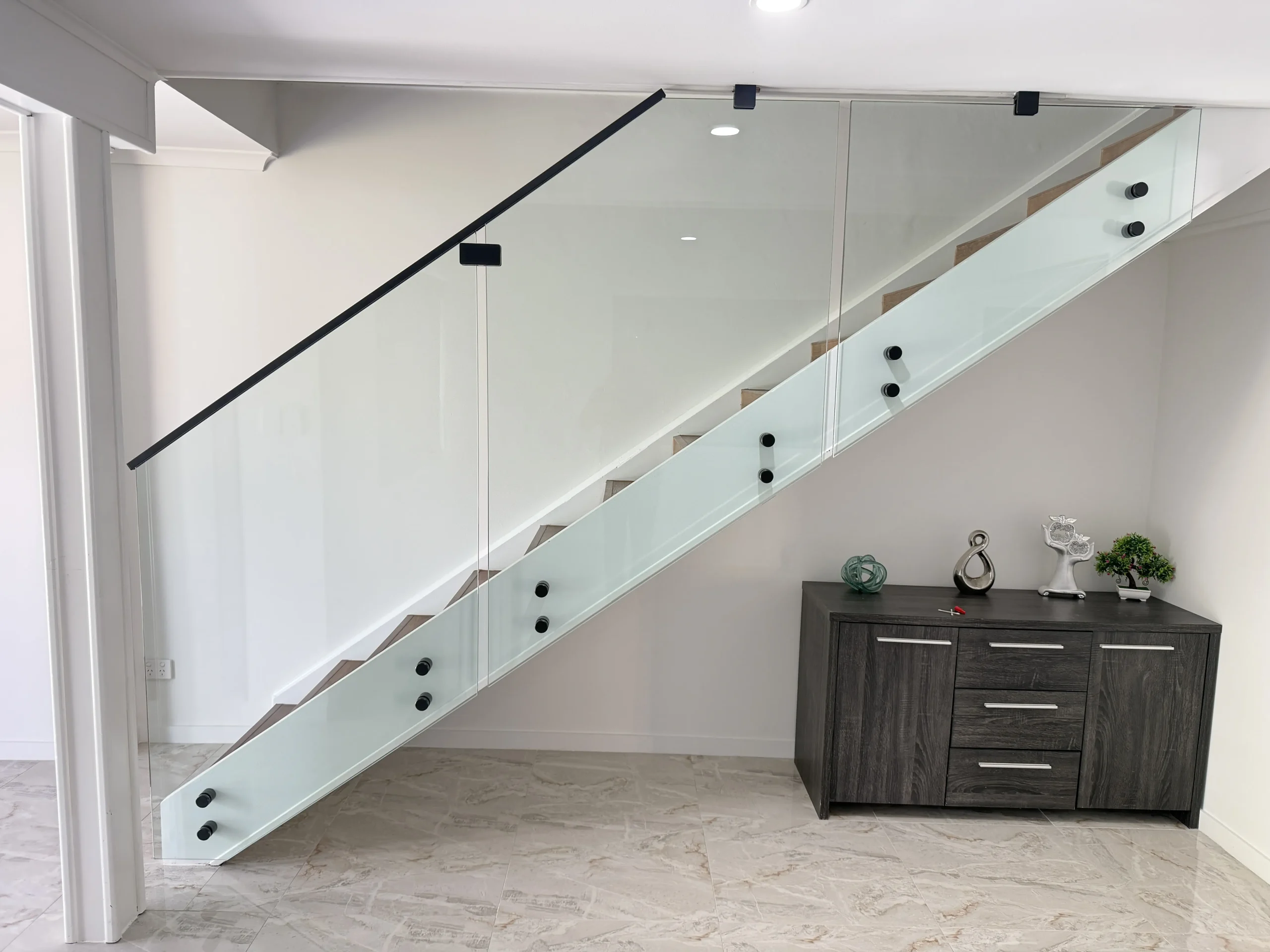
For projects where a handrail forms part of a staircase, AMG also provides staircase balustrade solutions using glass, metal and handrail combinations.
If your project involves stairs, accessways or an outdoor entrance, the material and design should be considered together rather than treating the handrail as an afterthought.
FAQ: Stainless Steel Handrails
Are stainless steel handrails suitable for outdoor use?
Yes, stainless steel can be suitable for outdoor handrails, including stairs, ramps, walkways and access areas.
The appropriate grade, finish, fixing method and maintenance requirements depend on the environment and application.
Are stainless steel handrails suitable for coastal Queensland?
They can be, but coastal exposure should be considered when selecting the stainless steel grade, finish and maintenance approach.
Salt and other environmental contaminants can affect the appearance of stainless steel over time.
Are stainless steel handrails better than aluminium?
Neither material is automatically right for every project.
Stainless steel offers a distinctive metal appearance and corrosion resistance, while aluminium is lightweight and can be powder coated in different colours.
The appropriate choice depends on the location, design, budget and intended use.
How high should an outdoor handrail be?
The required height depends on the type of building and application.
The NCC includes specific provisions for handrails on stairs and ramps, including height requirements in applicable situations.
Always confirm the requirements that apply to your particular project.
How do you maintain stainless steel handrails?
Regular cleaning helps remove dirt, salt and other contaminants.
Use appropriate stainless steel cleaning products and avoid abrasive materials that can damage the surface finish.
Coastal installations may need more frequent cleaning.
Can stainless steel handrails be custom made?
Yes.
Custom fabrication allows the handrail to be designed around the actual length, direction, fixing points, stairs, ramps and surrounding structures.
AMG Fabrication provides custom handrails for residential and commercial projects.
Do stainless steel handrails need professional installation?
For building work, professional measurement and installation can help ensure that the design, fixing method and finished installation are appropriate for the site and applicable requirements.
The exact compliance requirements should be confirmed for the individual project.
Final Thoughts
Stainless steel is a practical option when you want an outdoor handrail that combines a clean architectural appearance with corrosion resistance and durable everyday use.
The important decision is not simply whether to choose stainless steel.
Consider the location, environmental exposure, stainless steel grade, finish, fixing method, applicable building requirements and ongoing maintenance before fabrication begins.
For a custom stainless steel, aluminium or galvanised steel handrail in Brisbane, the Gold Coast or Sunshine Coast, AMG Fabrication can provide a free consultation and obligation-free quote.