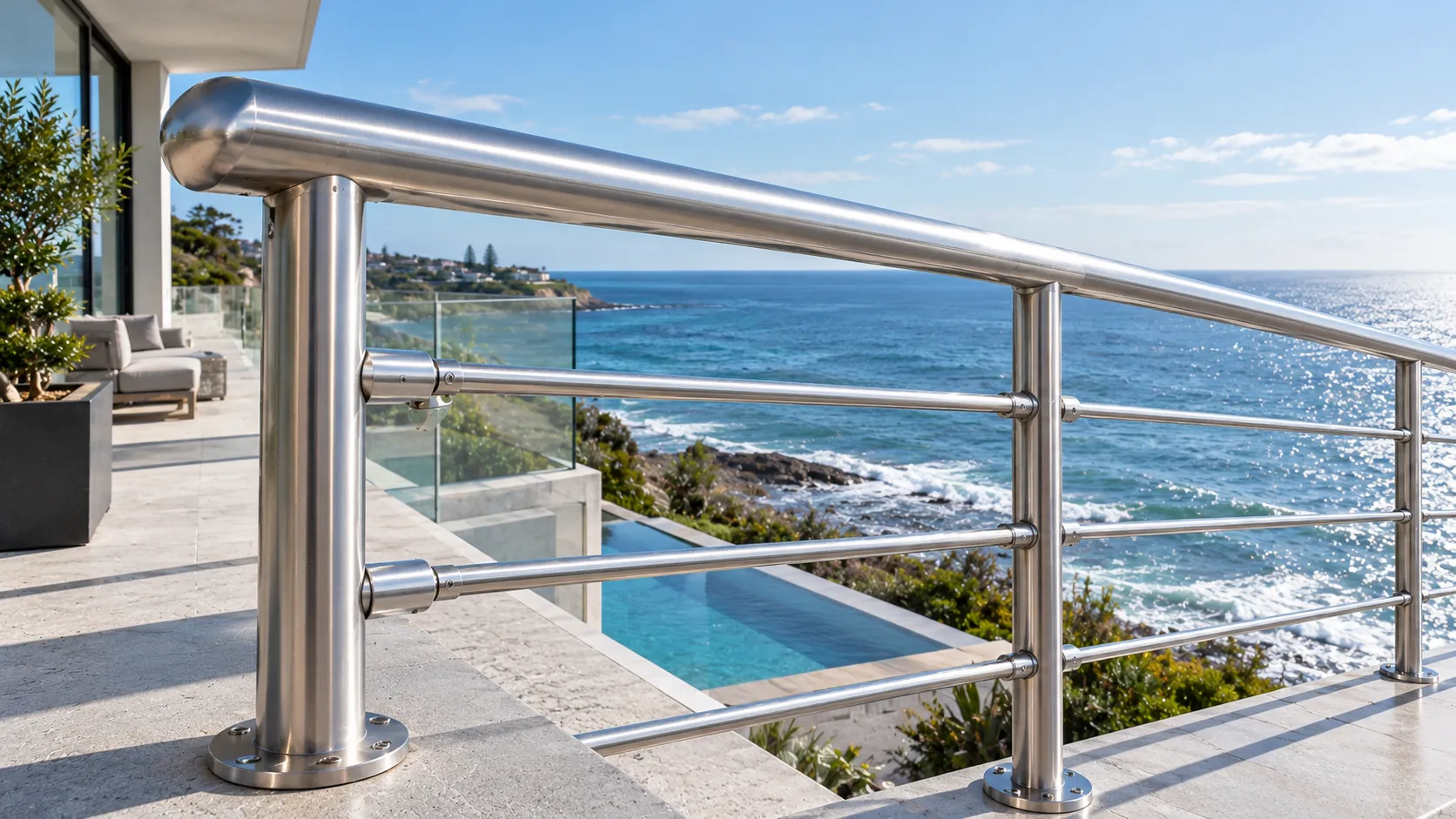
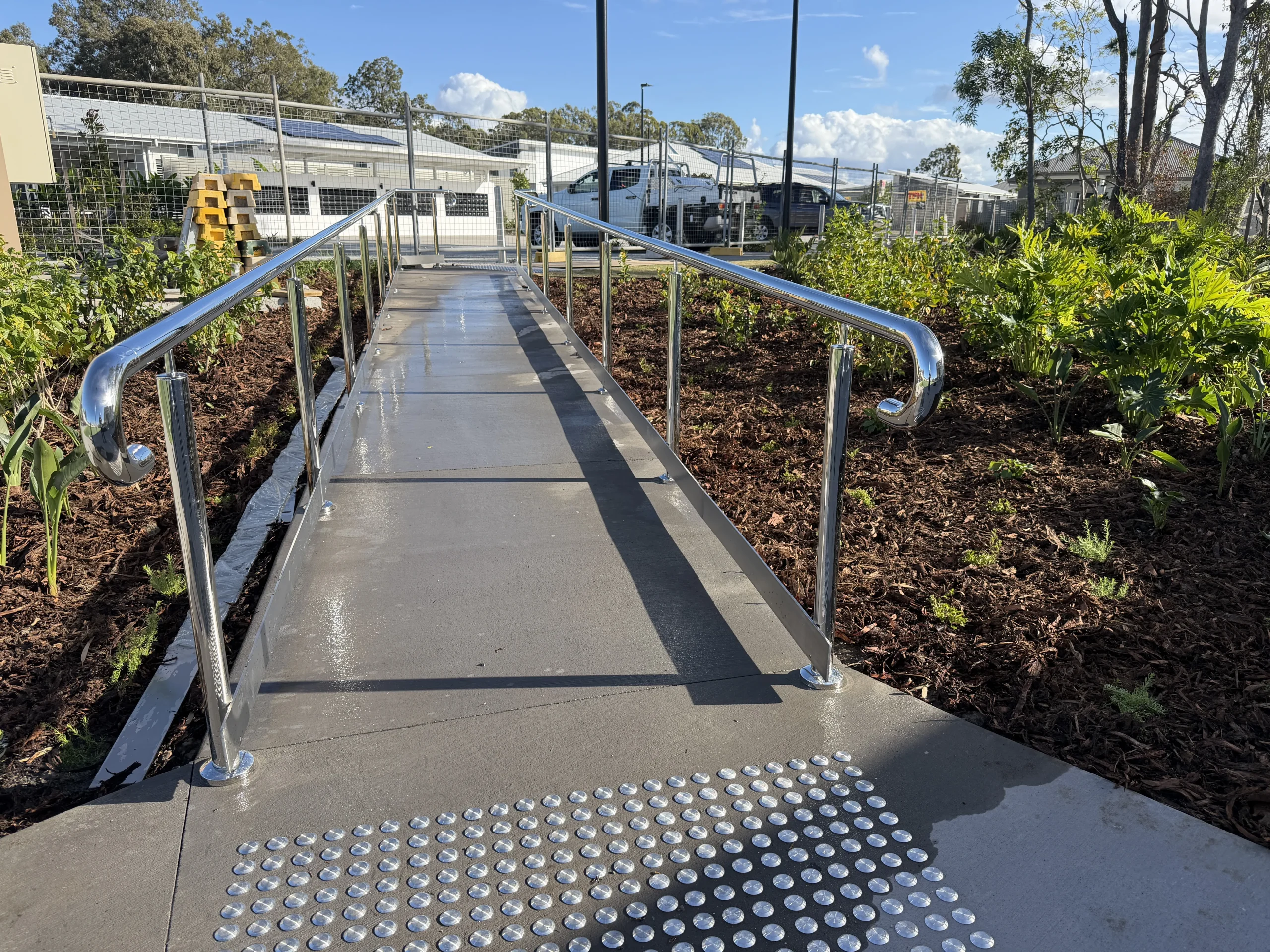
For coastal handrails, 316 is the grade that belongs outdoors near salt air. 304 can suit indoor stairs or well-inland jobs, but it tea-stains faster when chlorides hit. The rail can still fail early if screws, brackets and welds are the wrong metal — even when the tube says 316.
“Stainless” on a quote is not a full specification. In Queensland, salt from bayside suburbs, canal estates and beachside streets punishes the wrong alloy long before a powder-coated aluminium rail would look tired. If you are choosing a stainless stair or deck rail for a coastal or near-coastal home, the real decision is 304 vs 316.
This guide is for homeowners and builders comparing stainless handrail grades for outdoor stairs, decks, paths and voids. It covers what each grade does, where 304 is still fine, what tea staining means, NCC height in plain English, cost factors, maintenance, and what to force onto the quote. AMG Fabrication designs, fabricates and installs custom handrails in stainless steel, aluminium and galvanised steel across Brisbane, the Gold Coast and the Sunshine Coast.
For the wider materials choice, see aluminium vs stainless steel handrails. For stainless product options, see AMG’s stainless steel handrails Brisbane page. This post stays on grade.
On Reddit, coastal renovation threads often ask why a “brand new stainless rail” already has brown freckles. The usual answer is 304 in a salt zone, dirty welds, or steel contamination — not bad luck.
304 vs 316 stainless for coastal handrails: the short difference
Both are stainless steel. Both can look almost identical when brushed or polished. The difference is chemistry and coastal behaviour.
304 is the common architectural grade indoors and in milder outdoor areas. It has good corrosion resistance in normal atmospheres. It does not include the extra molybdenum that helps against chlorides.
316 is the marine-grade conversation for coastal outdoor work. Molybdenum improves resistance to salt-driven pitting and tea staining. It costs more. On a handrail that faces sea breeze, canal air or frequent salt spray, that extra cost is usually cheaper than living with brown bloom and early bracket failure.
A simple rule that works for most Queensland homes:
- Indoor air-conditioned stair: 304 can be enough
- Covered inland outdoor stair, well away from salt: 304 or aluminium may be fine
- Bayside, canal, beachside, exposed outdoor deck: ask for 316
- If the quote only says “stainless” with no grade: ask again before you compare price
What tea staining actually is
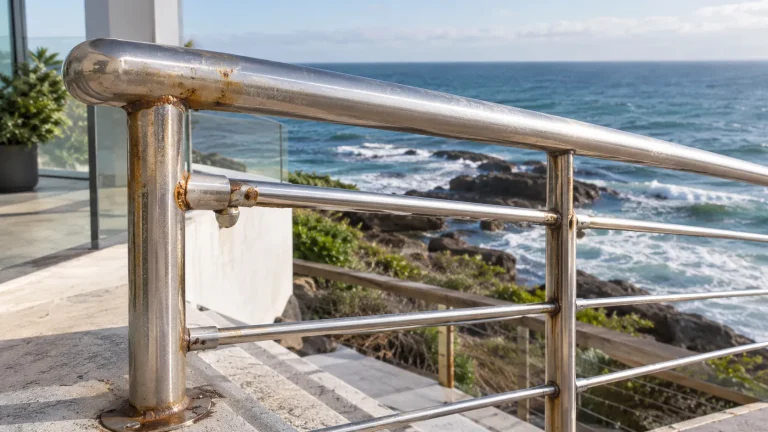
Tea staining is the brownish film or freckling you see on stainless outdoors. It is not always “rust through,” but it looks like it. Coastal chlorides, pool chlorine drift, dirty welds, steel particles from grinding, and no washing all make it worse.
316 resists that environment better than 304. It is not magic. A 316 rail that never gets rinsed, or that was fabricated with contaminated tools, can still stain. A 304 rail indoors that is wiped occasionally can stay clean for years.
If appearance matters — and on a feature stair it does — grade plus cleaning beats grade alone.
Where coastal handrails fail first
The tube is only one part of the system.
Brackets and wall flanges in the wrong grade stain first. Mild-steel screws against stainless create ugly local corrosion. Gate-style hinges are less common on handrails, but any moving closer or joinery nearby can shed contaminants. Welds that were never cleaned and passivated become stain magnets. Dissimilar metals — stainless tube on an aluminium post with steel screws — create galvanic problems in wet, salty air.
So when you compare 304 vs 316 stainless for coastal handrails, force the whole assembly onto the quote: tube, brackets, fasteners, finish, and weld clean-up. A cheap 316 stick with 304 brackets is not a coastal handrail.
Outdoor stairs, decks and Queensland climate

Coastal Queensland adds heat, UV, storms and salt. Dark polished stainless can get hot in western sun. Brushed finishes hide fingerprints better than mirror polish, though mirror can shed salt a little more readily if washed. Either finish still needs rinsing near the coast.
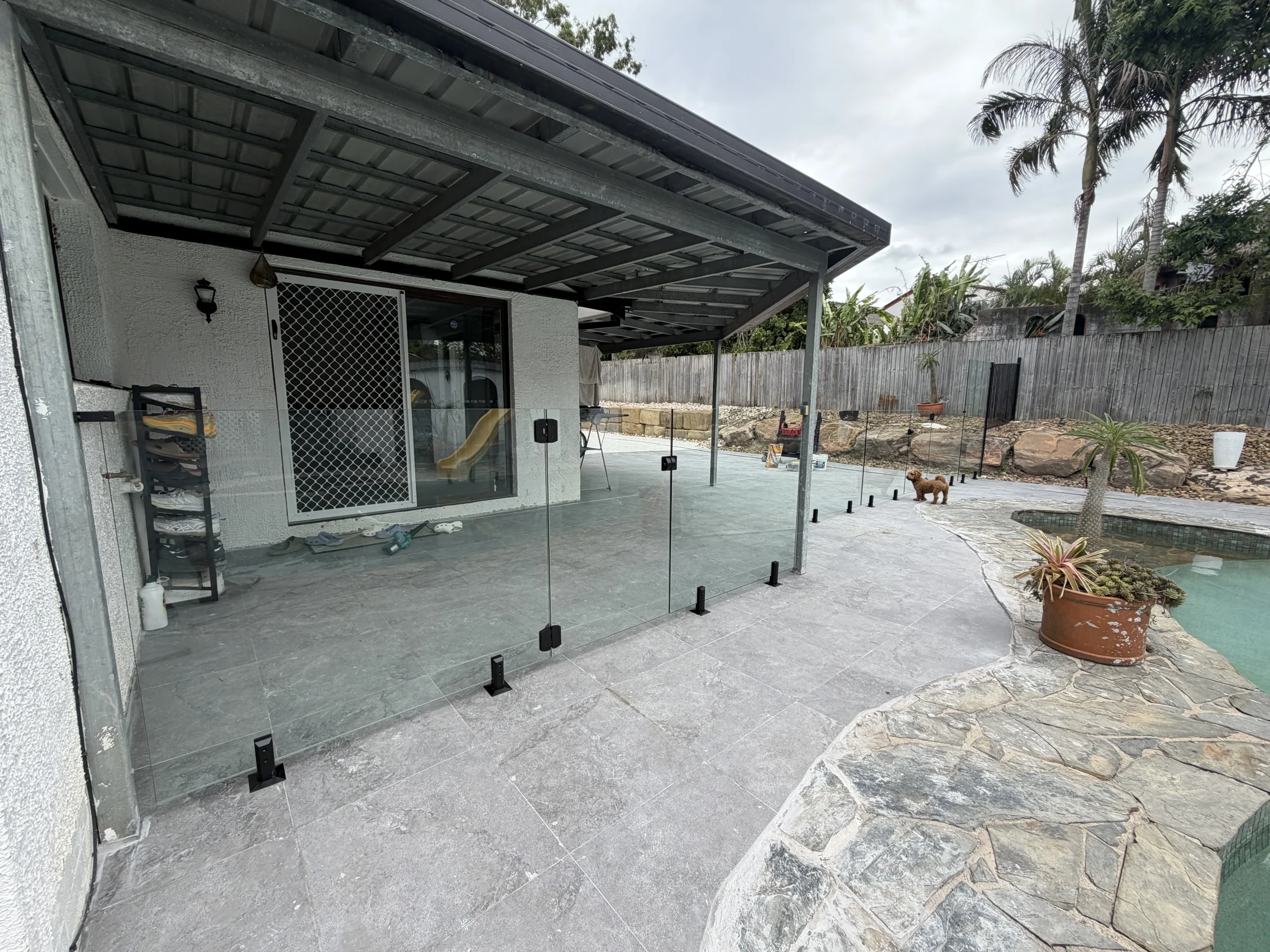
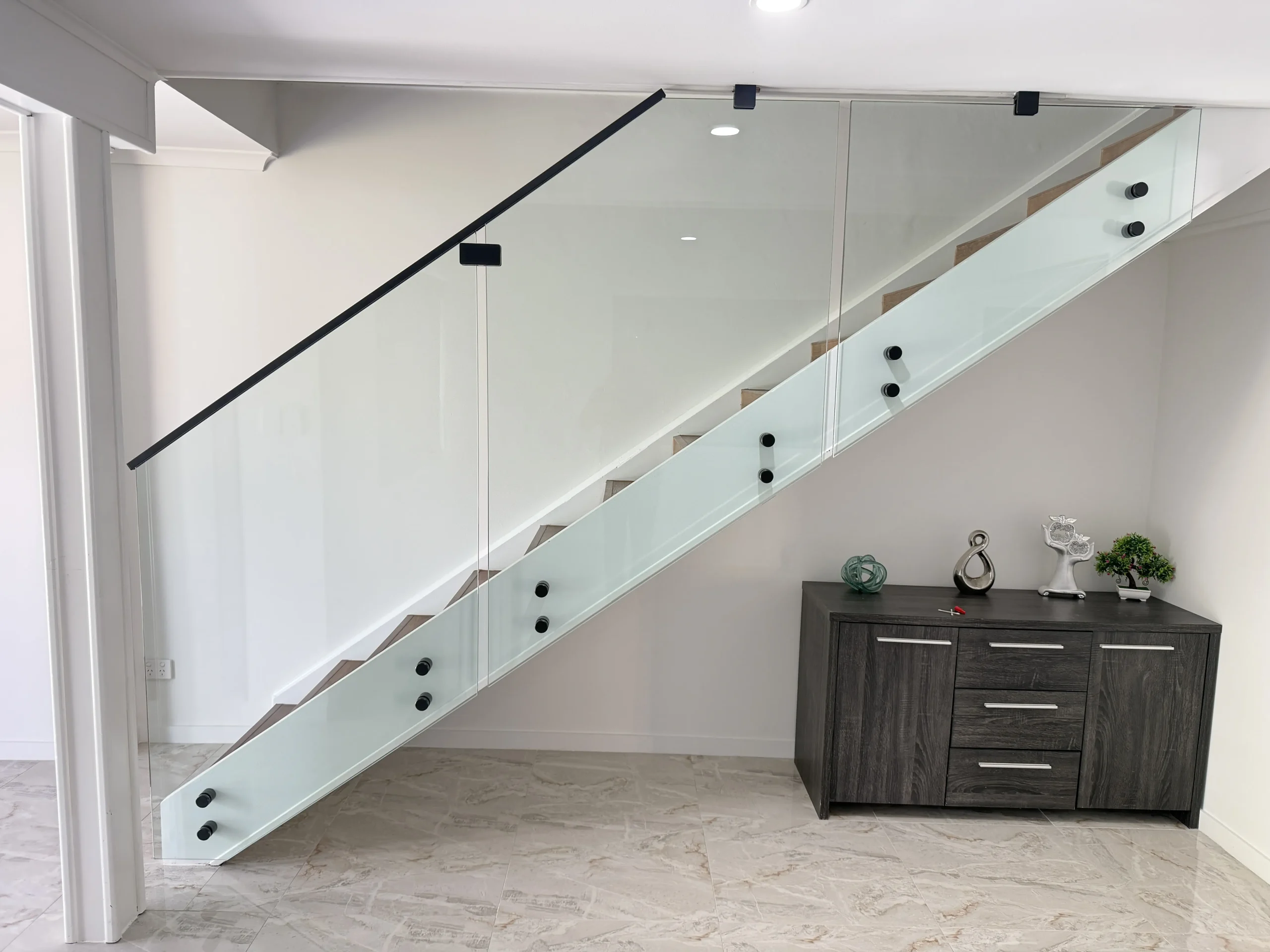
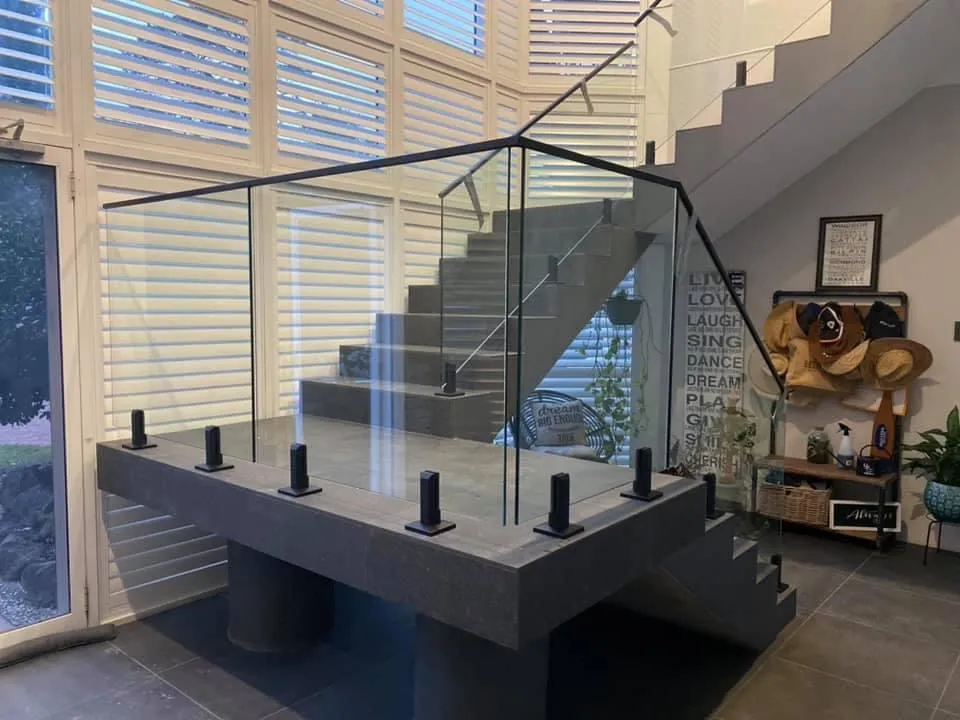
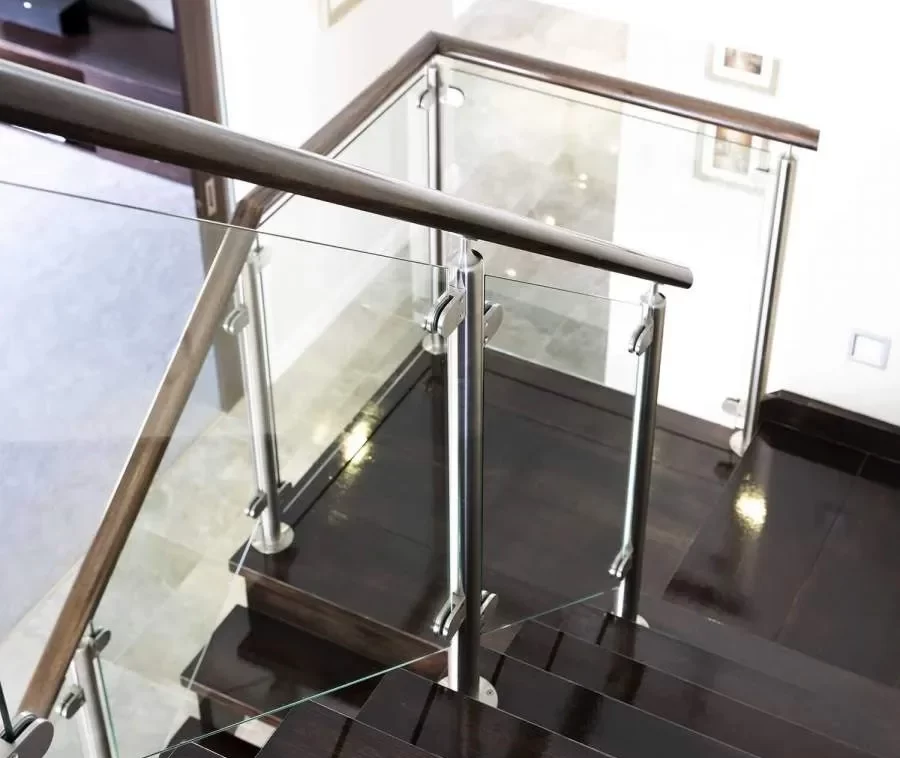
If the stair is also a fall edge, you may be buying a balustrade and a handrail together. Glass with an offset stainless rail is a common modern pairing — see glass stair handrail and staircase balustrades. The glass and the rail are related specs. The rail grade still needs to match the exposure.
Aluminium remains a strong outdoor alternative when you want colour and less salt drama. If the look must be metal stainless, coastal exposure points to 316.
NCC handrail height and safety notes
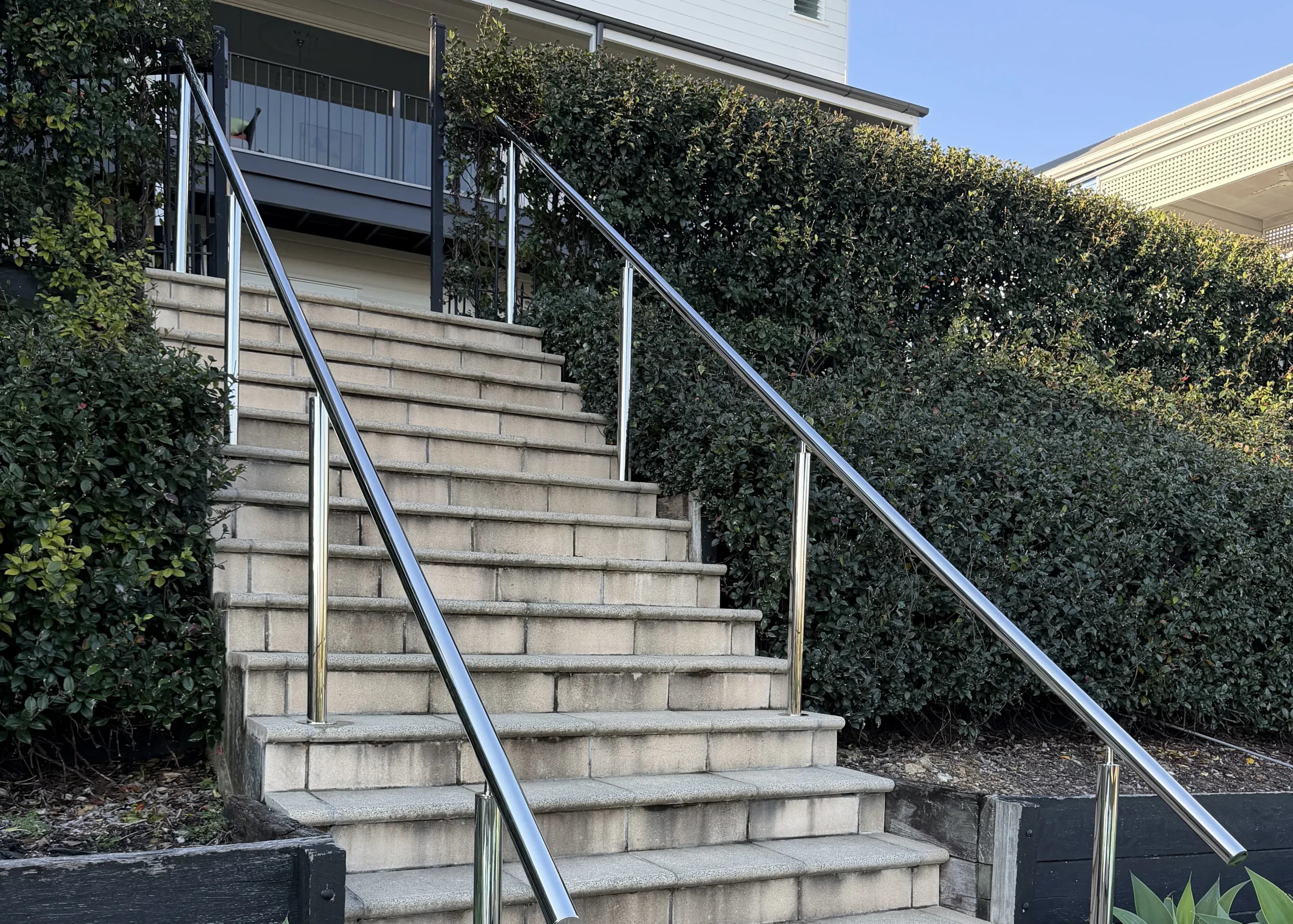
Grade does not replace code. For many Class 1 houses, the NCC Housing Provisions on barriers and handrails (opens in a new tab) require a handrail on at least one side of a flight with a 1 m or greater rise, with the top not less than 865 mm above the nosings.
The ABCB FAQ on stairways, barriers and handrails (opens in a new tab) is a clear overview. Apartments, public buildings and accessible stairs can differ. Workplace access may sit under AS 1657 and Safe Work Australia guidance on falls — see the model Code of Practice: Managing the risk of falls at workplaces (opens in a new tab). Confirm with a certifier. Requirements can change.
A beautiful 316 rail at the wrong height, with a profile you cannot grip, still fails the job. Round or oval graspable sections beat wide flat bars you cannot close a hand around.
Cost factors for 304 vs 316
AMG does not publish a single handrail rate because geometry dominates. As a budgeting guide for South East Queensland, custom stainless handrails often land roughly in the mid hundreds per lineal metre installed depending on grade, bends, finish and site — with 316 and complex coastal detailing toward the higher end, and simple 304 indoor runs lower. Small flights can total from about $1,500 into several thousand dollars all-in.
You pay for:
- Grade (316 costs more than 304)
- Finish (brushed vs polished)
- Bends, offsets, rakes and wall returns
- Bracket type and fixing into concrete, timber or masonry
- Whether the rail sits alone or with glass balustrade
- Access and lead time
The false economy is buying 304 for a salt-exposed deck because it was $40/m cheaper, then living with staining and early bracket fuss. Ask for grade in writing.
Maintenance that keeps coastal stainless looking clean
Rinse with fresh water regularly near the coast — monthly is a sensible starting point for exposed rails, more often after storms. Use mild soapy water or a dedicated stainless cleaner. Never use steel wool or carbon-steel brushes; they leave particles that rust. Wipe joints and bracket bases where salt sits. Recheck fixings after the first wet season. Keep plant fertiliser and pool chemical splash off the metal where you can.
If light tea staining appears early, clean it promptly. Waiting turns a wipe-down into a bigger cosmetic job.
AMG’s work includes a 3-year product warranty and defect rectification on the fabrication supplied. Coastal appearance still depends on grade, fabrication cleanliness and washing.
304 vs 316 stainless for coastal handrails: which should you choose?
Choose 316 for outdoor handrails near salt air, canal estates, beachside streets, exposed decks and any rail you expect to stay visually clean with normal washing.
Choose 304 for indoor stairs, or sheltered inland outdoor runs where salt is not a real factor — and still plan basic cleaning.
Choose aluminium if you want powder-coat colour, lower heat gain, and less coastal stainless maintenance drama.
Choose a mix when the internal feature stair is stainless and the backyard flight is aluminium or 316 only where exposed.
What to check before you buy
- Does the quote say 304 or 316 on tube and brackets?
- Are fasteners compatible stainless, not mild steel?
- Were welds cleaned / passivated?
- Is the profile graspable, and is height set for your stair under the NCC path that applies?
- Indoor, covered, or salt-exposed? That one answer often chooses the grade.
- Who measures, fabricates and installs? One workshop is simpler when bends must match the wall.
- What cleaning advice is in writing for coastal care?
If two quotes are close in price and only one states 316 for a coastal site, they are not the same rail.
Frequently asked questions
Is 316 always better than 304 for handrails?
For coastal outdoor exposure, yes as a grade choice. Indoors, 304 is often enough. “Better” means better for the site, not better in every room.
Will 316 stainless never tea stain?
No. 316 resists coastal chlorides better. Poor cleaning, contaminated fabrication or trapped salt can still stain. Washing matters.
Can I use 304 stainless outside in Brisbane?
On many inland suburban blocks, possibly. On bayside or other salt-influenced sites, ask for 316 or switch to aluminium. “Brisbane” includes very different microclimates.
How much more does 316 cost?
It depends on length, bends and finish. Expect a premium over 304. Get both options itemised if you are unsure about exposure.
What grade should I use with a glass stair balustrade?
Match the rail and fixings to exposure. Coastal outdoor glass stairs usually want 316 offset rails and compatible standoffs. See AMG’s glass stair guidance for the system view.
Does AMG Fabricate both 304 and 316 handrails?
Yes. AMG fabricates custom stainless handrails and can specify grade for the site, with free consultation and obligation-free quotes across Brisbane, the Gold Coast and the Sunshine Coast.
Conclusion
304 vs 316 stainless for coastal handrails is a site decision. 304 suits milder indoor and inland jobs. 316 belongs on salt-exposed outdoor rails, with matching brackets and fasteners. Add a graspable profile at a code-compliant height, clean welds, and a simple rinse routine.
AMG Fabrication can measure on site, fabricate the right stainless grade for your stair or deck, and install across Brisbane, the Gold Coast and the Sunshine Coast. Book a free consultation and quote via the contact page.